
Immediate permanent residency in return for an investment, a passport after five years. The announced rise in the property threshold in October 2026 is not coming as a cut-off date: since September 2026, the amount depends on whether you buy new or resale.
Correction of 10 October 2026: In March 2026, the property threshold of USD 300,000 applied only for a limited period, and the rise to USD 500,000 was expected for mid-October 2026. Executive Decree No. 17 of 8 September 2026, published on 16 September 2026 in the Gaceta Oficial, has reorganised the programme and replaced the cut-off date. Amounts and deadlines have been corrected accordingly; all the details are in the article on the new investor visa.
The Panama Qualified Investor Visa is the fastest route to permanent residency in Panama. The cheapest ticket in still exists, but no longer for every property: USD 300,000 is only enough for a new property bought directly from the developer. Let's take a clear-eyed look at what the programme offers and what has changed.
What the Qualified Investor Visa is
The Qualified Investor Visa, introduced by Executive Decree 722 of 2020, is Panama's programme for wealthy newcomers. Its great advantage: it grants permanent residency immediately, without a temporary preliminary stage, in return for a qualifying investment. The procedure with the Servicio Nacional de Migración is quick, often completed within a few weeks, and you receive your cédula as a permanent resident. Unlike the Pensionado, it is tied not to a pension but to capital, which opens it to entrepreneurs, investors and wealthy individuals regardless of age. It is Panama's answer to the classic golden visa programmes, only with the advantage of immediate permanent residency instead of a time-limited first stage.
The three investment routes
There are three recognised routes. First, and most popular, the property investment. Since Decree 17, two amounts apply here: USD 300,000 for a new, never-occupied property bought first-hand from the developer, and USD 500,000 for a resale property on the secondary market. Second, an investment in a securities portfolio through a Panamanian brokerage licensed by the securities regulator, from USD 500,000. Third, a fixed-term deposit from USD 750,000 at a private bank, or from USD 500,000 at Banco Nacional de Panamá or Caja de Ahorros. Every investment must be held for at least five years. All three lead to the same result, immediate permanent residency. Which route is right depends on whether you want a property in Panama anyway, prefer to hold your capital in securities, or value the simplicity of a fixed-term deposit. For most of my clients the property route is the obvious one, because it creates real substance and, for new builds, has the lowest threshold.
What became of the window
The USD 300,000 was a transitional rule. Decree 109 of 2022 made it sufficient for the first 48 months after Decree 722 of 15 October 2020, after which the regular amount of 500,000 was to apply. That is where the mid-October 2026 cut-off date came from. Decree 17 replaces Decrees 722, 109 and 193 in full and no longer has a cut-off date. It distinguishes by the type of property: new builds sold first-hand from 300,000, secondary market from 500,000. The difference of USD 200,000 remains; it is just your choice of property that decides it now, not the date.
What counts is the net value: the lower of purchase price and market value, minus all encumbrances. A mortgage must not push the net value below the threshold. If you made a binding purchase before 16 September 2026, you may use the old regime, provided you apply within six months of the decree taking effect. This mainly concerns buyers of resale property, for whom 300,000 was enough under the old law.
Tax, currency, passport
The setting is attractive. Panama is a territorial tax country: foreign income stays tax-free in Panama as long as it is genuinely foreign-source, as the PwC tax summary confirms. The country uses the US dollar as its official currency. For the internationally mobile investor that is a double advantage: a low ongoing tax burden on foreign income and a stable currency in which wealth can be held without devaluation risk. And the road goes further: after five years of permanent residency you can pursue naturalisation, with a solid passport at the end. A word of caution if you want to keep your current passport: Panama generally requires naturalised citizens to give up their previous nationality, so the passport is a deliberate decision, not an automatic add-on to residency.
Your home country first, then Panama
This is a point I put first with every wealthy client. Before any Panamanian tax regime applies, there is the home side of the move. Moving to Panama does not, on its own, end your tax residence at home, and if you hold company shares, check your home country's exit rules before you leave. No territorial system in Panama, however attractive, helps if your departure from home is not properly structured. The favourable investment threshold is one advantage; a sound exit plan is what makes it pay off at all. Plan both together from the start. What leaving involves depends on where you come from:
Investor, Pensionado or Friendly Nations?
To put the programme in context, here is a quick comparison. The Pensionado is the route for retirees with a lifetime pension, with no capital requirement and with the statutory discounts. The Friendly Nations Visa is the route for entrepreneurs and professionals from friendly nations, often through setting up a company or an employment relationship, with a temporary stage before permanent residency. The Qualified Investor Visa is the fastest and most capital-intensive route: it delivers permanent residency immediately in return for an investment, with no intermediate stage. If you have the capital and want speed, choose the investor route; if you have a pension, the Pensionado; and if you want to work and ease in more slowly, Friendly Nations. There is no best route, only the best one for your profile.
Common mistakes I see
Two mistakes cost real money on the investor route. First, confusing new and resale: if you plan with USD 300,000 but buy an apartment that has already been marketed, occupied or rented out, you do not meet the threshold, because 500,000 applies to the secondary market. Get proof of first-sale status before you sign. Second, checking the property carelessly: title, encumbrances and registration in the Registro Público must be checked by an expert before any money moves, or your residency ticket turns into a lawsuit. Take both to heart and the Qualified Investor Visa gets you one of the smoothest and fastest residency routes in the region. My job is to make sure of exactly these two points, the right threshold for your property and the legal check of the property, so that the fast route does not become an expensive detour.
Where to invest if it is the property route
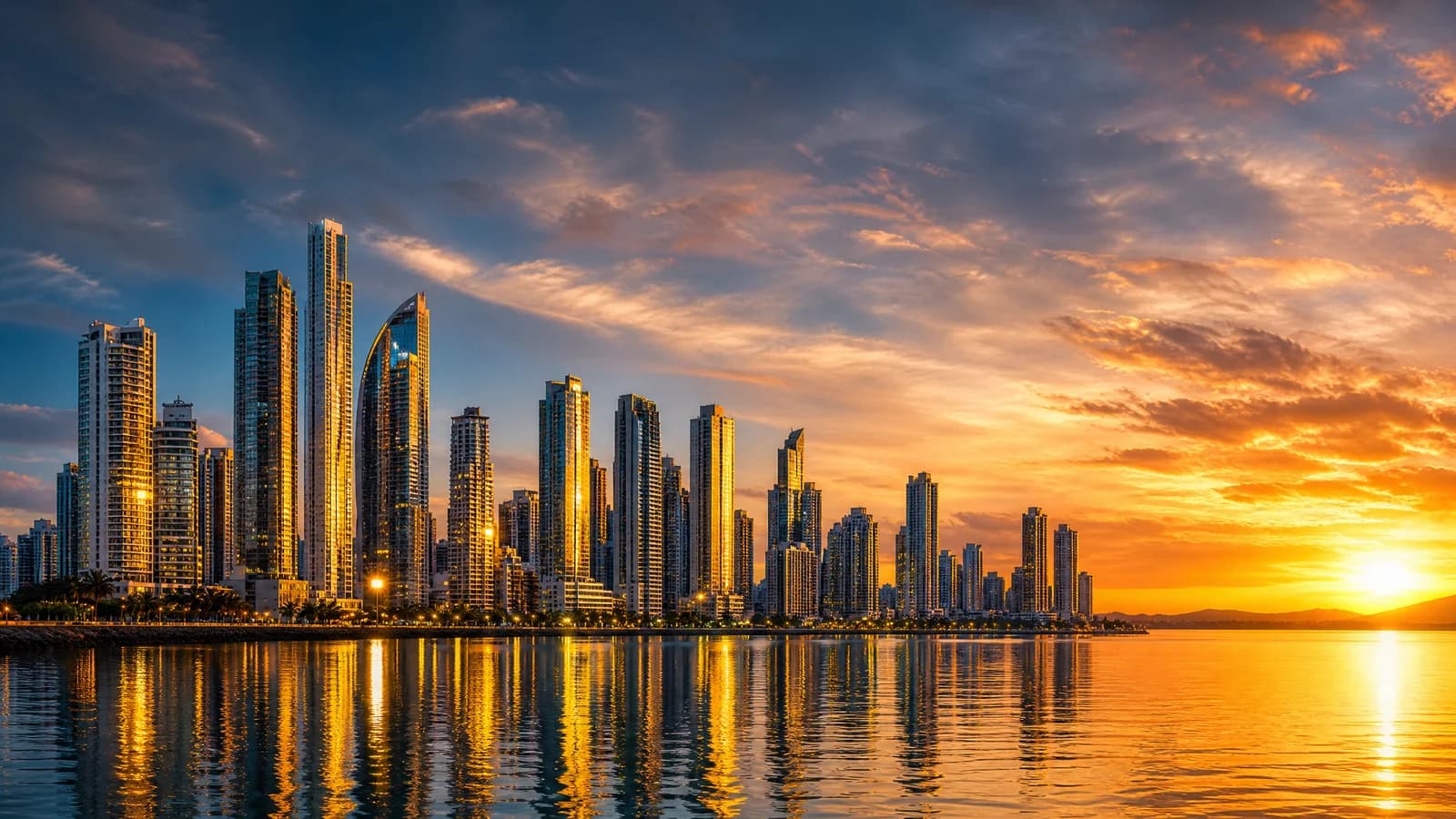
If you choose the property route, the question is where. Panama City offers the most liquid market, modern high-rises on the water, strong rental demand and the easiest resale, the obvious choice for most investors. Upmarket areas such as Punta Pacífica, Costa del Este or the restored old town, Casco Viejo, combine quality of life and stable values. If you would rather invest in greener surroundings, you will find alternatives in the highlands around Boquete or on the coasts and islands, but expect lower liquidity and slower resale there. What matters is that the property does not just meet the residency threshold but also stands up as an investment, because you are tying up real capital here. I advise my clients to assess the property first as an investment and only then as a residency ticket, never the other way round.
Who the Qualified Investor Visa is made for
The Qualified Investor Visa is the fastest route to permanent residency in Panama for anyone who brings the capital and wants to build substance. It suits the entrepreneur, the investor and the wealthy individual looking for dollar stability, territorial taxation and a quick route to residency without years of temporary stages. It does not suit someone who wants to park a backup on a small budget; there are cheaper routes in the region for that, such as Paraguay. But if you wanted to invest in Panama anyway, the new-build amount of USD 300,000 is a solid reason to get the order of the steps right.
This is exactly the calculation I do with my clients before a single dollar moves: whether new build, resale, a portfolio or a deposit suits you, and how your exit from home fits in. If Panama is on your list, let's work through the numbers. Book a call with me; the link is right below.
👉 Book a consultation with Harley
Carpe Diem. Life is short and fleeting. One shot. Make it count.