
Which Latin American countries really leave your foreign income tax-free? The honest ranking of the three best territorial tax countries in 2026, plus the strongest special regimes.
When clients come to me and ask where they can legally hold their foreign income tax-free, the answer almost always points to a small group of countries: the territorial tax countries of Latin America. The principle is strikingly simple: these states tax only what is earned inside the country, and your genuine foreign income is left alone. But not all of these countries are equally good, and the devil is in the detail. Below is my ranking of the three best tax countries, the strongest special regimes, and the one principle without which none of them works. I have settled clients in all of these countries and know their strengths and their pitfalls from practice. One thing up front: territorial does not automatically mean tax-free; it depends on keeping things strictly separate.
No. 1: Paraguay, the value-for-money champion
The overall winner, and for good reason. Paraguay taxes strictly territorially: your genuine foreign income stays tax-free, and the local rate on domestic income is a low 10% or so, as the tax summary confirms. On top of that comes a whole bundle of advantages that no other country combines in the same way: no wealth tax, no inheritance tax, no CRS exchange yet (no automatic exchange today, committed to the OECD by 2028), the lowest costs in the region and naturalisation after five years. Each of these points would be an argument on its own; together they make up the strongest overall package in the region. If you want a base that is inexpensive, simple, tax-free and private all at once, nothing else in the region is as well rounded. That mix is exactly why Paraguay is so often the first building block of a freedom strategy, and why I wrote a whole guide on living tax-free in Paraguay. It is the clear number one because no other country combines territorial tax freedom with low costs, speed and privacy in a single, uncomplicated package.
No. 2: Panama, the established dollar hub
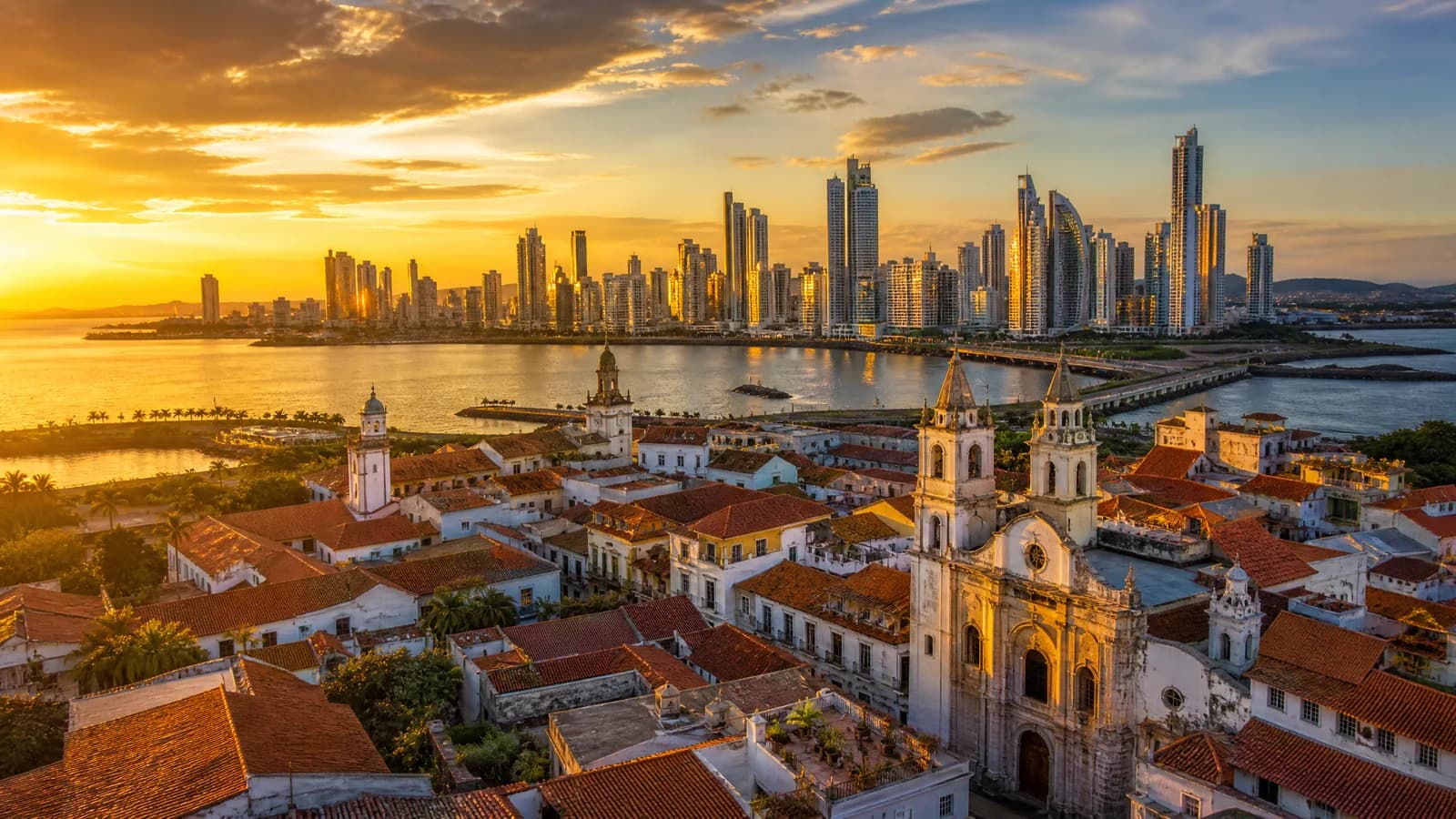
The established classic. Panama also taxes territorially, your foreign income stays tax-free, and the country brings a unique advantage: the US dollar as legal tender, so no exchange rate risk. Panama is a genuine financial hub with a large international banking sector, and since its removal from the FATF grey list in October 2023 its reputation has recovered noticeably. Then there are the legendary Pensionado discounts and immediate permanent residence for retirees. Panama lands just behind Paraguay because it is more expensive and takes part in the CRS, but in return it offers more infrastructure, the dollar and stronger banking. For anyone who wants to combine tax freedom with dollar stability and international connections, Panama is the first choice. If you think of your wealth in dollars and need the best connections, Panama is the most established home in the region.
No. 3: El Salvador, the bold riser
The most exciting newcomer on the podium. El Salvador also taxes territorially, your foreign income stays tax-free, the country has been dollarised since 2001, and there is no wealth tax, no inheritance tax and no capital gains tax on bitcoin gains. The fresh trump card: under Decree 531, the presence requirement for temporary residents was cut to just 90 days a year from 31 March 2026, ideal for the internationally travelling entrepreneur. Add to that the spectacular security turnaround of recent years. A country that was considered dangerous not long ago is today one of the safest in the hemisphere, and that fundamentally changes its appeal for newcomers. El Salvador takes third place because it keeps up with the best on tax and even stands out with the 90-day rule and the dollar, but it is institutionally less established than Panama. For the bold freedom seeker, it is one of the most exciting destinations anywhere: a bet on a country on the move that already offers tangible tax advantages.
Just off the podium: Costa Rica
In fairness, I should also name the country that narrowly missed out. Costa Rica also taxes strictly territorially, your foreign income stays tax-free, and the country offers stability, nature and an excellent health system. The reason it lands just off the podium is compulsory membership of the public health system, the CAJA, which costs around 9% to 13% of declared income and works like an additional levy, plus the higher cost of living. On tax, Costa Rica is first class, but the CAJA obligation and the costs cost it a podium place. A close result that shows how tight the leading group is. For anyone who puts stability and healthcare above the last dollar saved, it remains a top choice all the same. Just make sure you factor the CAJA contributions into your overall numbers instead of looking only at the zero on foreign income.
The special regimes: a league of their own
Alongside the pure territorial countries there is a second group that is often just as attractive for newcomers: countries with time-limited special regimes. Uruguay offers new tax residents a tax holiday with eleven years of zero tax on foreign investment income, although since 2026 only in return for more than 183 days of real presence or an investment in the millions, combined with the most stable democracy in the region. Chile exempts new residents from tax on foreign income for the first three years, extendable to six, before worldwide taxation applies, and also offers the strongest passport in the region. This combination of a tax window and a top passport makes Chile particularly interesting for the long-term planner. Ecuador has granted new arrivals a five-year regime since 2024 with 0% on all foreign income, tied to the US dollar. This makes Ecuador effectively tax-free on foreign income for the first five years, even though it is not a territorial country. For anyone who uses these windows deliberately and plans the transition, these special regimes are often just as valuable as permanent territoriality, but they require more structuring. The difference from pure territoriality is time: territorial is permanent, while a special regime gives you a limited but often particularly generous period in which to build your structure calmly.
Why territorial does not automatically mean tax-free
This is a misunderstanding I have to clear up again and again. Being taxed territorially does not automatically make you tax-free; it depends on a strict separation. First, your income must genuinely be foreign-source, in other words really earned abroad, not through work carried out inside the country. Second, and this is the decisive point, tax freedom in your new country is worth nothing if your home country still regards you as tax resident. That is exactly why the model includes consistently giving up your old residence and, for most set-ups, banking and a company structure outside the region. Territorial tax freedom is a powerful tool, but only as part of a properly built overall structure. Take this principle to heart and you turn the territorial principle into real, lasting tax freedom.
How the model works in practice
So that you can picture it concretely, here is the basic pattern I set up with clients. You move your residence and the centre of your life to one of the territorial countries and properly give up your old residence. Your income comes from genuine foreign sources, dividends, investment income, location-independent work, and is not taxed there because it is not earned in the country. Your banking and company structure sit deliberately outside the region, in stable, well-connected jurisdictions, both for tax reasons and to protect your assets. The result is the legal combination these countries stand for: tax-free foreign income in your new country, a sound structure outside it, and a second residence or passport as a bonus. This is not a trick but consistent international structuring, and it takes experience.
The most common mistakes
I see three mistakes again and again with tax countries, and each of them can be expensive. First, confusing residence with tax freedom and believing that residence alone is enough, when in truth properly giving up your old tax residence is what decides it. Second, treating income as foreign-source that in reality arises from work carried out inside the country and is therefore locally taxable. Third, ignoring the exit side at home and believing everything is done once you have moved. Avoid these three and plan with a sound structure from the start, and you get the benefits of territoriality without walking into the typical traps.
In practice: sort out your departure first
One principle outranks all three podium places, and I put it at the start of every plan. Before any territorial tax country can work for you, the home side of the move comes first: whether your home country stops treating you as resident, whether leaving triggers tax on company shares or other assets, and whether any claim on you continues after you leave. None of these countries helps if your departure from a high-tax country is not properly structured. Structure decides, not the destination.
The ranking at a glance
The ranking is clear: Paraguay leads as the value-for-money champion with territorial tax freedom, low costs, no CRS exchange yet and a passport after five years; Panama follows as the established dollar hub; and El Salvador completes the podium as the bold riser with its 90-day rule and the dollar. Costa Rica waits just behind, and the special regimes of Uruguay, Chile and Ecuador form a highly attractive league of their own. Which country is right for you depends not only on the tax rate but on costs, currency, passport and your overall structure. This is exactly the trade-off I work through with my clients before they commit.
If you want to hold your foreign income legally and lastingly tax-free, let us work out together which country really fits your assets, your life and your structure, and how to structure your departure from home properly. Book a call with me via the link below.
👉 Book a consultation with Harley
Carpe Diem. Life is short and fleeting. One shot. Make it count.