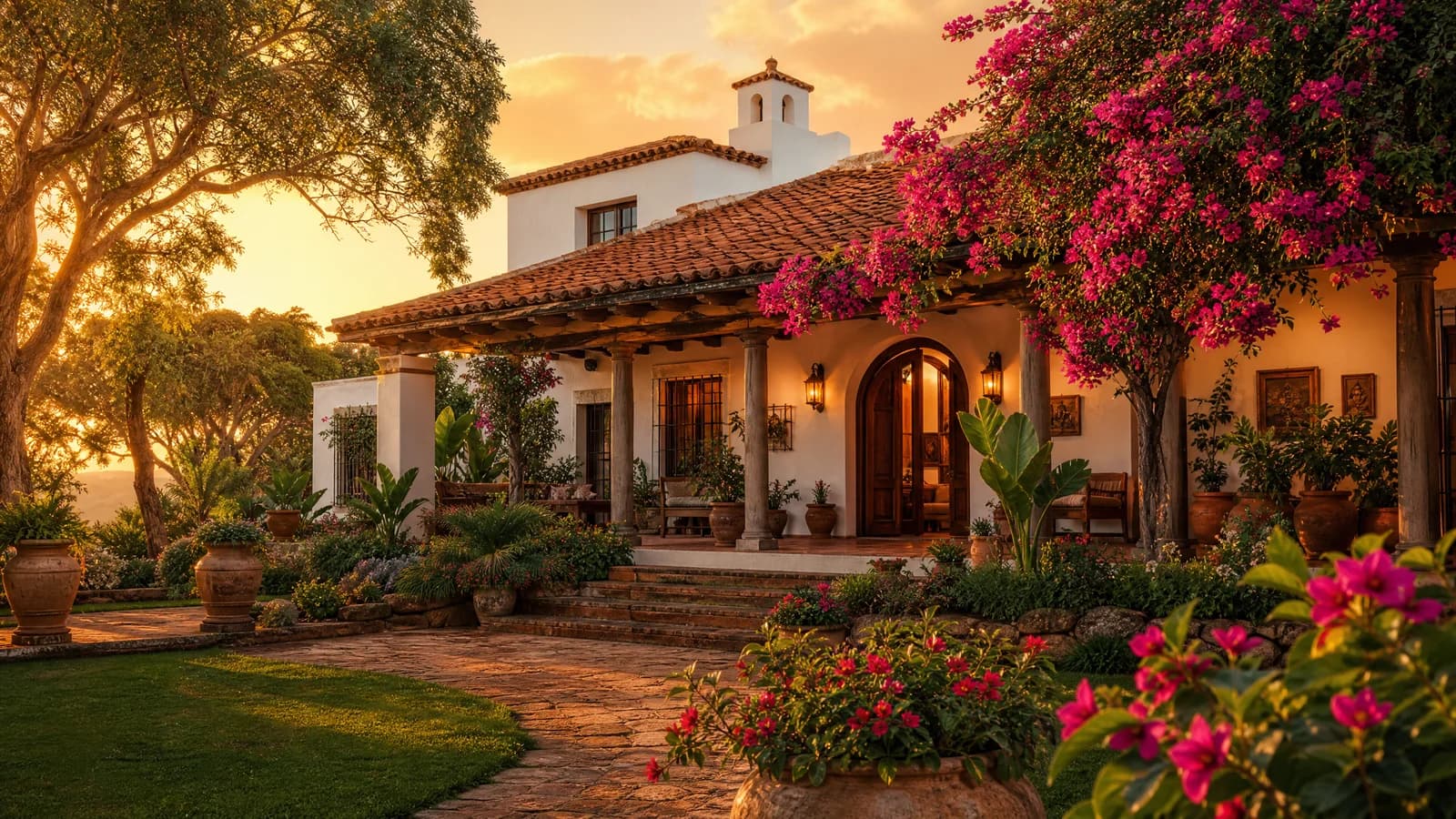

Buying property in Latin America as a foreigner: where you can buy freely, where restricted zones such as Mexico's coast require a fideicomiso, how the purchase process works, and why a property does not change your tax residence. The 2026 guide.
Many people dream of their own home under the palm trees, and the good news first: in most Latin American countries you can buy as a foreigner freely and in your own name, with the same rights as a local. The less well-known news: there are restricted zones such as Mexico's coast, where you need a special route, and there are pitfalls in the buying process that can get expensive. Both are manageable if you know about them in advance. And there is one truth, above all, that many people would rather not hear: buying a property changes nothing about your tax residence. That one insight separates the clear-eyed buyer from the naive dreamer. This guide takes you through rights, zones and process. One note up front: property is easy to acquire, but it does not make you tax resident.
The good news: freehold ownership almost everywhere
Let's start with what surprises many people. In the vast majority of the region's countries, a foreigner can buy property in their own name and with full rights, often with the same constitutional rights as locals. That applies to Panama (with titled freehold, the finca), Colombia (constitutional equality), Uruguay, Paraguay, Argentina, Brazil, Chile, Ecuador and Peru. So free acquisition covers practically every country that is a realistic option for people moving to the region. Unlike some Asian countries, which only allow foreigners leaseholds or flats, buying land here is usually straightforward. In many Latin American countries, the land register simply shows your name at the end, with no detour through a local nominee. The World Bank documents property rights and the ease of registering property, see the World Bank. For foreign buyers, the upshot is that in most countries no legal barrier stands between you and a home of your own. Buying land here is often simpler than in many parts of Asia or even in some European countries.
The exception: Mexico's restricted zone and the fideicomiso
The most important exception is Mexico. There, foreigners may not buy directly in their own name in the so-called restricted zone, 50 kilometres along the coast and 100 kilometres along the borders, a legacy of Article 27 of the constitution. Yet that is exactly where the most popular places are: Cancún, Tulum, Playa del Carmen, Puerto Vallarta, Los Cabos, Baja. The dream locations by the sea are precisely the ones that fall into the restricted zone. The solution is the fideicomiso, a bank trust agreement under which a Mexican bank holds title in trust while you keep all ownership rights: buying, selling, letting, passing on. The fideicomiso also bypasses local probate, because you can name your successors directly in the contract. It costs around USD 2,000 to 3,000 to set up plus USD 500 to 1,000 a year, runs for 50 years and is renewable. Beyond these costs, the fideicomiso behaves like real ownership in everyday life. Outside the restricted zone, foreigners in Mexico buy directly in their own name. If you want to buy on Mexico's coast, plan for this route from the start. The fideicomiso is not a disadvantage but an established, secure instrument used by millions of foreigners.
Other border and special zones
Mexico is not the only country with zones. Elsewhere, too, there are border and special zones with restrictions. In Peru, foreigners need special permission for land within 50 kilometres of the border. In Brazil and Paraguay, there are restrictions on land in certain border strips and on large rural landholdings. These rules are meant to limit foreign ownership of strategically sensitive border land and of large tracts of land. In many places there are also protective rules for indigenous land, which cannot be freely sold. These zones do not affect most city and coastal properties, but if you want to buy in the countryside or near a border, you need to know them. People looking for a finca or a larger plot away from the cities run into such rules more often. The rule is: in the cities and usual residential areas, buying is free; at borders, on indigenous land and for large landholdings, special rules apply. For the classic city flat or a house in a residential neighbourhood these hurdles simply do not exist. Checking the specific location therefore comes first. What you can take for granted in the city can look very different on a border river or in a nature reserve.
The buying process: diligence before bargains
The buying process itself is solid across the region, but it demands diligence. Central to it is the title search: an unbroken chain of ownership, no encumbrances, no unpaid taxes, clear boundaries. This check reveals whether the seller is actually the rightful owner and whether the property is free of third-party claims. The purchase is executed before a notary, the escritura, and must be entered in the land register. An independent local lawyer who carries out the review and owes nothing to the seller is indispensable. The quality of land registry systems differs from country to country, as institutional comparisons by the OECD show. PwC documents the taxes around a purchase. The most common pitfalls are informal or unclear titles, in Mexico the communal ejido land, which is subject to special rules, and the pressure to buy a supposed bargain without checks. Ejido land in particular keeps being offered to unsuspecting foreigners as a bargain and leads to nasty surprises. The rule for anyone relocating is always: check first, then buy, never the other way round. A thorough lawyer costs a few hundred dollars; an unchecked title can cost you the whole property.
Ownership in your own name: simple, but visible
A word on structure, because many people ask whether they should buy in their own name or through a company. Buying in your own name is simple and cheap but has three drawbacks: no asset protection, local probate on death, and full visibility in the registers. Buying through a company or structure can bring asset protection and simpler succession, but costs more and does not make you invisible, because the beneficial owner remains identifiable. Automatic exchange of information sees the beneficial owner behind every structure, so a property hides nothing. Which route is right depends on value, purpose and your overall structure. For a simple holiday home or residence your own name is often enough; for larger properties or those where succession matters, a structure makes sense. Rule of thumb: the higher the value and the more important succession is, the more a well-thought-out structure pays off. Make this decision at the start, not as a later correction. Transferring a property into a structure afterwards often triggers transfer tax and notary fees a second time.
The honest truth: property is not tax residence
And now the point that matters more than any other. Buying a property does not make you tax resident, and it does not end your tax obligations at home. A house in Panama or Mexico is an asset, not a change of residence. As long as the centre of your life stays in your home country, buying property abroad does not, on its own, move your tax residence, however many properties you own. Buying a holiday flat in Tulum does not turn a Londoner or a Torontonian into a Mexican taxpayer. What is more, a property abroad is visible in the registers; it hides no wealth. Anyone who thinks buying property is a tax trick or a way to become invisible is mistaken. The property is an asset and a piece of quality of life, but the tax effect only comes from a genuine change of residence. Buying and moving are two different decisions, and you can make them separately. Grasping this distinction spares you costly illusions. If you understand it, you buy with realistic expectations and are not disappointed later.
In practice: buy, and treat tax separately
Now to your own situation. Buying property abroad is a great step, but it needs to be placed properly in your tax picture. What your home country keeps taxing while you remain resident there, how rental income from a property abroad is treated, whether a tax treaty helps, and whether holding the property through a company has consequences when you leave, all depend on where you come from:
The property is one building block of your life plan, but it does not replace a sound tax structure; it complements it. Think about the two together, but decide them separately. Only a genuine change of residence turns the house abroad into a fresh tax start as well. Structure matters more than the destination.
Buying property in Latin America as a foreigner is possible in most countries freely and in your own name, from Panama to Colombia to Uruguay, with the same rights as locals. The important exception is Mexico's restricted zone on the coast and borders, where the fideicomiso is the route, and there are border and special zones elsewhere. The buying process is solid but demands diligence on title search, notary and registration, with an independent lawyer. Buying in your own name is simple, but visible and unprotected; a structure can do more but costs more. And the key truth remains: a property does not change your tax residence, which only comes from a genuine change of residence. That combination of a sound purchase and a sound structure is exactly what I build with my clients.
If you want to buy property in Latin America and set it up correctly in legal and tax terms, let's plan it together. Book a call with me using the link below.
👉 Book a consultation with Harley
Carpe Diem. Life is short and fleeting. One shot. Make it count.