
Where in Latin America can you get by in English? From Belize, with English as its official language, to Panama and its financial-centre English: the honest ranking of the three most English-speaking destinations in 2026, with tax and residency.
Not everyone who wants to move to Latin America speaks fluent Spanish, and for many of my clients the language is the biggest hurdle. The good news: in some countries of the region you get surprisingly far with English, and in one of them it is even the official language. The less good news: the choice is smaller than many hope, because Latin America is overwhelmingly Spanish- and Portuguese-speaking. Here is my ranking of the three most English-speaking destinations, each with an eye on tax and residency, so that you know where you can land without perfect Spanish. One thing up front: even where English is widely spoken, Spanish opens every door in the end. Do not underestimate it.
No. 1: Belize, English as the official language
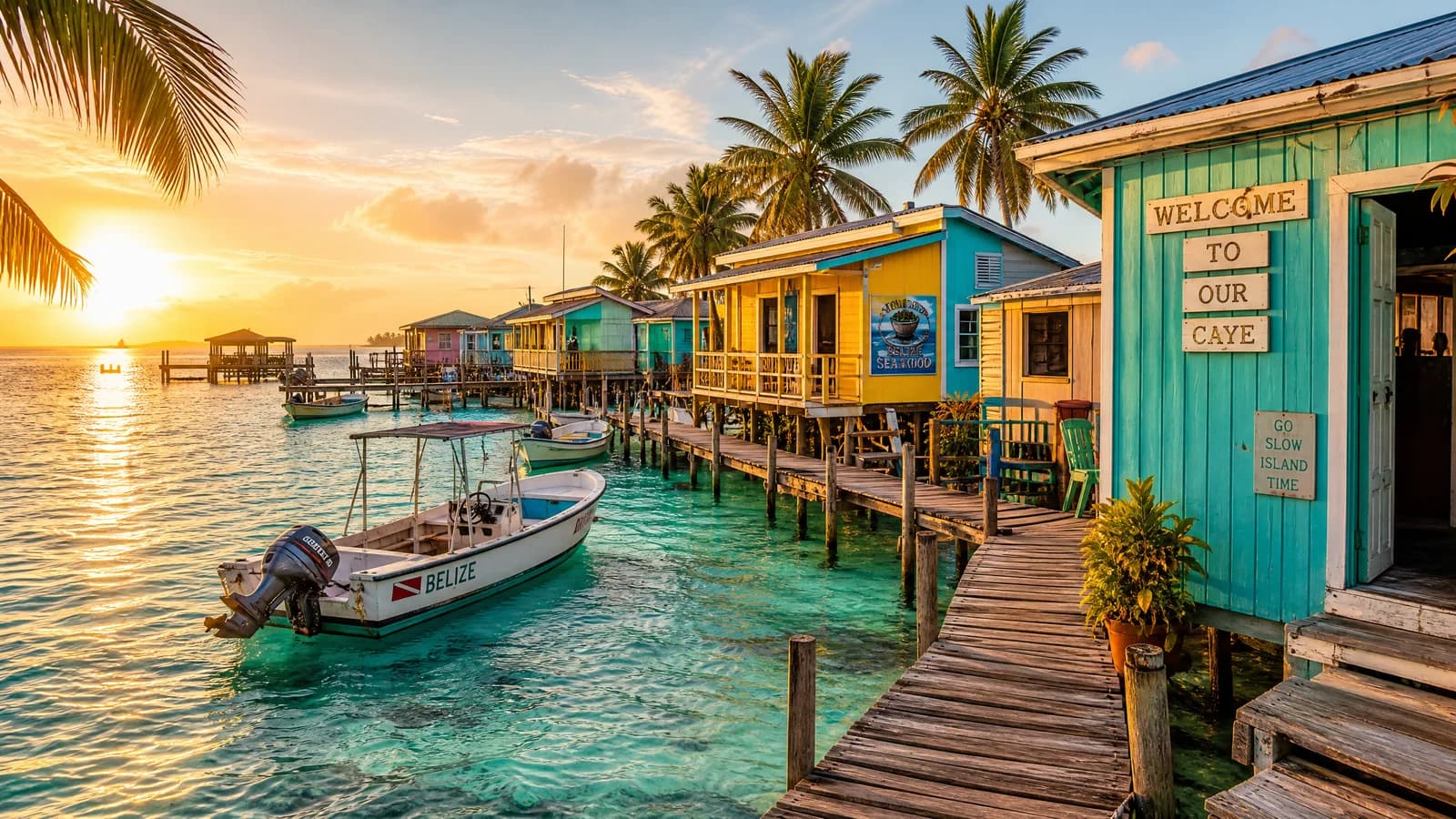
The undisputed leader, and the only one of its kind. Belize is the only country in Central America with English as its official language, a legacy of its British colonial history, and you can get through everything here in English, from government offices to the doctor. Contracts, newspapers and school lessons are in English, a situation unique in Latin America. On top of that comes a strong tax argument: Belize does not tax foreign income, it follows the territorial principle, and there is no wealth or inheritance tax. The famous Qualified Retirement Program, the retirement programme, is considered one of the easiest routes to residence abroad anywhere. The Belize dollar is pegged to the US dollar at a fixed rate of roughly two to one, the legal system follows English common law, and the Caribbean coast with its world-famous barrier reef offers a lifestyle few places can match. Diving, sailing and a relaxed island pace are simply part of daily life here. For the English-speaking expat, Belize is the clear number one. Nowhere else in the region does the language barrier disappear so completely.
No. 2: Guyana, the English-speaking riser
The well-kept secret in the middle of a growth spurt. Guyana is the only country in South America with English as its official language, also a British legacy, and in fact it is often not counted as part of Latin America at all, linguistically and culturally, precisely because English is spoken there. Thanks to huge offshore oil discoveries, the country is experiencing one of the strongest economic booms in the world, with rapidly growing GDP and enormous development potential. Within a few years Guyana has gone from one of the poorer countries to one of the fastest-growing economies in the world. For the entrepreneurial, English-speaking expat who wants to get into an emerging market early, Guyana is fascinating. To be fair, there is another side: infrastructure and the expat community are far less developed than in the established destinations, and the country suits the pioneer more than someone looking for comfort. Guyana is the region's English-speaking frontier opportunity. If you bring courage and entrepreneurial vision, this is one of the last genuine boom stories on the continent.
No. 3: Panama, the language of finance
The pragmatic third choice for anyone who wants English in daily life. Panama has Spanish as its official language, but because of its particular history it is the most English-friendly of the major expat destinations. The US legacy around the canal, Panama City's role as a global financial centre where English is the language of business, and the English-speaking Caribbean communities around Bocas del Toro make it easy to live and work here without perfect Spanish. Many international professionals and entrepreneurs live well in Panama for years with English as their main language. Then come the tangible advantages Panama is known for anyway: territorial tax freedom on foreign income, the US dollar as its currency and first-class residency programmes. For anyone who wants to combine English in daily life with an established, tax-friendly environment, Panama is the most pragmatic choice of the three. In the international neighbourhoods of Panama City you can lead a complete life in English. From the bank to the doctor to the international school, English is the everyday language there.
The strong runner-up: Costa Rica
In fairness, I should also name the country that narrowly missed out. Costa Rica, measured by the international proficiency tests, actually has a higher average level of English than Panama, carried by its long tourism tradition, a strong focus on education and the English-speaking Caribbean communities on the Atlantic coast. In the expat hotspots and the tourism industry you get by very well in English. On the Caribbean coast and in the retirement enclaves in particular, English is widespread. Amazon and other international companies run large operations in Costa Rica for good reason. Costa Rica lands just outside the top 3 because, unlike Belize, it does not have English as an official language and, unlike Panama, it does not have the same international finance-English character. But for the English-speaking expat it is an excellent alternative, with territorial taxation of foreign income and great stability.
Belize in detail: the retirement programme
Because Belize is the clear leader, its easiest way in deserves a closer look. The Qualified Retirement Program is aimed at people above a certain minimum age who can show regular foreign income from a pension or similar sources, and it is considered one of the most straightforward retirement programmes in the world. Those who are accepted may live in Belize permanently and enjoy certain concessions, for example when importing personal belongings. Combined with territorial tax freedom on foreign income, the Belize dollar pegged to the US dollar and English as the official language, this creates a particularly frictionless landing place for the English-speaking retiree. As everywhere, realistic expectations matter: Belize is a small, relaxed country, not a place for anyone who expects full urban amenities and world-class infrastructure. If you are looking for Caribbean, English-speaking island life, Belize offers something rare.
The most common mistakes
I see three mistakes again and again when it comes to language and moving abroad. First, making language the only criterion and choosing a country just because of English, even though tax, residency and lifestyle do not fit. Second, neglecting Spanish entirely in the belief that English will get you through everywhere, when in truth it quickly runs out beyond the expat bubbles and the tourism industry. Third, forgetting the tax and exit side over the language question, even though that is what decides the financial success of the move. Avoid these three, learn a little Spanish and treat language as one factor among several, and you will make a smart and sustainable decision.
Why the choice is so small
A word of context that surprises many people. Latin America is, by definition, the part of the Americas where Romance languages dominate, above all Spanish and Portuguese. Countries with English as an official language, such as Belize and Guyana, or with Dutch, such as Suriname, are often included geographically but frequently left out culturally and linguistically. That explains why the list of genuinely English-speaking destinations is so short. If you want to live in the region in English, you essentially have three serious options plus Costa Rica as a strong addition. In all the other countries English helps in the expat bubbles and the tourism industry, but without Spanish you remain a guest in the long run. Only with some Spanish does the guest become a real resident who takes part in the life of the country. Knowing this up front saves disappointment. Come with realistic expectations and you will be pleasantly surprised; expect miracles and you will be disappointed.
Language is not everything: what really matters
A ranking by language tempts you to ignore everything else, but for the right choice the overall picture counts. Tax decides how much you keep, and here Belize and Panama shine with their territorial systems. Residency varies widely, from Belize's easy retirement programme to Panama's established routes. Infrastructure and healthcare separate the developed destinations from the frontier: Panama and Costa Rica lead here, Guyana trails. And lifestyle ranges from Caribbean island life to the financial metropolis. Language is an important factor, but only one. If you weigh it together with tax, residency and lifestyle, you will find not just an English-speaking home but one that truly fits. A country where you understand the language but are unhappy is not a home.
In practice: sort out your departure first
One principle comes before everything else. However tempting an English-speaking environment is, it does not replace careful planning of the move itself. Before you go, clarify your own side first: whether your home country keeps treating you as tax resident, and whether leaving triggers any tax on the way out. The territorial tax freedom of Belize or Panama is of little use if your home country still considers you resident. Language is one part of arriving, a sound structure is the other, and you need both. Structure decides, not the destination.
The ranking at a glance
The ranking is clear: Belize leads as the only country with English as its official language, territorial tax freedom and an easy retirement programme; Guyana follows as the English-speaking frontier opportunity in the oil boom; and Panama completes the top 3 as the most pragmatic choice, with finance English, the dollar and tax freedom on foreign income, while Costa Rica waits as a strong runner-up. Which one is right for you depends not only on the language but on tax, residency, infrastructure and lifestyle. And one piece of advice outweighs the rest: even where English is enough, Spanish opens every door. This is exactly the trade-off I work through with my clients before they commit.
If you want to live in Latin America in English, let us work out together which country really fits your language, your assets and your goals, and how to structure your departure from home properly. Book a call with me via the link below.
👉 Book a consultation with Harley
Carpe Diem. Life is short and fleeting. One shot. Make it count.