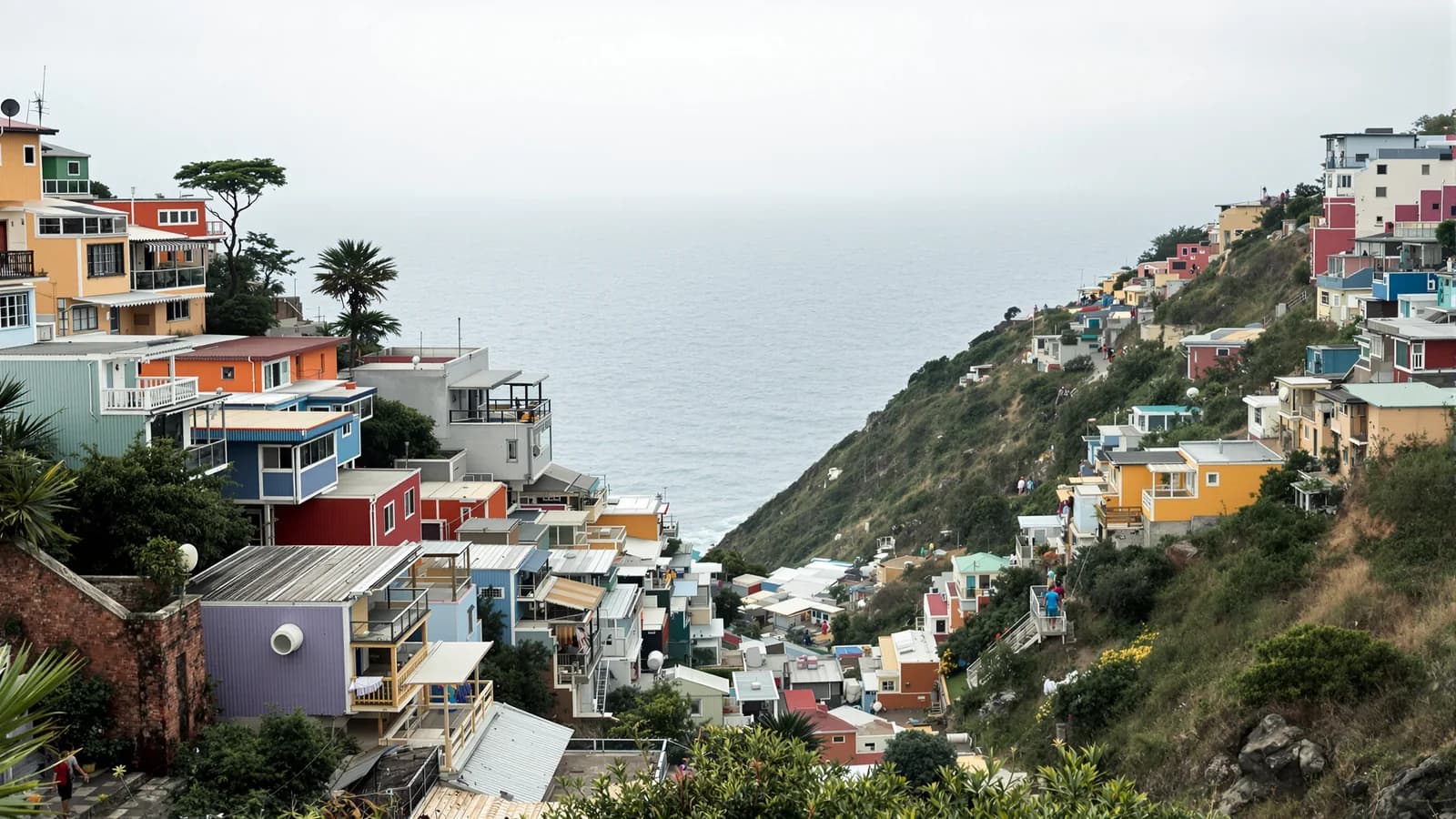

Buying property in Chile is surprisingly accessible for foreign buyers and legally secure, at least compared with many other countries in the region. I deal in facts, not sales pitches, so the most important point comes first: in Chile you can buy property as a foreigner without restriction, even as a non-resident and even as a mere tourist, as long as you have a Chilean tax number. There is no residence or citizenship requirement, and the same property rights apply to you as to Chileans. A buyer living in Europe, North America or Australia can acquire a house, an apartment, a building plot or a rural property in Chile, to live in or as an investment. Unlike many of its neighbours, Chile also has a well-organised, reliable property registration system, which makes the country particularly attractive to investors and people relocating.
The market and the most attractive regions
The Chilean property market is considered one of the most transparent and stable in South America, underpinned by a functioning rule of law, stable economic conditions and lasting demand for housing in central locations. Interest from people relocating and from investors centres on a few regions. Santiago, with upmarket neighbourhoods such as Providencia, Las Condes, Vitacura and Ñuñoa, offers the largest and most liquid market, with steady rental demand from an international clientele. The coast around Viña del Mar and Valparaíso is popular with second-home buyers. The south, around Puerto Varas, Frutillar, Valdivia and Lake Llanquihue, shaped by 19th-century German settlement, draws foreign buyers in particular for its landscape, mild lake climate and established international community. Prices in Chile are usually quoted in UF, the inflation-indexed unit of account, rather than in pesos, which makes price comparisons unfamiliar for newcomers at first.
The RUT: the first step
The key first step for every buyer, local or foreign, is the Chilean tax number, the RUT (Rol Único Tributario). Without it you cannot have a property registered, and a passport number is not a valid substitute. If you do not yet have a RUN from a residence permit, as a non-resident you apply for a so-called RUT Inversionista, an investor tax number that can be obtained within a few days with the help of a Chilean citizen or a foreigner with permanent residence. Since an administrative ruling in 2025, accredited banks can also apply for the RUT on behalf of foreign investors. Unlike a passport number, it stays the same for life, which also protects you as a buyer. Without your own RUN or RUT, practically nothing works in Chile: neither the notary nor the property registry accepts a bare passport number, and a Chilean bank account, which you need for paying the purchase price and running costs, requires it too. So make the RUT your first step, long before you commit to a specific property.
The buying process step by step
Once you have chosen a property, you submit a written offer, usually followed by the Promesa de Compraventa, a binding preliminary contract that sets out the payment schedule, deadlines, penalties and conditions for unwinding the deal. Alongside it runs the most important phase, the due diligence by a specialised lawyer: the so-called Estudio de Títulos, a review of the chain of title and of any encumbrances, usually going back ten years. The lawyer requests a certificate from the property registry that discloses mortgages, easements, usufructs and prohibitions, the Certificado de Hipotecas, Gravámenes y Prohibiciones, as well as proof of who the currently registered owner is. This is essential, because in Chile, in principle, anyone can sign a purchase contract, including someone who does not own the property at all.
The actual transfer of ownership takes place before a notary by signing the Escritura Pública, the public deed of sale, without which the sale has no legal existence. And now comes the point that foreign buyers most often misunderstand: signing at the notary does not yet make you the owner. Only once the Escritura has been registered with the competent Conservador de Bienes Raíces, the Chilean property registry, which fulfils a similar though not identical function to a land registry in Europe, does ownership actually pass to you. Registration takes a few weeks depending on the region. The whole process from Promesa to registration takes roughly three to eight weeks for a straightforward cash purchase, longer with financing. One important difference from many European systems is the role of the notary: in Chile, the notary merely certifies the deed and checks the formalities, but represents neither party and looks after neither side's interests on the substance. That is exactly why your own independent lawyer, representing only your interests, matters so much in Chile, while the estate agent may broker properties but may not carry out a legal title review.
Purchase costs and the VAT trap
There is good news here, and a trap. The good news: Chile levies no property transfer tax. Purchase costs are correspondingly moderate: notary fees of usually under 1%, registration of around 0.2 to 1%, a small transfer or stamp tax of about 0.2%, legal fees of 1 to 2% and an estate agent's commission of around 3%. In total you should budget roughly 5 to 8% of the purchase price in purchase costs, depending on the scope of services.
The trap: when you buy a new property directly from the developer, 19% VAT (IVA) is charged on the purchase price. That is a substantial item which quickly adds up to a five- or six-figure sum on a new apartment. Buying a resale property from a private individual, on the other hand, is VAT-free. This difference between a new build from the developer and a resale is crucial for your budget, and many buyers overlook it. A worked example: on a new-build apartment listed at the equivalent of EUR 200,000, the IVA alone adds around EUR 38,000, while the same amount does not arise when buying a comparable resale apartment. If you are flexible, deliberately choosing a resale property can save you a great deal.
Financing: usually a cash purchase
Chilean banks offer mortgages, with interest rates recently around 4%, which is moderate by Latin American standards. For non-residents and foreigners without permanent residence, however, financing is difficult: banks usually require 20 to 30% equity, proof of stable income in Chile and extensive paperwork, and they often refuse without permanent residence. In practice, most foreign buyers therefore buy as cash buyers, from their own capital or with financing raised in their home country. If you do finance, a stamp tax of usually 0.8% of the loan amount applies, or only 0.2% under the DFL2 regime's concessions. Some developers offer direct financing for new-build projects on more flexible terms, though at higher rates than a conventional bank mortgage. If you are moving larger sums from abroad, do not underestimate exchange and transfer costs, and keep thorough records of the capital you bring in, because it may matter later when you repatriate the sale proceeds.
Special cases: border zones, rural land and Rapa Nui
A few situations call for particular care. In Chile's border zones, for example in Aysén and Magallanes in the far south, restrictions apply to certain plots that require special permits from the Interior Ministry. These rules are aimed mainly at buyers from the immediately neighbouring countries, but can occasionally affect other foreign buyers too. Rural and agricultural land requires additional checks: indigenous land classifications under Chile's Indigenous Law can render a purchase legally void, and there are questions of water rights, access and subdivision permits on top. And Easter Island, Rapa Nui, is subject to its own legal regime with special ownership restrictions that do not apply on the mainland. In all these cases, a specialist legal review before any deposit is a must. To clarify the status of a specific plot, have a Chilean property lawyer check the Conservador's registers and confirm the land's classification before you sign anything. Especially with rural dream properties overlooking a lake or a volcano, it is often exactly these invisible restrictions that turn the purchase into a problem after the fact.
Running costs and selling
As an owner you pay the annual property tax, the Contribuciones de Bienes Raíces, which is based on the official fiscal value of the property and is relatively low by international standards. When you sell later on, Chile is remarkably generous to private sellers: capital gains of up to 8,000 UF remain tax-free, provided certain conditions are met, for example that you are a private individual, not trading commercially, selling to an independent party and have held the property for at least one year. Important: this 8,000 UF threshold is a lifetime limit per taxpayer, not per transaction, so several sales gradually use it up. Anything above it is taxed. The UF, the Unidad de Fomento, is the inflation-indexed unit of account in which many property prices and thresholds in Chile are stated. If you buy a property as a long-term home rather than a short-term speculation, this rule works very much in your favour: the gain on an owner-occupied home will usually stay within the generous exemption and therefore remain tax-free. Anyone who trades several properties or acts commercially, by contrast, loses the concession and is taxed normally.
An important tax point for non-residents
One point affects investors who do not move to Chile themselves: if you rent out a Chilean property as a non-resident, the rental income is subject to an additional tax (Impuesto Adicional) of 35%, significantly higher than the rates for people resident in Chile. Whether your home country also taxes that rent, and whether a treaty with Chile offsets the Chilean tax, depends on where you are resident, and you should factor it into your return calculation from the start:
For people who live in Chile themselves and become tax resident there, the normal, lower rates apply instead. Also important for investors: buying property does not speed up or improve your residence or citizenship application, because Chile has no citizenship-by-investment programme. Anyone promising you otherwise usually wants to sell you something. At most, ownership can later help show a genuine tie to Chile, but it is no shortcut to a visa or a passport. I cover residence in detail in the Chile residence permit guide.
The most common mistakes foreign buyers make
In practice, a handful of recurring mistakes cost foreign buyers dearly. The first, and by far the most common, is assuming that the purchase is complete once you sign at the notary, when in fact ownership only passes with registration at the Conservador de Bienes Raíces. The second is buying without an independent Estudio de Títulos, trusting the agent or the seller, even though in Chile anyone can sign a purchase contract without being the owner. The third is overlooking the 19% VAT on new builds bought from the developer, which can wreck the budget. The fourth is buying from a distance without a trustworthy person on the ground, precisely because Chile, too, has dubious agents. And the fifth concerns rural and border plots, where indigenous land rights, water rights or border-zone rules can, in the worst case, render a purchase void. Take these five points seriously and you have already eliminated most of the typical risks.
Buying remotely and getting the right advice
You do not have to be in Chile in person to buy: the law allows you to grant a notarised power of attorney (poder) to a trusted person or a lawyer on the ground, who then signs in your name and handles the registration. When buying remotely, however, independent legal advice that represents only your interests is indispensable, because in Chile the notary only certifies the deed and checks the formalities, without protecting your interests. Make sure the lawyer expressly takes on the full Estudio de Títulos, the review of encumbrances and prohibitions, and the coordination of registration.
If you have a specific property in Chile in mind and want to know how to set up the RUT, due diligence and registration properly and how to budget correctly for VAT and purchase costs, get it reviewed before you pay any deposit.
👉 Book a consultation with Harley
Carpe Diem. Life is short and fleeting. One shot. Make it count.