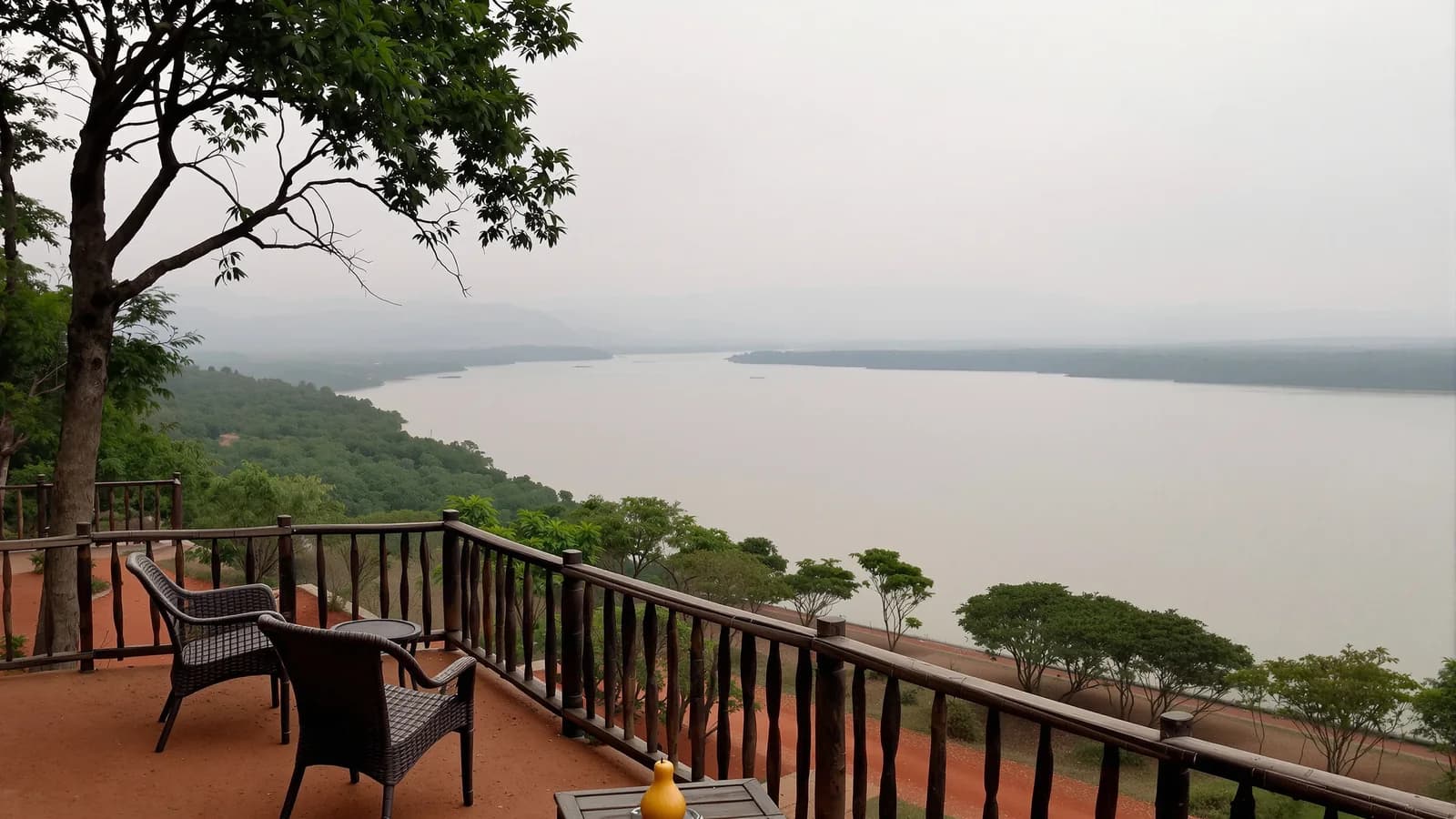

Paraguay does not tax your pension, but that does not make it tax-free. A straight guide for retirees in 2026: the new residency route since Ley 6984, the tax your home country may still take, health cover in later life, real costs and the best places to live.
Among retirees looking abroad, Paraguay has become something of a well-kept secret, and unlike many hyped destinations, its reputation has real substance behind it. I have helped enough retirees move to Paraguay to tell you plainly why it works for many, and for whom it is the wrong choice. And because Paraguay's immigration law changed fundamentally in 2022, we will start by clearing away some outdated information.
Why Paraguay is so strong for retirees
Four things come together here, a rare combination. First, low costs: a pension from Europe, North America or Australia goes noticeably further in Paraguay than at home, and for many that is the difference between scraping by and living comfortably. Second, territorial tax: Paraguay only taxes income from Paraguayan sources, so your foreign pension stays outside its scope. Third, relaxed residency rules: no minimum income in the first stage, no 183-day requirement, and permanent residence only lapses after more than three years of unexcused absence. And fourth, the emotional factor for many, the established European communities, many of them German-speaking: from the colonies in Itapúa to clubs and doctors who speak German and often English, covered in detail in the article on the German and Mennonite colonies in Paraguay.
The residency route under the new migration law
First, the most important correction, because many blogs still describe the old procedure. Migration law Ley 6984/2022 rewrote the rules: the old direct permanent residence for retirees no longer exists, and the famous USD 5,000 bank deposit is history. Today the standard route, for retirees too, is temporary residence for two years, followed by conversion into permanent residence. Only at that conversion does the migration authority DNM ask for proof of means, and for retirees, since Resolución 407/2026, that specifically means an apostilled pension certificate stating the amount. The authority sets no fixed minimum; what matters is a documented, recurring income. For the temporary stage you mainly need your paperwork in order: an apostilled birth certificate and proof of civil status translated into Spanish, a police clearance certificate from home, and locally a police certificate and an Interpol clearance. The official fee is 25 daily wage units (jornales), a little over PYG 2.9 million per procedure as of July 2026. In practice, approval of temporary residence currently takes three to four months, the conversion to permanent three to six, and since early 2026 you should expect to wait three months or more for the cédula, the Paraguayan ID card, because the authority has every file checked directly with Interpol in the country of origin. The complete process is in the article on residency in Paraguay. And for your planning: temporary residence lapses after more than one year of unexcused absence, so enter the country at least once a year until your permanent card arrives.
Your pension and your home country: the full picture
Now to the point I always set straight. Paraguay does not tax your pension. That does not mean nobody does. Moving to Paraguay does not, on its own, end your tax residence at home. Whether your state pension, an occupational pension or a private annuity stays taxable at home, whether any personal allowance still applies, and whether a tax treaty with Paraguay helps, depends on where you come from:
In short: build the home side into your plan rather than wishing it away, because this is exactly what decides how much of your pension actually reaches you in Paraguay.
Health cover after 65: the hardest chapter
This is the point that decides whether the plan works at all. Do not count on your home country's public health cover following you to Paraguay; check what your country's rules say before you go, and assume you will need a private solution. That is where age becomes a factor. Local private insurers (prepagas) such as Asismed, Santa Clara or the in-house plans of the major clinics are affordable at roughly EUR 100 to 300 a month, but: several providers no longer accept new customers over 65 or 70, pre-existing conditions lead to exclusions or waiting periods of six to twelve months, and medication is often not covered even during hospital stays. International health insurers will accept you up to a later age, but for a couple between 60 and 70 it quickly costs USD 4,000 to 8,000 a year. The good news: paying out of pocket will not ruin you. A specialist appointment costs USD 30 to 100, an MRI USD 200 to 350, and in the colonies the Sanatorio Alemán in Obligado and the Sanatorio Adventista in Hohenau treat you at prices where emergency wound care comes to around EUR 40. For serious cases, heart, oncology, stroke, Asunción with hospitals such as Sanatorio Migone or Hospital Bautista remains the place to go. So the rule for retirees is: settle the insurance question before you firmly plan the move, and live close enough to good medicine. If you only start looking at seventy, you pay more or are turned down.
What retirement really costs
Let us talk 2026 numbers, because the cheap-living story of old blogs is now only half true. A frugal retired couple outside Asunción, for example in Encarnación or the colonies, gets by on USD 1,200 to 1,600 a month including rent. Living comfortably in Asunción, with a modern two-room flat in a good location (USD 650 to 950 rent), eating out, domestic help and private insurance, you are more likely looking at USD 2,000 to 2,800 for two people. Local food is cheap, beef costs around EUR 6 a kilo, while imported goods are expensive. Part-time domestic help costs USD 150 to 300 a month (the full minimum wage has been PYG 3,044,000 since July 2026). Two items eat into the savings: the health insurance from the last chapter and home security (wall, alarm, cameras), which is standard locally. And be realistic about the summer: at 38 to 42 degrees Celsius the air conditioning runs constantly, and after the blackouts of recent heatwaves (February 2026: at times more than 80% of households without power), a generator or backup power solution is a sensible purchase for older people.
The best places to live for retirees
So where should you move? Asunción and its upmarket neighbourhoods such as Villa Morra or Recoleta offer the best medical infrastructure in the country, ideal if healthcare is your priority. Encarnación in the south, with its riverside promenade on the Paraná, the mildest climate in the country and a good private clinic, is regarded as one of the most liveable cities in Paraguay and is often recommended specifically for retirees. San Bernardino and Areguá on Lake Ypacaraí are quiet, green towns with a long German tradition; San Bernardino, however, turns into a party hotspot in summer and is very quiet in winter. The Colonias Unidas around Hohenau, Obligado and Bella Vista in Itapúa are the German-speaking hub par excellence: clubs, bakeries, church congregations, German-speaking doctors and two established private clinics on the spot. Independencia in the Guairá department has the same colony charm, but thin medical care. And the Mennonite colonies in the Chaco around Filadelfia and Loma Plata do have good colony hospitals, but a semi-arid climate with peaks around 44 degrees, which I frankly do not recommend to retirees who struggle with heat. The basic rule remains: close enough to good medicine, far enough from the hustle. How safe the individual regions are is covered in the honest Paraguay safety check.
Pension transfers, bank accounts, CRS
Check with your pension payer whether it pays directly to Paraguay or only to an account at home. The usual set-up: the pension keeps landing in an account at home, you bring the money over by Wise or bank transfer, and you open a local account at your leisure once you have your cédula. Markets, tradespeople and small shops want guaraníes in cash. Then there is transparency: Paraguay currently does not exchange account data automatically, but has committed to the OECD to a first automatic exchange by 2028. That changes nothing about the territorial principle or the untaxed foreign pension, only about the myth of the "invisible" account. More on what Paraguay can and cannot do for you on tax is in the reality check on Paraguay as a tax residence.
The route to retiree residency, step by step
This is how it works in practice. First, prepare your documents before you fly: an apostilled birth certificate with a certified Spanish translation, proof of civil status where applicable, a police clearance certificate, and the pension certificate stating the amount, which you will need for the later conversion anyway. Second, enter the country and apply to the DNM for temporary residence; while the procedure runs, you are already legally in the country as a "residente precario". Third, apply for the cédula and, if you want to be able to act for tax purposes, the RUC tax number, and plan the waiting time realistically. Fourth, activate your health insurance and choose a place to live within reach of good medicine. Fifth, after two years, file the conversion to permanent residence, with the pension certificate as proof of means. If you file complete paperwork, you avoid the rounds of follow-up requests that cost many applicants months. A note for the self-employed and business owners without a conventional pension: how your own company can provide a lifelong company pension, documented by attorneys, is explained on our page on the pension plan LLC; whether a residency programme recognises it is checked country by country before you order.
The most common mistakes retirees make
I see four stumbling blocks again and again. First, treating your home pension as "automatically tax-free", which is the most expensive misconception. Second, planning according to outdated guides: if you still assume the USD 5,000 deposit and direct permanent residence, you are planning a procedure that has not existed since 2022. Third, tackling the health question too late. Fourth, living too remotely out of a romantic idea of saving money: a country house deep in the Chaco is idyllic until the first medical emergency. All four can be avoided with careful planning, because retiring abroad is not about the prettiest brochure, it is about numbers that hold up.
Arriving and everyday life
What many underestimate is the human side. Paraguay is warm-hearted and slow at the same time, and if you come from a tightly scheduled life in Europe or North America, it takes a few months before the new life feels normal. This is where community helps: a club, a church congregation, neighbours who speak your language. You can read how others have fared, ups and downs included, in the honest experiences of living in Paraguay. And a little Spanish, brought with you or learned locally, opens the country up completely.
Who it suits, and who it does not
So, the bottom line. Paraguay is strong for the retiree who wants low costs, an untaxed foreign pension and an established community, and who is prepared to live close to good medicine and be patient with bureaucracy. If you expect top medical care around the corner, effortless authorities and Western European comfort, you are in the wrong place. The well-kept secret works, but for a particular type of person, and being clear about that spares you a nasty surprise.
This fit is exactly what I check with my clients: does the pension still add up after what your home country takes, is the health question solved, is the place to live chosen wisely. Only when all of that is settled does the secret become a good retirement.
If you are a retiree thinking about Paraguay, let us check properly whether it suits you, pension, health and costs included. Book a conversation with me; you will find the link right below.
The complete overview of moving to Paraguay, not only for retirees, is in the honest complete guide.
👉 Book a consultation with Harley
Carpe Diem. Life is short and fleeting. One shot. Make it count.