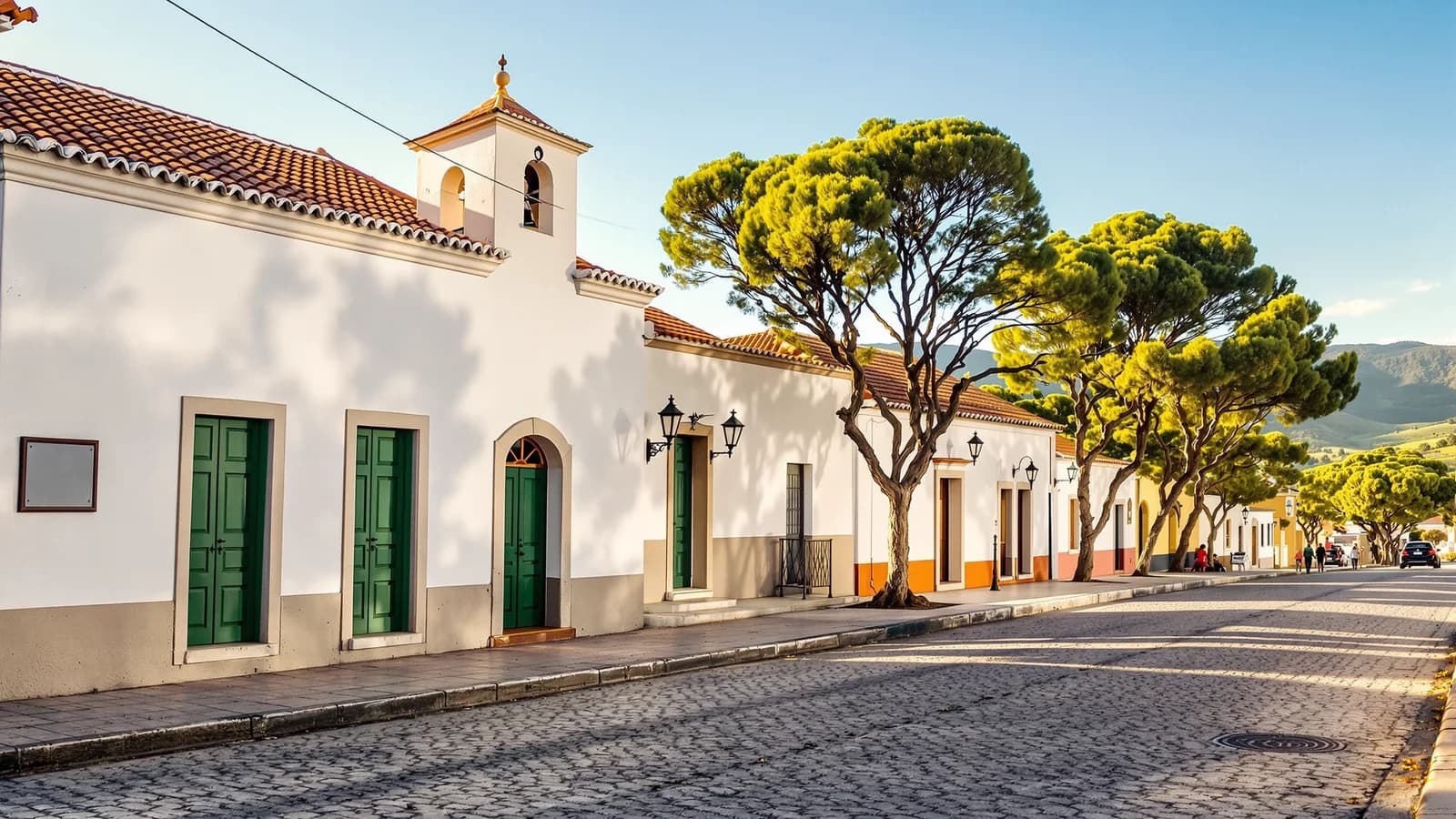

The German and Swiss story in Uruguay is quieter than in the big neighbouring countries, but it has real charm. Uruguay is not Argentina with its alpine villages, nor Paraguay with its vast Mennonite colonies: the German-speaking imprint here is smaller, finer and strongly Swiss in colour. But it is real, it is old, and it has solid anchors in Nueva Helvecia, the German congregation in Montevideo and a growing modern community. I put the picture in context here, using the facts that are available, without inventing numbers and without romanticising the heritage. Anyone weighing a move to the "Switzerland of South America" wants to know where this heritage is still tangible and how much of it is alive today.
How German is Uruguay really?
Let me say it plainly, and early: Uruguay has no mass German-speaking presence like Argentina, Brazil or Paraguay. The country is small, with around three and a half million people, and its immigration was overwhelmingly Spanish and Italian. The German-speaking thread is therefore a fine vein rather than a broad foundation, but one with a special character, because it was carried largely by German-speaking Swiss, with Germans and Austrians alongside them.
The numbers call for caution, and I deliberately avoid false precision. There are the historic descendants of the nineteenth-century colonists, whose German has often faded; there is the institutional community around the school and church in Montevideo; and there is the small but growing modern newcomer scene that values Uruguay's stability. If you are looking for this heritage, you will find it, but you should not expect a German-speaking environment everywhere. The clear-eyed overall assessment of the country is in the Uruguay reality check.
Historically, Uruguay was one of the countries that actively recruited European colonists in the nineteenth century to develop a thinly populated agricultural land. Alongside the great Spanish and Italian flows came smaller but formative groups from German-speaking Europe and the Protestant Alpine valleys, who settled mainly in the fertile region west of Montevideo. This origin explains why Uruguay's German-speaking heritage has such an agricultural, Swiss character: these were farmers and cheesemakers, not industrialists, and their legacy still lies more in the fields and dairies than in the cities.
Nueva Helvecia: the Swiss colony and its German-speaking heritage
The heart of this heritage lies in the department of Colonia, around 120 kilometres west of Montevideo: Nueva Helvecia, founded on 25 April 1862 and originally simply called "Colonia Suiza". The first settlers reached the shore of the Río de la Plata in 1861, and in the founding years the overwhelming majority were German-speaking Swiss, joined in smaller numbers by Germans, Austrians and French. The name, "New Helvetia", still carries the Swiss origin on the town sign today.
The beginnings were hard: drought, floods, plagues of locusts and gruelling fieldwork took their toll. But the colonists brought new techniques and agricultural know-how and soon made Nueva Helvecia a centre of dairy farming and cheese production, which became its economic foundation and helped establish Uruguay's reputation as a dairy country. The town still cultivates its heritage visibly, celebrates the Swiss National Day on 1 August and carries the nickname "the Switzerland of Uruguay". If you want to dig deeper into the colony's history, the town portal of Nueva Helvecia is the place to start.
Nueva Helvecia does not stand alone: the surrounding Colonia region is a whole mosaic of European foundations, including neighbouring Colonia Valdense, which goes back to Protestant Waldensians from the Italian-French Alpine valleys. Not every one of these colonies is German-speaking, and it would be wrong to lump them together, but together they form a landscape in which European heritage, order and farming still shape the region. For anyone moving today, Nueva Helvecia is less a closed language world than a living monument: an attractive, safe place to live or visit for those who want quiet, landscape and a European sense of order, set in one of the oldest colonial regions of the country around the UNESCO World Heritage town of Colonia del Sacramento.
The German congregation and school in Montevideo
The second great anchor is the capital, Montevideo, and here the community is at its most institutionally tangible. Its core is old: as early as 3 September 1857, the German Protestant congregation of Montevideo founded its own school for the children of the German merchants, craftsmen, engineers and diplomats living in the city. That congregation school became today's Deutsche Schule Montevideo, the Colegio y Liceo Alemán, run by the non-profit German School Association.
For international families this matters a great deal: the school runs from kindergarten through primary to secondary level, teaches on two campuses in Pocitos and Carrasco, and since 2019 has held the "Excellent German School Abroad" quality seal. A child can complete a bilingual school career here and grow into Uruguayan life at the same time, a combination that few cities in South America offer at this level.
Around the congregation and school you find the usual bridge institutions of an international community, from the Protestant congregation to club life, cultural exchange and language courses. This density is remarkable for such a small country: newcomers from Europe find doctors, lawyers and contacts used to international clients, cultural life and a social network that eases the first months, when language and bureaucracy are still unfamiliar. And unlike a sealed-off colony, this network sits in the middle of an open-minded capital, which eases the start without isolating anyone from Uruguayan society.
Montevideo, Punta del Este and Colonia: where newcomers live today
So where do people moving to Uruguay today actually settle? Most live in or around Montevideo, the country's only true metropolis, with the widest range of schools, doctors, culture and international connections, and with the popular coastal neighbourhoods of Pocitos and Carrasco, where the German school also has its roots. For anyone who wants to combine urban life with the beach and safety, Montevideo is the obvious first choice.
The second magnet is Punta del Este, the glamorous resort on the Atlantic coast, which attracts wealthy newcomers, retirees and investors from around the world and becomes an international stage in the southern summer. If you want luxury, marinas and a cosmopolitan crowd, you will find them here, but you pay the highest prices in the country. The third, quieter pole is the Colonia region in the west, around Colonia del Sacramento and Nueva Helvecia itself, where history, landscape and proximity to Buenos Aires (just a ferry ride across the Río de la Plata) add up to a slower way of life of its own.
In practice, choosing between these poles is a question of lifestyle. Montevideo offers the densest network of schools, doctors and international contacts and suits families best, along with anyone who needs urban infrastructure. Punta del Este is worthwhile for those who bring capital and want an international, upmarket setting, but because of the seasonal swings and the prices it is less suited to a down-to-earth permanent home. The Colonia region, finally, is the place for those who put quiet, safety and historic charm above urban variety and want to be close to this chapter of the country's history. How the residency process works in practice is covered in the Uruguay residency guide, and the security situation, one of Uruguay's real trump cards, in the Uruguay safety reality check.
Swiss and German traces in everyday life
Beyond the colony and the institutions, the German-speaking immigrants shaped everyday life in Uruguay, often without anyone noticing. The clearest trace is in dairy and cheese: Uruguay's reputation as a dairy country, its cheese tradition and the orderly farming of the Colonia region owe a great deal to the Swiss and German colonists who brought their know-how with them. When you eat good cheese in Uruguay, you are eating a piece of Nueva Helvecia.
The heritage is also visible in the architecture and town layout of the colonial region, in club life and festivals, and in a Protestant influence that sets its own accent in a country that is mostly Catholic and strongly secular. Uruguay's beer and baking traditions also carry Central European features, and in and around Nueva Helvecia there are still businesses whose roots go back to the Swiss and German founding families.
Unlike Argentina, where the German heritage has condensed into tourist backdrops, in Uruguay it is quietly woven in: less postcard, more lived national culture, which many Uruguayans no longer see as "Swiss" or "German" because it has long become part of their own identity. That is exactly what makes tracing it so rewarding: it does not lead to a parallel world but to a deeply rooted layer of Uruguayan society, recognisable above all in the quality of the dairy products, in place names and in the calm order of the Colonia region.
Why Uruguay is drawing people again
Beyond the historic heritage, there is a very present-day reason why Uruguay is back near the top of the list for people from Europe and North America: stability. Uruguay is considered one of the most solid democracies in Latin America, with stable institutions, low corruption and a very good security situation by regional standards, which is why it is often called "the Switzerland of South America". For anyone looking for calm, legal certainty and a European-style sense of order, that is a strong argument.
Then there is the tax incentive. Uruguay grants new residents an eleven-year tax window (a "tax holiday" arrangement) on foreign investment income, since Ley 20.446 including foreign rental income and capital gains, but now only in return for more than 183 days of genuine presence a year or an investment running into the millions. Once the window ends, five years follow at the half rate of 6%, and after that the full 12%; for individual cases we check this against the ruling practice of the DGI, the Uruguayan tax authority. Anyone who became resident before 2026 and exercised the option keeps their old window for its full remaining term. At its core Uruguay taxes on a source basis, but residents' foreign investment income is taxable, which is exactly why the tax holiday matters. What remains for whom is a question of structure and of the latest reforms, which the overview of the Uruguay tax reform and the PwC tax summary for Uruguay break down in plain terms. One important point of context: Uruguay is not a zero-tax paradise but a country of stability and quality of life with attractive but limited tax advantages.
A third reason is quality of life itself. Uruguay offers well-developed healthcare, good infrastructure by regional standards, clean beaches and a relaxed, safe everyday culture that many newcomers describe as "European with South American warmth". This modern community is small but active, and it grows where safety, stability and a familiar way of life come together: in Montevideo, in Punta del Este and increasingly in the quiet Colonia region. How Uruguay measures up against the region's other stable country is shown in the comparison Uruguay vs Chile, and whether the country as a whole suits you is weighed up in the complete guide to moving to Uruguay.
If you are considering Uruguay
For anyone weighing the move today, the picture is clear. The German-speaking heritage in Uruguay is smaller than in the neighbouring countries, but of high quality: a living historic legacy in Nueva Helvecia, a dependable institutional anchor in the congregation and school in Montevideo, and in Montevideo, Punta del Este and Colonia, clear places where newcomers feel at home. Unlike in Paraguay or Argentina, you do not find the connection here in large colonies but in a compact, well-organised network that makes the start easier.
Uruguay therefore suits people who put stability and calm above tax savings and thrills: families who value an international bilingual school and a safe environment, retirees looking for an orderly, European-feeling life, and wealthy individuals who want a dependable second home in a solid democracy. It is less suited to those looking for a cheap zero-tax base in the style of Paraguay, or who need the cultural variety and pace of a city of millions, because Uruguay is small, quiet and, measured against its neighbours, rather expensive.
That does not mean you can get by without Spanish or should live in a closed world of your own. The community is a bridge, not a parallel society, and Uruguay's real trump cards, safety, stability and quality of life, only open up to those who integrate into the country. For practical preparation, official travel advice such as the UK Foreign Office page on Uruguay is a good first stop. How Uruguay compares with the region's two other destinations of German heritage is shown in the companion articles on the German and Mennonite colonies of Paraguay and German heritage in Argentina, and the full route is described in the Uruguay guide. The country overview is on the Uruguay country page.
If Uruguay is on your list and you want to know how the community, residency and tax fit your own situation, let us go through it calmly together. Book a call with me; the link is right below.
👉 Book a consultation with Harley
Carpe Diem. Life is short and fleeting. One shot. Make it count.