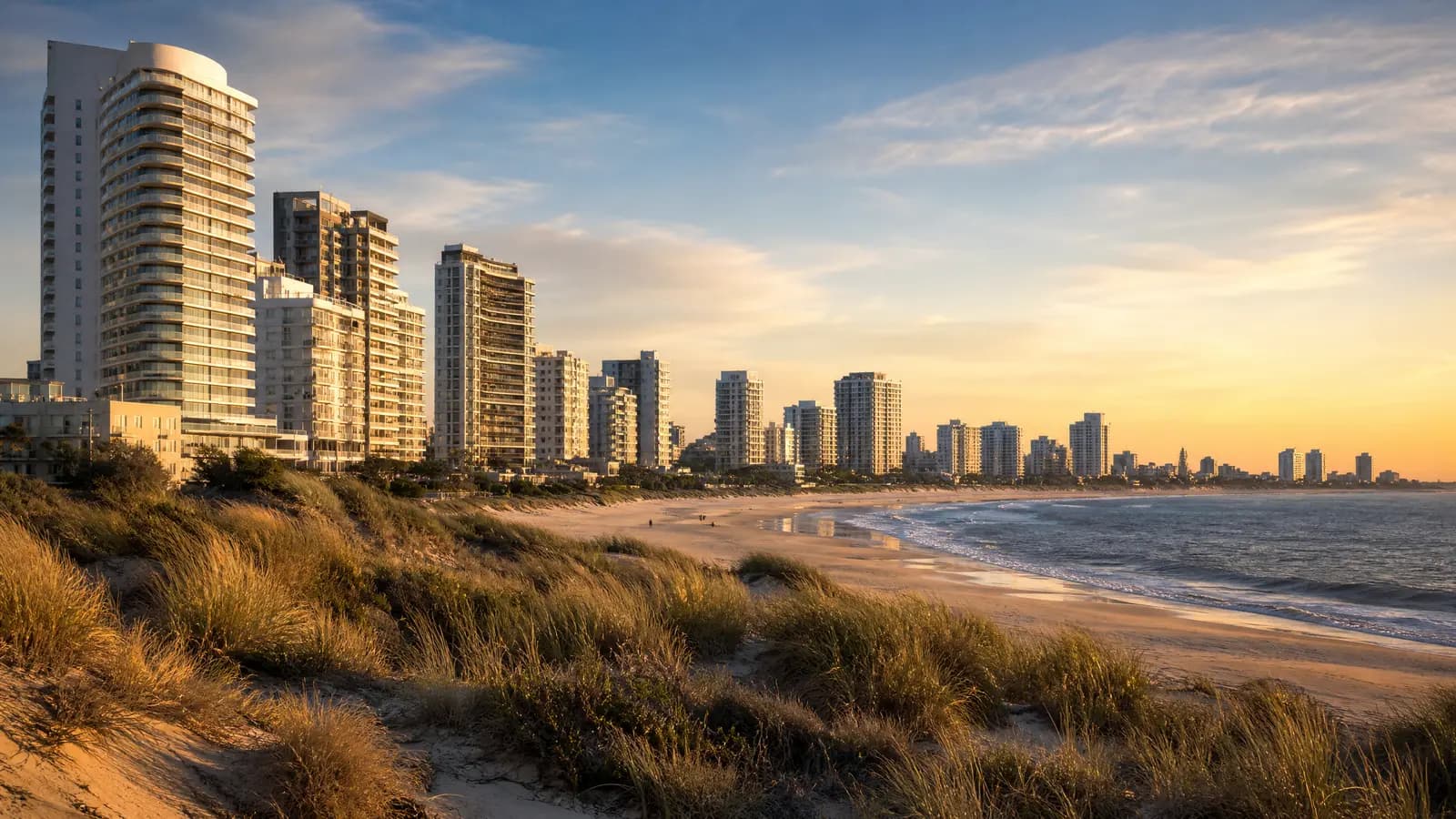

In October 2025 the Cipriani group in Punta del Este sold a penthouse for USD 17.1 million to a European buyer. The project behind it, the Cipriani Ocean Resort, Residences & Casino on the site of the legendary Hotel San Rafael, is the largest investment in the city's history at around USD 600 million, designed by the Uruguayan star architect Rafael Viñoly, with South America's second-tallest tower. In the first half of 2025 alone, the Punta del Este property market turned over more than USD 1.17 billion.
I lead with these numbers on purpose, because they tell you two things at once. First: Uruguay is the most mature and safest property market in Latin America; real international capital flows here because buyers trust the legal framework. Second, and this is the real lesson for you: the traps in Uruguay look completely different from those in Paraguay. There, you lose your money to fraudsters without a registered title, to land that never belonged to the seller. Here, you lose it more subtly: by buying the wrong thing at the wrong price in the January summer frenzy, underestimating the annual taxes, or watching your letting plans crash against the reality of the building rules. I will show you both: why buying here is safer than almost anywhere else in the region, and where the expensive mistakes still lurk.
The good news: the safest purchase on the continent
As a foreigner in Uruguay you have exactly the same property rights as a Uruguayan. All you need is a valid passport: no residence, no special permit, and you can acquire urban and rural property in your own name, even remotely by power of attorney. The whole market runs in US dollars, which makes the currency risk easy to plan for, whether you hold dollars or euros. Only farmland comes with two small rules: it must be held by individuals or by companies with named owners, and areas over 500 hectares must first be offered to the state settlement institute INC. For the typical buyer of a home or holiday property, these are not relevant hurdles.
At the heart of this security is the escribano, the Uruguayan notary, who acts for you as your representative and is liable to you. He checks the chain of title over the last 30 years; every property has a unique padrón number in the public registry, and charges and mortgages can be inspected in full. The process is standardised and buyer-friendly: verbal agreement, a boleto de reserva with a deposit of around 10% into an escrow account, 30 to 45 days of title and tax checks, then the escritura with the balance and registration. The crucial difference from Paraguay: the title check takes place after the reservation, and if legal defects are found, the contract is dissolved without penalty and you get your deposit back. Double sales and phantom titles, the Paraguayan drama, are practically a non-issue here, because the registry works and the escribano is personally liable.
What buying costs: allow 8 to 9% on top
Closing costs are the first point newcomers underestimate. The industry rule of thumb: around 8 to 9% on top of the purchase price. In detail: the escribano usually charges 3% plus 22% VAT, so 3.66%, plus stamp duty of 0.55% for registration and the ITP transfer tax of 2%, which buyer and seller share equally. The welcome relief: the ITP is calculated not on the market price but on the cadastral value, which is usually only 30 to 40% of the market price; on a USD 200,000 apartment that is often only a little over USD 1,200. The agent's commission of usually 3% plus tax is paid by the seller or by both sides, depending on the region. Financing is the weak spot: seller financing is rare, and the state mortgage bank finances foreigners at most half the price, on unattractive terms. Plan as a cash buyer as a matter of principle; anything else is the exception.
What owning costs: the taxes nobody budgets for
Uruguay has no single big property tax, but several small items that add up, and it is precisely that total newcomers underestimate. The municipal contribución inmobiliaria and the national impuesto de primaria together typically cost USD 400 to 1,000 a year for a USD 200,000 property, because they too are based on the low cadastral value. More serious is the impuesto al patrimonio, the wealth tax on Uruguayan assets: above an allowance, residents pay from 0.1%, but non-residents pay considerably more, which adds up noticeably with several or high-value properties and is why your residence status changes the calculation fundamentally. If you let the property, IRPF at 10.5% applies to the gross rent (for non-residents IRNR at 12%), and small lettings below a certain annual threshold are exempt. On sale, 12% tax on the inflation-adjusted gain is due. And the most important saving lever for investors: apartments under the Vivienda Promovida incentive programme (Ley 18.795) are exempt from contribución and income taxes for years, which transforms the net yield over the first decade. For every new build, check whether this status applies and how long it still runs, because it can decide whether an investment succeeds or disappoints.
Prices in 2026: the continent's most expensive market, on two levels
With average prices around USD 3,450 per square metre, Montevideo is the most expensive city in Latin America to buy in, with Pocitos, Punta Carretas and Carrasco correspondingly above that. In Punta del Este the average is around USD 4,000, premium new builds reach USD 7,000 to 10,000 per square metre, and beach villas trade between USD 7 million and 20 million. This is driven by Argentine and Brazilian capital, increasingly by North Americans and Europeans, and by a real structural shift: the Maldonado region has gained around 15,000 new permanent residents since the pandemic, and with a World Trade Center free zone and international schools Punta del Este is turning from a summer town into a year-round city. For yield hunters, the frank answer is this: you buy Uruguay for capital preservation, legal certainty and moderate 3 to 7% appreciation, not for the double-digit rental yields promised to you elsewhere, because the market is too mature and the annual tax burden too real for that.
The traps that really cost money here
Now for the part the agent leaves out in the January sun. Trap one: the January purchase. The most regretted mistake in Punta del Este is well documented: buyers fall in love in high summer at 30 degrees under a blue sky and discover in July a windy, damp, poorly insulated house with inadequate heating that is hard to live in during winter and hard to resell. View in winter or bring in a building surveyor, and check insulation and heating as you would in Scandinavia. Trap two: the Airbnb illusion. Many buy with letting plans and only afterwards read the reglamento de copropiedad of their building, which can restrict or completely ban short-term letting, whatever the national tourism law allows. Trap three: dual agency. In Uruguay the same agent often represents buyer and seller at once, with the obvious conflict of interest; get your own agent and always your own independent escribano, not the seller's. Trap four: the running costs. Gastos comunes of USD 70 to over USD 250 a month in towers with pool, concierge and spa, plus the wealth tax for non-residents, quickly eat into projected yields. Trap five: the tax mix-up. Since the 2026 reform, a property only gets you access to the tax holiday from an investment of around USD 2 million; the old 60-day route through a USD 590,000 property is history. Anyone who buys a mid-range apartment and believes this automatically makes them a tax resident with a holiday is relying on a rule that no longer exists. The details are in my article on the 2026 tax reform.
Where to buy: the three Uruguays of the property market
When choosing a region, you should know that the market splits into three worlds. Montevideo is the year-round market for living and stable letting: the coastal strip from Pocitos through Punta Carretas to Carrasco offers value stability, good rental demand from diplomats, managers and wealthy Uruguayans, and the shortest routes to clinics, schools and authorities. Punta del Este and the Maldonado coast are the lifestyle and investment market, high-priced, glamorous, but seasonal: in January demand explodes, in winter much stands empty, which is why winter usability and the reglamento question matter especially here. Colonia, Carmelo and the interior are the quiet, cheaper alternative for those who want peace rather than glamour, often with country houses, vineyards (Uruguay has a serious Tannat wine culture) and views across the river towards Buenos Aires. If you are still undecided, rent for a season before you buy, because the three Uruguays feel completely different in daily life, and the wrong choice between summer glamour and winter reality is the most expensive one this market has to offer.
How to buy right: the checklist
First, your own escribano, your own agent: no dual agency, no friendly referral from the seller, but advisers who are liable to you. Second, a winter viewing or at least a building surveyor, with an eye on damp, wind, heating and the fabric of the building. Third, read the reglamento, gastos comunes and Vivienda Promovida status before the reserva, not after, because these three documents decide usability, running costs and tax burden. Fourth, work out the total cost: purchase price plus 8 to 9% closing costs, plus annual property and income taxes and common charges, plus wealth tax depending on residence status. Fifth, tax logic first: whether you buy as a resident, a non-resident or a future tax holiday candidate changes the calculation fundamentally, and getting the order right (structure first, then region, then property) makes all the difference between an investment and an expensive souvenir with a sea view. What your home country makes of your move and of the property is a separate question:
This is exactly the order I set up with my clients: first the residence and tax structure, then the region, then the specific property, with independent people on the ground who earn nothing from the sale and whose only interest is your success.
If you want to buy in Uruguay, let us talk about structure, region and the right advisers before you sign a boleto. Book a call with me; the link is right below.
👉 Book a consultation with Harley
Carpe Diem. Life is short and fleeting. One shot. Make it count.