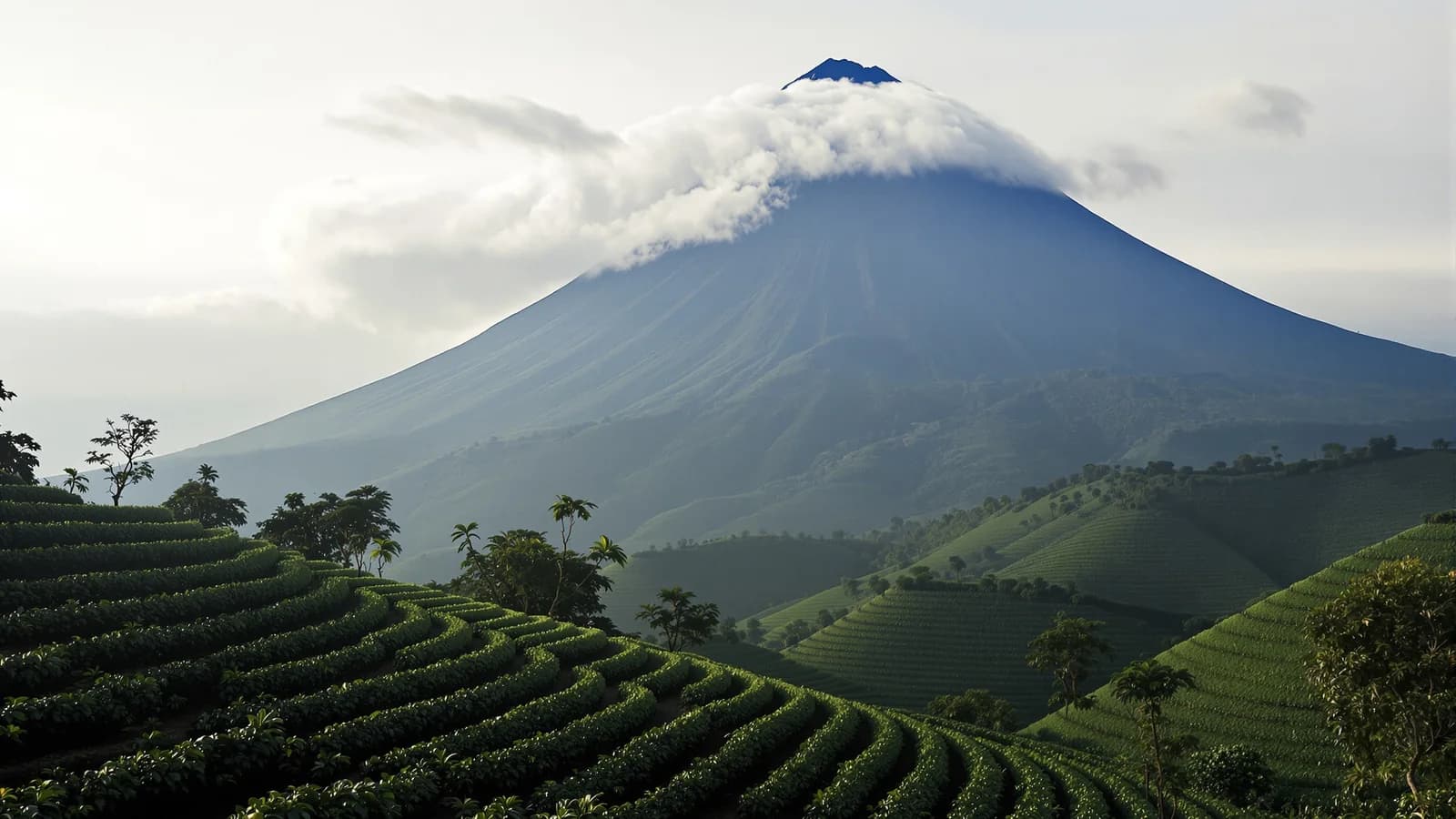

El Salvador may be the fastest-changing destination in Latin America. Only a few years ago it was decried as the most dangerous country in the world; today it is one of the safest in the region and is positioning itself as a dollar-based, tax-friendly and crypto-friendly destination. I am not here to sell you anything, and my honest verdict is this: for the right kind of expat, El Salvador offers an exceptionally attractive overall package, but it remains a developing country with real downsides and a political trajectory you should understand.
El Salvador uses the US dollar as its official currency, has had a tax-friendly regime for foreign income since 2024, low living costs and a dramatically improved security situation. At the same time it is a small, poor country with weak infrastructure, a long journey from Europe and an authoritarian government whose security turnaround was bought with substantial restrictions on fundamental rights. A fair assessment has to weigh both sides. With around 6.3 million inhabitants, El Salvador is the smallest and at the same time the most densely populated country in Central America, lying on the Pacific coast between Guatemala and Honduras and shaped by volcanoes, coffee plantations and beaches. After decades of civil war, gang violence and natural disasters, it is undergoing a profound transformation under President Bukele, and in this guide I give you a straight view of its opportunities and risks.
The US dollar and the Bitcoin U-turn
Let's start with the currency. El Salvador has been dollarised since 2001 and uses the US dollar as legal tender. For expats that means no exchange rate risk against the dollar, no devaluation worries and stable financial planning, an advantage that only a few countries in Latin America share, such as Ecuador and Panama.
The country became famous in 2021 as the first in the world to make Bitcoin legal tender. That story has since been toned down: under pressure from the International Monetary Fund, which made the reversal a condition of a loan worth more than a billion dollars, Bitcoin's mandatory status was lifted in early 2025. Bitcoin is now voluntary, no longer a mandatory means of payment. In hotspots such as Surf City and El Zonte, though, the voluntary Bitcoin economy lives on: many businesses accept payments over the Lightning Network, and the government continues to hold Bitcoin reserves. For crypto-minded expats El Salvador therefore remains a particularly friendly environment, without you having to give up the dollar. A concrete advantage over other crypto-friendly countries is that El Salvador has hardly any surveillance or reporting obligations for wallets: nobody forces you to register your cold wallets with the state or to provide complete proof of origin for every transaction. In hotspots like Surf City you can in practice pay rent, a hire car, the electricity bill or the weekly shop over Lightning, with no traditional bank account at all. This combination of a stable dollar and a voluntary, unbureaucratic crypto economy is rare.
The tax advantage since 2024
On tax, El Salvador changed fundamentally in 2024. A reform of the income tax law in March 2024 exempted foreign income from tax. Previously the local tax authority taxed certain foreign income of residents, such as dividends from foreign companies or interest from foreign accounts, which made the country unattractive for internationally mobile wealthy people. That trap is gone: if you live in El Salvador today but draw your income from abroad, for example from a pension, investment income or an online business with foreign clients, you no longer pay tax on that income there. El Salvador taxes only income from Salvadoran sources. For location-independent entrepreneurs who invoice through a US LLC or another foreign company, for crypto investors and for retirees with a foreign pension, the reform is a real turning point, because exactly this income now stays untaxed. For the typical expat who lives off foreign income, El Salvador became competitive on tax almost overnight, having previously been uninteresting precisely because it taxed foreign income. El Salvador also does not take part in the automatic exchange of financial account information (CRS).
What El Salvador does not tax is only half the picture. Living there does not, on its own, end your tax residence at home, and whether your home country keeps taxing your pension or investment income, and whether any treaty applies, depends on where you come from:
Cost of living: cheap, but it depends
El Salvador is affordable. A couple can live comfortably in a mid-sized town on around USD 800 to 1,000 a month, including rent, food and leisure. Local food, simple restaurants and public transport are very cheap; a bus ride often costs less than a dollar. The picture is more mixed for flats in good locations and on the booming coast: around Bukele's Surf City project near La Libertad there is a construction boom, and modern apartments there sell for several hundred thousand dollars. Imported goods and your own car are also expensive. Live locally and you get by cheaply; want a Western standard of consumption and a coastal location, and you pay considerably more. For realistic planning, bear in mind that prices in the booming coastal and capital locations are rising noticeably, partly because well-off foreigners push the level up, which some locals view critically. A modest lifestyle in a small town or in the highlands remains very affordable, though, and on an average Western European or North American pension you live considerably more comfortably in El Salvador than at home.
Regions: small, but varied
El Salvador is the smallest country in Central America, roughly the size of Wales or the US state of Massachusetts, so everywhere is reachable within a few hours. The capital San Salvador offers the most infrastructure, but expats mostly look to the upscale, safe suburbs such as Antiguo Cuscatlán and Santa Tecla. The second city, Santa Ana, impresses with colonial charm, a magnificent cathedral and the nearby Ilamatepec volcano. The Pacific coast around La Libertad, El Tunco and El Zonte is the centre of the surf and crypto scene, with a lively international crowd. And the Ruta de las Flores winds through picturesque coffee villages in the highlands. Add crater lakes such as Coatepeque and Ilopango and Maya ruins such as Tazumal. This variety in a small area is one of the country's great attractions. Because the country is so compact, you can have breakfast by a volcano and watch the sunset over the Pacific in the evening, and your choice of home does not tie you to one landscape. Most expats choose the safe, well-connected suburbs of the capital region or the up-and-coming coastal towns, while the highlands around the Ruta de las Flores and Santa Ana win people over with a mild climate and lower prices.
Climate and healthcare
The climate is tropical, warm all year, and milder and more pleasant in the highlands. The rainy season from May to October brings heavy rainfall. Healthcare is two-tier: private clinics in San Salvador offer a good, affordable standard, and a general medical check-up costs roughly USD 40 to 70, while public care and the rural regions are weaker. For expats, international health insurance is essential, because health cover from home usually does not pay out there. If you have a chronic illness, sort out your medication supply and sources before the move. An often overlooked point is long-term care in old age: there is no nursing care system comparable to those in Western Europe, but home care by local staff is affordable. The emergency number 911 works nationwide, and ambulances usually reach urban areas within 15 to 20 minutes, while in the countryside it can take considerably longer.
Residency, work and the crypto scene
For a long-term stay, the main options are the rentista visa, which requires a regular foreign income of about four times the local minimum wage, and the investor visa through a local company or property. A 2026 immigration reform cut the presence requirement for temporary residence to just 90 days a year (Decreto Legislativo 531/2026, in force since 31 March 2026), which makes El Salvador a flexible winter base. Holders of rentista or pensionado residence may be absent for no more than six months a year, and permanent residents can be away for up to two years. Naturalisation is possible after five years of temporary and permanent residence combined, and you need permanent residence when you apply. The details are in my guide to El Salvador residency. Building a local salary, on the other hand, is not very promising, as wages are low and the minimum wage is a few hundred dollars. For location-independent entrepreneurs and crypto investors, however, the environment is very friendly, precisely because there are hardly any surveillance or reporting obligations for wallets. Another much-discussed route is the so-called Freedom Visa, a programme intended to open a fast track to residence and eventually citizenship in exchange for a larger investment, mainly in Bitcoin, and which positions the country deliberately as a magnet for wealthy crypto investors. There is no official source yet for its exact conditions, so treat any figures you read online with caution.
Family, homeschooling and pets
For families, Spanish is the key; English is rarely spoken outside tourist areas. Homeschooling and unschooling are possible under certain conditions, and many expat families use flexible schooling arrangements. International and private schools are concentrated in the capital region. Bringing pets is feasible but requires a health certificate, proof of vaccinations and paperwork that you should prepare early.
The downsides, honestly
I would rather spell out what really gets in the way. El Salvador is a poor developing country with large social contrasts, high public debt and an economy heavily dependent on remittances. Infrastructure is weak outside the centres, and roads are often in poor condition. The journey from Europe is long and expensive, and the only nonstop flights from Europe are from Madrid (among others with Avianca and Iberia). The language barrier is high without Spanish. Natural hazards are real: earthquakes, volcanoes and heavy rains. And the political situation is ambivalent: the impressive security turnaround was achieved under a state of emergency that suspends numerous fundamental rights, which human rights organisations view critically. If you know these points, you can make an informed decision; the full list of pros and cons is in the El Salvador reality check, and the security picture in safety in El Salvador. On top of that, El Salvador has the lowest economic growth and the lowest foreign investment among the Central American countries, even though tourism is picking up noticeably thanks to the new security. For expats who draw their income from abroad anyway, the weak domestic economy matters less; for anyone who wants to build something locally, it is very much a factor.
Who El Salvador is right for
El Salvador is a particularly good fit for location-independent entrepreneurs, crypto investors and the financially independent, who benefit from the dollar, the tax exemption for foreign income and the new security, and who value the flexible 90-day rule. With the dollar and low costs, it is also interesting for retirees with a foreign pension. The country is less suitable for anyone who would depend on a local salary, who needs Western infrastructure and short trips back to Europe, or who cannot live with the authoritarian political direction. If, on the other hand, you are financially independent, are not afraid of the adventure of a country in upheaval and appreciate the combination of dollar, tax exemption and new security, El Salvador offers you one of the most surprising and dynamic destinations in the region.
To diversify your banking beyond El Salvador, our sister brand freedombanking.plus specialises in accounts abroad. If you want to build a realistic plan for your move, from choosing the visa through the tax exemption to the right region, let's talk before you take the first steps.
How daily life really feels is covered in what expats in El Salvador report.
👉 Book a consultation with Harley
Carpe Diem. Life is short and fleeting. One shot. Make it count.