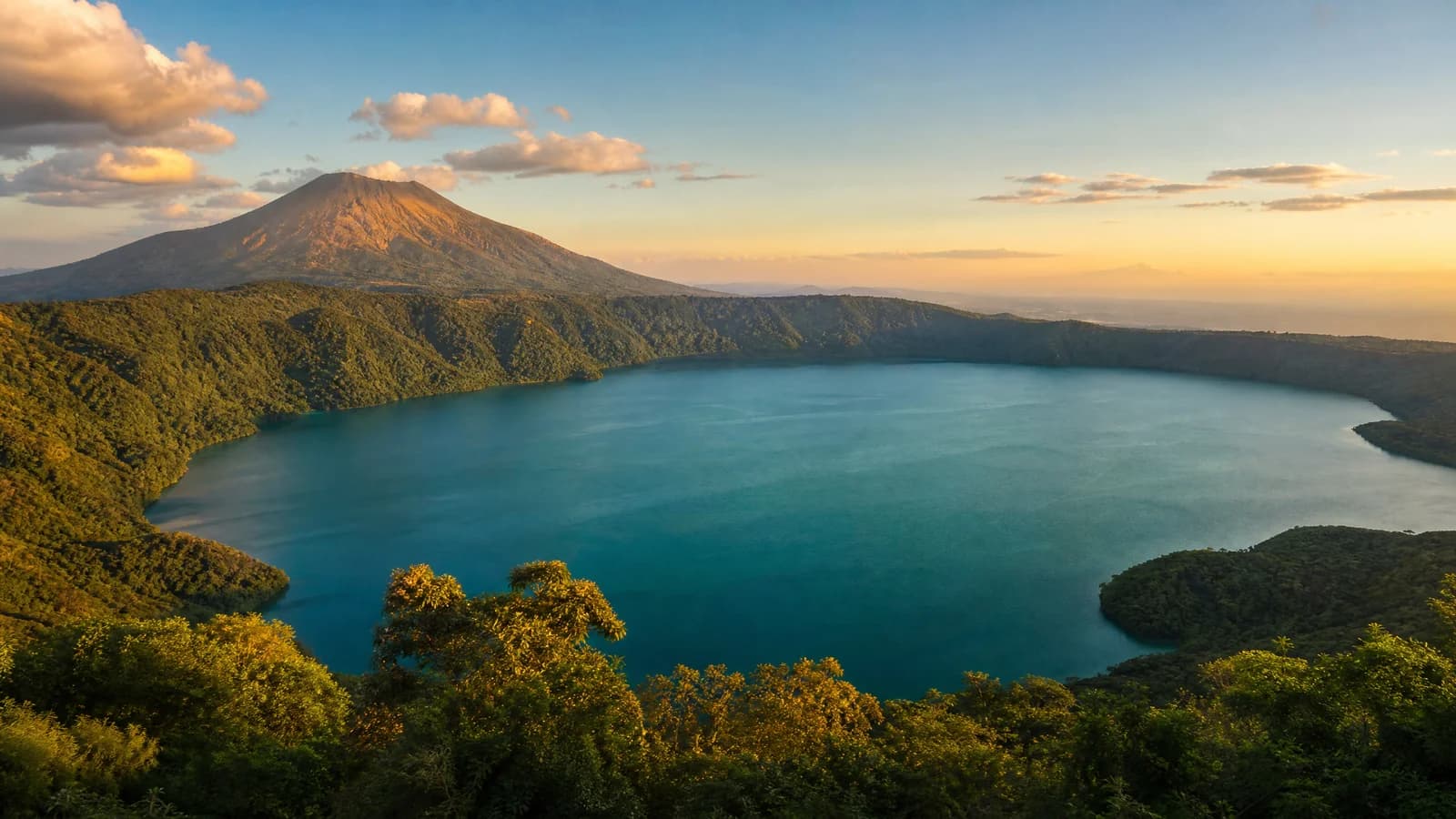

Territorial tax, the US dollar and the most spectacular security turnaround in the region. What El Salvador really offers in 2026, explained honestly, with all the advantages and all the catches.
Hardly any country has turned its image around as radically in so short a time as El Salvador. Only a few years ago this small Central American country was considered one of the most dangerous in the world, a byword for gang violence. Today entrepreneurs, investors and freedom seekers from all over the world come here, drawn by a combination that hardly exists anywhere else: territorial taxation, the US dollar as currency and a security turnaround without equal. Let us take a clear-eyed look at what is behind it and where the catches are, because no country is all sunshine.
Tax: territorial and lean
Let us start with what many people want to know first. El Salvador taxes territorially. Only income earned in the country is taxed, and your genuine foreign income stays tax-free, as the tax summaries confirm. On top of that: no wealth tax, no inheritance tax, and no capital gains tax on bitcoin gains. For the internationally mobile entrepreneur, retiree or investor living from foreign sources, that is a very attractive framework. Local tax rates on income earned in the country are moderate, but for anyone who lives only from foreign sources they are almost irrelevant, because that income simply stays outside the system. As everywhere, the separation matters: your tax freedom in the destination is no use if your home country still treats you as tax resident, so properly ending your old tax residence has to come at the start of any plan.
The dollar and the bitcoin story, told honestly
Some plain words first, because a lot of half-truths are going around. El Salvador has been dollarised since 2001; the US dollar is the currency in daily use, so there is no exchange rate risk. In 2021 the country was the first in the world to make bitcoin legal tender, but that story is more nuanced today: under the agreement with the International Monetary Fund at the end of 2024 and the change in the law in early 2025, accepting bitcoin became voluntary, the obligation to accept it was dropped, taxes can no longer be paid in bitcoin, and the state wallet Chivo was scaled back. El Salvador remains bitcoin-friendly and still holds a bitcoin reserve, but everyday life runs in dollars. If you come for the crypto-friendliness, you will find an open-minded environment, but you should know the plain reality: the dollar rules, bitcoin is an extra, not an obligation.
The security turnaround: the real sensation
This is the story that truly transformed El Salvador. Only a few years ago the country had one of the highest murder rates in the world, dominated by the notorious maras, the street gangs. Since the state of exception imposed in March 2022 and the government's hard line against the gangs, the murder rate has fallen dramatically, from one of the highest in the world to one of the lowest in the Western Hemisphere. Walk through San Salvador or the coastal towns today and you see a country that is hard to recognise. Where neighbourhoods were once no-go areas, people now go jogging in the evening, cafés open and an international community is growing. That is real and an enormous gain in quality of life. Honesty also means naming the other side: the state of exception comes with mass arrests, and human rights organisations criticise shortcomings in the rule of law. If you move to El Salvador, you should know both sides of this coin, the gain in security and the debate about the price at which it was bought.
President Bukele and the political situation
The country is shaped entirely by President Nayib Bukele, who was re-elected for a second term in early 2024 with around 85% of the vote and whose party clearly dominates the legislature. This concentration of power brings political stability and fast reforms, but it is also the point where observers push back, because the separation of powers and checks and balances are weakening. For someone moving there, it means a predictable, reform-minded environment that is, however, strongly tailored to one person. If you value stability and clear direction, you will find it here; if robust institutional counterweights matter to you, keep this in view.
Residence: now only 90 days
There is a recent change here that matters for anyone building a Plan B. With Decree 531, in effect since 31 March 2026, El Salvador cut the presence requirement for temporary residents from nine months to 90 calendar days a year, either in one block or spread out. That puts the country among the leading low-presence residence countries and makes it much more interesting for the internationally travelling entrepreneur. There is also the route via a bitcoin investment (historically three bitcoin or more) to permanent residence, and a high-priced investment programme for a fast passport. For most of my clients, the combination of territorial tax and the new 90-day rule is the real attraction. As everywhere: residence is one part, a properly settled tax residence the other, and the two have to be planned together.
Costs, daily life and infrastructure
On to daily life, because in the end this is where you live. El Salvador is inexpensive: the cost of living is well below European levels, and with the dollar as currency the budgeting is simple. The country is small, distances are short, the Pacific coast with its surf beaches attracts a growing international community, and the government is visibly investing in infrastructure and digitalisation. From the capital to the coast takes a little over an hour, a convenience that larger countries in the region do not offer. At the same time, El Salvador is not a fully equipped first-world country: the health system and infrastructure are solid but not at the level of Chile or Panama, and if you need the best medical care you plan private solutions or use the proximity of larger neighbours. It is a country on the move, with all the charm and all the rough edges that come with it.
Where in El Salvador?
So where to go? San Salvador, the capital, offers the most infrastructure, modern neighbourhoods and the best medical care, and neighbouring Santa Tecla is considered one of the most liveable, greenest residential areas. On the Pacific coast, La Libertad with its surf beaches is the centre of the international community, and the small town of El Zonte, known worldwide as Bitcoin Beach, embodies the country's crypto spirit like no other place. If you want urban comforts, stay in San Salvador or Santa Tecla; if you are after relaxed coastal life, go to the Costa del Bálsamo. The country is small enough for both to be close together, an advantage many only come to appreciate on the ground.
El Salvador compared with the region
Put El Salvador in its proper place. For tax it stands level with the region's territorial countries, much like Panama or Paraguay; foreign income stays tax-free in all three. What makes El Salvador special is the combination of the US dollar, the new 90-day rule and the momentum under Bukele. Compared with Panama it is cheaper and more crypto-friendly, but less established and institutionally weaker. Compared with Paraguay it brings the dollar and the coast; on naturalisation the two are level, at about five years each. It is not a replacement for the established destinations but a bold bet of its own on a country in transition. If you understand that bet, you will find something in El Salvador that no other country in the region offers in this form.
The advantages at a glance
El Salvador combines a rare mix of security, tax and flexibility that did not exist in this form a few years ago.
The full process is described in the guide to moving to El Salvador, and the country overview is on the El Salvador country page.
The disadvantages, looked at honestly
The flip side deserves just as clear a look, because El Salvador's strengths depend on conditions that can tip.
And as everywhere, your home side comes first: without a proper departure from home, the finest territorial tax system does not help (more on that below). How the country really feels day to day is shown in the experiences of people who moved there.
Who El Salvador is made for
El Salvador is the country for the committed freedom seeker who values territorial tax, dollar stability and the new 90-day flexibility, and who shares the spirit of a country reinventing itself. For the bitcoin-minded entrepreneur looking for an open-minded environment, and for anyone who appreciates the spectacular gain in security. It is less suited to those who put a fully equipped first-world setting and robust institutional counterweights above everything else, or who do not want to go along with the human rights debate around the state of exception. But if you are looking for an inexpensive, dollar-based, tax-free and now safe base in a reform-minded country, El Salvador is one of the most exciting destinations in the region.
Leaving home comes first
The same principle comes first in every plan I make. Before El Salvador's territorial tax can work for you, the home side of the move has to be in order. Moving to El Salvador does not, on its own, end your tax residence at home. Whether leaving triggers an exit tax on company shares, whether your home country keeps a claim on you for years afterwards, and whether a tax treaty helps all depend on where you come from:
No territorial system, however attractive, helps if the departure from a high-tax country has not been set up properly.
El Salvador, weighed honestly
El Salvador is one of the most fascinating countries in the region, precisely because it shows so much movement. The security turnaround is real, the territorial tax is real, and the dollar and the new 90-day rule are tangible advantages. At the same time, a fair assessment means seeing the shadows too: the debate about the state of exception, the power structure tailored to one person, the infrastructure still being built. If you look at both together and weigh them for yourself, you make a smart decision. That weighing-up, opportunities and catches side by side, is exactly what I go through with my clients before they commit.
If El Salvador appeals to you, let us check together whether the country really fits your life, your assets and your goals, and how your home side fits in properly. Book a conversation with me; the link is right below.
👉 Book a consultation with Harley
Carpe Diem. Life is short and fleeting. One shot. Make it count.