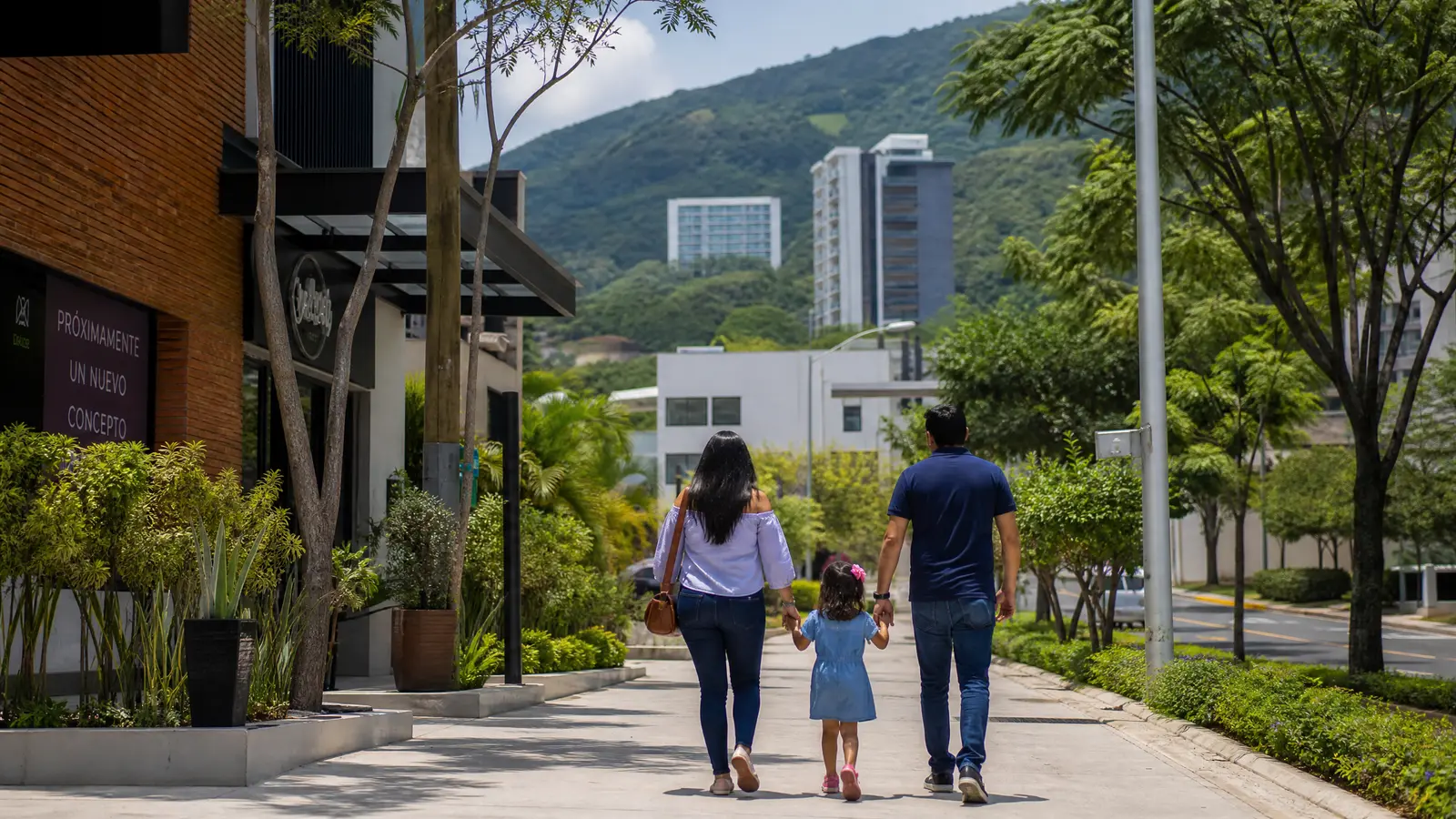

There is hardly a country where reputation and reality are as far apart as in El Salvador, only in the opposite direction to most. I'm a realist, not a salesman, and the honest version for 2026 is this: El Salvador has been through what may be the most dramatic security turnaround in the world and is today one of the safest countries in Latin America, but that turnaround was achieved under a state of exception that brings significant restrictions on fundamental rights. Unlike Ecuador, where I warn of an acute crisis, this is a genuine improvement with a political price tag. Both are part of the same story. So I'll go through safety in three steps: the impressive turnaround, its price in terms of the rule of law, and the remaining everyday and natural risks.
The turnaround: from murder capital to safest country
Keeping quiet would be dishonest, so the facts first. Only a few years ago El Salvador was considered one of the most dangerous countries in the world, ruled by the notorious youth gangs, the maras, which controlled whole neighbourhoods, extorted protection money and shaped the daily lives of millions with their violence. Since the state of exception was introduced in March 2022, the murder rate has fallen from over 100 to under 3 per 100,000 inhabitants, one of the lowest figures in the Americas. To achieve this, the government has arrested more than 75,000 suspected gang members and held them in large prisons. In daily life the change is noticeable: foreign residents report more police presence, less visible crime and a much stronger sense of safety, especially in cities such as San Salvador, Santa Tecla and Santa Ana. Public transport is now considered relatively safe in daytime. By international comparison this turnaround is unprecedented: hardly any country has reversed its security situation so radically in such a short time. Where tourists and foreign residents used to give the country a wide berth, an international community is now growing, and visitor numbers are rising noticeably. For your choice of location, what matters is that this improvement applies nationwide and is not limited to a few safe islands, as in some other countries.
The price: the state of exception and its consequences
As impressive as the figures are, the honest flip side matters just as much. The state of exception suspends numerous fundamental rights and has been extended again and again since 2022. Human rights organisations criticise the mass detentions, the lack of due process and the risk of arbitrary arrest. There are reports of cases in which uninvolved people were arrested without sufficient evidence, and of restricted defence rights for detainees. For the local population this is a real concern; for foreign residents in normal circumstances it is a rather abstract one, but any fair overall assessment has to include it. One concrete example newcomers should know: police often treat tattoos as a sign of gang membership, and simply having them can lead to a stop and search, so anyone with tattoos should keep them covered where possible. President Bukele, who has jokingly called himself the "coolest dictator in the world", is extremely popular at home because of the security turnaround and was re-elected in 2024, but his authoritarian style of leadership is controversial internationally. As a newcomer, you benefit from the new security, but you should be aware that it rests on a foundation that is questionable in terms of the rule of law. This ambivalence is characteristic of today's El Salvador: the overwhelming majority of the population supports Bukele's course because they experience the end of decades of gang rule as liberation, while international observers warn of the erosion of the separation of powers and fundamental rights. As a foreign resident you live within this tension, and you are well advised to stay out of politics, avoid demonstrations and follow the instructions of the security forces. Political stability is high at present, but its long-term development is hard to predict.
Everyday crime and precautions
Despite the turnaround, not every risk has disappeared. Petty crime such as pickpocketing and robbery still occurs, above all at markets, on public transport and in poorer neighbourhoods. Foreigners stand out by their appearance and can become targets. Even though organised violent crime has fallen massively, opportunistic crime does not disappear overnight, and the greatest risks are when carrying cash and wearing expensive items. The practical precautions are manageable and effective: avoid the poorer outlying districts and known problem neighbourhoods, carry only a little cash and no eye-catching jewellery, use licensed taxis or ride apps rather than basic buses, and avoid driving between cities after dark, also because of poor roads and the high risk of accidents. Many foreign residents choose gated communities in good neighbourhoods, which adds considerably to the sense of safety. One practical point concerns tattoos: because the police treat them as a possible identifying mark in the fight against the gangs, you should keep conspicuous tattoos covered in public to avoid unnecessary stops. As everywhere in the region, women are advised to take extra care after dark and with people they have only just met. In the upmarket suburbs and expat areas, daily life today is calm and relaxed. Care is also needed on the roads: many road surfaces are in poor condition, manhole covers are often missing, and a generally risky driving style makes traffic one of the more tangible dangers in daily life, which is why many foreign residents rely on their own vehicles or private drivers and avoid driving between cities at night. At the airport, use only the official, licensed taxis. These measures sound like a lot, but they quickly become habit and apply in much the same way to most countries in the region.
Natural hazards: the underestimated challenge
With crime less of a problem today, another risk moves to the foreground. El Salvador lies in a highly seismically active zone on the Pacific Ring of Fire. Earthquakes are a reality: statistically, severe quakes of magnitude 7 and above occur about every 38 years and quakes of magnitude 6 and above about every eleven years, and the capital has been badly hit by earthquakes and rebuilt several times in its history, most recently on a large scale in 2001. The frequent lighter tremors are part of daily life and take some getting used to for newcomers. The country has around 20 volcanoes, of which Chaparrastique near San Miguel, which last erupted in 2022, and Ilamatepec near Santa Ana are considered active. At around 2,381 metres, Ilamatepec is also the country's highest volcano and a popular hiking destination that should be taken seriously. When volcanic activity increases, zones are closed and warnings issued, and you should follow them without fail. Then there are the weather-related hazards: the storm season from June to November brings tropical storms, and the rainy season from May to October can trigger floods and landslides within a short time through heavy rain, severely damaging infrastructure across the country. A particularly underestimated risk is the dangerous undercurrents on the Pacific coast, which reach right up to the beach and lead to serious bathing accidents every year. Especially at the popular surf beaches, take the local current conditions seriously, don't swim too far from the shore and follow warnings, because drowning is among the more common causes of accidents among foreigners. So look for earthquake-resistant construction, familiarise yourself with emergency plans and evacuation routes, keep an emergency supply ready, and be very careful when swimming in the sea. The interaction between tectonic and volcanic processes further increases the seismic risk, which is why El Salvador counts among the most earthquake-prone countries in the region. The good news: modern buildings are designed to withstand earthquakes, and the country has monitoring and warning systems as well as a civil protection organisation. When buying or renting, it is worth looking at the year of construction, the building method and the location, because a plot on a steep slope or in a flood-prone hollow carries very different risks in the rainy season than a solidly built house in a stable location. Buildings and contents insurance that covers natural hazards is part of the basic kit in El Salvador.
Where foreign residents live safely
All of this adds up to a clear picture for choosing where to live. The upmarket suburbs of the capital region such as Antiguo Cuscatlán and Santa Tecla, as well as the city of Santa Ana, are considered safe and are popular with foreign residents, as are the established coastal towns of the surf and crypto scene. Anyone who avoids the poorer outlying districts, pays attention to the build quality and location of their property and follows the usual precautions lives more safely in El Salvador today than at any time in decades. Experience shows that integration works best in the urban centres around San Salvador, where you also find the largest international community and the best infrastructure. Also register with your embassy, or with your foreign ministry's traveller registration service where your country offers one, so that you can be reached quickly in the event of a severe earthquake or natural disaster. It also makes sense to connect with other foreign residents on the ground, because the growing international community readily shares experience about safe neighbourhoods, reliable tradespeople and local quirks. A personal emergency plan with important phone numbers, digital copies of your identity documents and fixed meeting points for your household rounds off your preparation.
In the end the verdict has two sides: El Salvador is genuinely safe today as far as violent and gang crime is concerned, and this turnaround is real and noticeable in daily life. At the same time it rests on a state of exception with questionable rule of law, and natural hazards remain the real long-term challenge. Anyone who weighs both carefully will find a country that has turned from problem child into perhaps the most surprising destination in Central America. For most newcomers, the new security clearly outweighs everything else in daily life, especially in the preferred residential areas, while the political judgement of Bukele's course remains a matter of personal conscience that everyone has to answer for themselves. One thing is certain: anyone who moves to El Salvador today experiences a different country from the one of five years ago.
If you want to know which region suits your situation and how to weigh safety, the political situation and natural hazards realistically, let's talk it through personally before you commit.
👉 Book a consultation with Harley
Carpe Diem. Life is short and fleeting. One shot. Make it count.