
Costa Rica is the dream destination among Latin America's relocation countries, and unlike some advertising promises, there is real substance behind its reputation. This small Central American country has had no army since 1948, is one of the most stable democracies on the continent, has been an OECD member since 2021 and generates almost all of its electricity from renewable sources. I am not here to sell you anything, so here is my honest take: Costa Rica offers one of the most attractive legal tax advantages in the region, combined with political stability and spectacular nature, but it is the most expensive country in Central America, and its bureaucracy is far slower than the relaxed pura vida facade suggests.
Costa Rica does not tax foreign income, is one of the safest and most stable countries in the region and offers an exceptional quality of life. At the same time, the cost of living is high by Central American standards, dealing with the authorities is slow, and the tropical climate brings heavy rainy seasons as well as sunshine. Any fair assessment has to weigh all of that. Costa Rica is small, with around 5.5 million people, counts as one of the happiest countries in the world and was the first country ever to be honoured by the United Nations for its environmental policy. The Ticos, as Costa Ricans call themselves, are known for their friendliness and their relaxed attitude to life, expressed in the national motto pura vida.
The tax advantage: the territorial principle
Let's start with what makes Costa Rica so interesting for retirees, entrepreneurs and investors. Costa Rica applies a genuine territorial principle: only income from Costa Rican sources is taxed, and foreign income stays tax-free, permanently, even if you live in the country full time. Your pension from abroad, your dividends from a US brokerage account, your capital gains and the income from an online business with customers outside Costa Rica all remain untaxed in Costa Rica. Unlike Chile's time-limited tax window, this is not a temporary privilege but a permanent principle of the tax system. For a retiree, that means transferring a foreign pension to Costa Rica triggers no additional tax in Costa Rica. Whether that pension stays taxable in the country that pays it depends on your home country and its rules:
For a location-independent entrepreneur whose customers are abroad, the profit likewise stays untaxed in Costa Rica. And for an investor, dividends, interest and capital gains from a foreign portfolio remain completely tax-free. It is exactly this combination that makes Costa Rica so attractive for retirees, remote entrepreneurs and investors from Europe, North America and beyond.
On top of that: Costa Rica has no wealth tax, no inheritance tax and no gift tax. Property tax is negligible at around 0.25% of the registered value, and VAT (IVA) is 13%. The flip side matters: income from Costa Rican sources is taxed, progressively up to a maximum of around 25% for individuals, and companies pay up to 30% corporate tax. So if you run a hotel in Costa Rica, provide services locally or rent out a Costa Rican property, you pay tax on that. For the typical newcomer, though, meaning retirees, location-independent entrepreneurs and investors with foreign income, the model is highly attractive. A note on the future: under EU pressure, Costa Rica occasionally discusses taxing the passive foreign income of shell companies, but for genuine residents as individuals the territorial principle has so far remained stable.
The visa system: pensionado, rentista and inversionista
Most Western passport holders can enter visa-free as tourists for up to 90 days. For a long-term stay there are three classic routes. The pensionado visa is the most popular route for retirees and requires proof of a lifelong monthly pension of at least USD 1,000, which often covers the spouse as well. The rentista visa is aimed at financially independent people who have not yet reached retirement age and requires a guaranteed monthly income of USD 2,500 over two years. The inversionista visa requires an investment in property, a business or projects; the USD 150,000 threshold under Law 9996 only applied until its window closed on 14 July 2026, and for new applications it is currently not clearly regulated, which is why we clarify it before you apply. There is also a visa for digital nomads, which requires private health insurance but no Caja membership.
One important point: with the pensionado or rentista visa you may not work as an employee in Costa Rica, but you may own your own business and draw capital from your investments. If you want to work as an employee, you need a work visa with a Costa Rican employment contract. After usually three years of temporary residencia you can apply for permanent residence; I cover the details in my guide to Costa Rica permanent residency. Processing takes several months to more than a year depending on the visa type, and getting the cédula, the foreigner's ID card, requires patience. A practical tip that many people learn the hard way: prepare the paperwork in your home country as far as possible. Passport, certified and translated birth certificate, police clearance certificates from every country where you have lived for an extended period in recent years, health certificate and proof of income should all be gathered, apostilled and translated into Spanish before you file at the migration authority. Missing or faulty documents are the most common cause of months-long delays. Dependants, meaning a spouse and children up to a certain age, can also be included in the application for a fee.
The Caja: healthcare with an obligation
Costa Rica has a healthcare system that rates very well internationally. Anyone granted a residencia must join the state social security system, the CCSS, known as the Caja. The contribution depends on the income declared when you immigrated and in practice is around 7 to 11%. In return, the Caja covers doctor's visits, hospital stays and medication without co-payments. The downside is long waiting times in places and overloaded public clinics. That is why many residents combine the Caja with private or international top-up insurance that gives access to modern private hospitals such as Hospital CIMA or Clínica Bíblica in San José at US standards. Worth knowing: if you stop paying Caja contributions, you risk losing your residence permit. A question people often think about too late is long-term care in old age: Costa Rica has no comprehensive, nationwide long-term care system of the kind some European countries have, and care is usually organised privately or through the family. If you hold long-term care cover at home, check before you move whether, and to what extent, it pays out abroad, because that will later have a real bearing on your quality of life in old age.
Cost of living: the most expensive country in Central America
This is the surprise for many. By Central American standards, Costa Rica is not a cheap country but the most expensive. For a comfortable life you should budget monthly spending of around EUR 1,500 to 2,500 depending on region and lifestyle, while a frugal couple in rural areas can get by on about USD 1,000. A two-bedroom flat costs roughly USD 400 to 600, considerably more on the coast and in the San José metropolitan area. Local products are cheap, imported goods expensive, because Costa Rica levies high import taxes. Cars in particular are strikingly expensive because of these import taxes. Public transport, local food and simple restaurants, on the other hand, are affordable. All in all, you live more cheaply than in Western Europe, but more expensively than in almost all the neighbouring countries. This is important to understand: if you compare Costa Rica with Nicaragua, Panama or other Central American countries, you will feel the higher prices at once. But the premium buys you stability, a good health system, well-developed infrastructure in the urban areas and a large, established expat community. Another cost factor many underestimate: local purchasing power is low and wages are low, which is why services such as domestic help or gardening are cheap, while imported consumer goods are noticeably dearer than in Europe.
Regions: from the highlands to both coasts
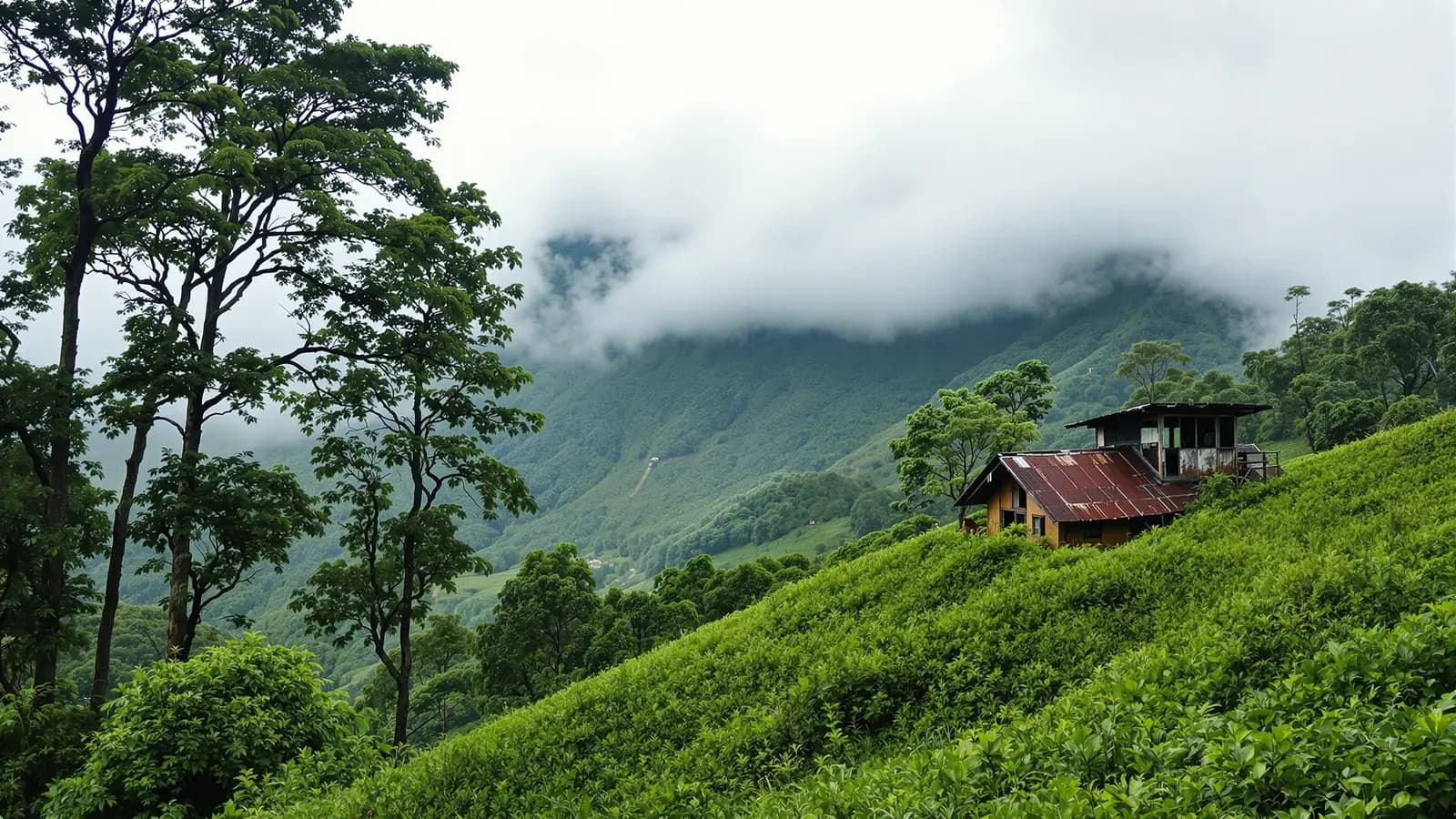
Costa Rica is small but extremely varied. The Central Valley (Valle Central) around the capital San José, with the suburbs of Escazú and Santa Ana and the popular small towns of Atenas and Grecia, offers a mild, spring-like climate at altitude, good infrastructure and the largest concentration of expats and doctors. The Pacific province of Guanacaste in the northwest is drier and sunnier, with popular beach towns such as Tamarindo and Nosara. The central and southern Pacific around Jacó, Manuel Antonio and Uvita combines rainforest and beach. The Caribbean coast around Puerto Viejo is greener, more unspoilt and more strongly Afro-Caribbean in character. And the Arenal region around La Fortuna draws people with volcanic landscapes, hot springs and lakes. This variety in a small area is one of the country's great attractions. Within a few hours' drive you go from cool mountain air to the tropical coast, from the dry northwest to the rainy south. When choosing where to live, the climate is often more decisive than the landscape: the Central Valley at altitude offers pleasant temperatures all year round without air conditioning, while the coasts are hot and humid. That is why many newcomers from Europe choose the highlands, while the beach towns have more of a holiday and second-home character.
Family, school and homeschooling
If you come with children, you will find good international and private schools above all in the Central Valley, including the German school (Humboldt-Schule) in San José. Homeschooling and unschooling are possible in Costa Rica, and many families from abroad use this route or a combination of flexible schooling and distance learning. Clarify the exact handling with the local authorities, as requirements can change. Overall Costa Rica counts as exceptionally family- and child-friendly, which makes integration easier for many families who move there. The level of education is high by regional standards, Costa Rica has traditionally invested heavily in education, and the international schools in the Central Valley offer recognised qualifications. Choosing state schools saves money, but plan for your children to have solid Spanish.
The advantages at a glance
Costa Rica combines advantages that you otherwise find only one at a time in the region. On tax, the key is the genuine territorial principle: foreign pensions, dividends, capital gains and location-independent online income stay tax-free permanently, not as a temporary privilege but as a basic principle. On top of that, the country levies no wealth, inheritance or gift tax, and property tax is minimal at around 0.25%. Politically, Costa Rica is the most stable democracy in Central America, without a military, with a functioning rule of law and a long tradition of neutrality. Access is straightforward: the pensionado, rentista and inversionista visas ask for predictable, moderate proof rather than a six-figure investment. The nature is world class, from volcanoes and cloud forest to two coastlines in a small area, and the Caja offers a solid health system that is mandatory for residents, complemented by a good private sector. In the Central Valley around Escazú and Santa Ana lives a well-established international community where you can get a long way with English, while the unhurried pura vida pace is, for many, the real reason to stay. For a clear-eyed view of the security situation, see the Costa Rica safety reality check, and the country overview is on the Costa Rica country page.
The disadvantages, honestly
I would rather list what really grates than sell you paradise. Bureaucracy is the most common source of frustration: dealing with the authorities is slow, the wait for the cédula can take months to more than a year, and documents must be certified, translated and complete. The cost of living is high for the region, with imported goods and cars especially expensive. The tropical climate brings a pronounced rainy season from May to November, with high humidity and at times heavy rain. Infrastructure outside the urban areas is not everywhere at Western standards; roads and internet can be weak in remote regions. The language barrier is real: without Spanish, daily life is hard work. And the recent rise in crime is an issue to which I devote an article of its own. If you know these points in advance, you will have fewer disappointments. Another often underestimated drawback is the distance to Europe: direct flights are rare and expensive, and with around twelve to fourteen hours of travel, spontaneous visits home become a major undertaking. Low local purchasing power and high unemployment also mean that Costa Rica is poorly suited to building a local earned income. The mandatory Caja is solid but overloaded, and in practice most residents add private top-up insurance for planned treatment. In the popular expat areas from Guanacaste to the Central Valley, property prices have risen sharply in recent years, and the bargain of old is a thing of the past in many places. And in the rainy season, road conditions and occasional flooding away from the urban areas demand patience.
Who Costa Rica suits
Costa Rica is a good fit for retirees with a pension from abroad, location-independent entrepreneurs and digital nomads, and investors who want to benefit from tax-free foreign income while also looking for political stability, a good health system and spectacular nature. It is less suitable for anyone looking for a cheap destination, who would depend on a local earned income, or who is bothered by slow bureaucracy and a humid tropical climate. But if you are financially independent, value nature and a relaxed pace of life and accept the premium over the neighbouring countries for stability and quality of life, Costa Rica offers you one of the most well-rounded overall packages in Latin America.
If you want to build a realistic roadmap for your move, from choosing the right visa and using the territorial principle to picking a region, let's talk before you sign the first contracts.
👉 Book a consultation with Harley
Carpe Diem. Life is short and fleeting. One shot. Make it count.