
Costa Rica has a reputation as a peaceful island of stability in a restless region, and at its core that reputation is deserved. I'm a realist, not a salesman, and the honest version for 2026 is this: Costa Rica is still one of the safest and most stable countries in Central America, but crime has risen noticeably, and the real risks for people who move there often lie less in crime than in nature. So I'll take the three layers one at a time: political stability, crime and natural hazards. The distinction matters, because many people either overestimate how safe it is, because they only know the pura vida postcard, or underestimate it, because they lump Costa Rica together with its crisis-hit neighbours. The truth lies somewhere in between, and it can be pinned down quite precisely.
Political stability: Costa Rica's great strength
Let's start with what truly sets Costa Rica apart. Costa Rica has had no army since 1948, it is one of the oldest and most stable democracies in Latin America, and it has been a member of the OECD since 2021. The country is known for its democratic tradition, the rule of law and long-standing protection of press freedom and free speech. With GDP per capita of around USD 17,900 it counts as a high-income country, and it generates 98% of its electricity from renewable sources. For anyone moving there, this stability is a concrete everyday advantage: reliable institutions, legal certainty and a country where political upheaval and violence are not a constant worry. OECD membership since 2021 underlines that status and means Costa Rica has committed itself to international standards of regulation, transparency and good governance. Protests, strikes or road blockades that disrupt traffic do happen now and then, but compared with many neighbouring countries they are harmless. This stability is no accident but the result of a deliberate choice: after the short civil war of 1948, Costa Rica abolished its army and invested the money it freed up in education and health instead. Since then the country has seen itself as a neutral, peaceful nation and has earned a reputation over decades as the "Switzerland of Central America". For people who want to leave political instability or legal uncertainty behind, this is exactly one of the strongest reasons to choose Costa Rica over other destinations in the region. Challenges remain: the country is wrestling with a widening social gap and shortfalls in its health and education systems, but the democratic institutions themselves stand on solid ground.
Crime: the honest trend
This is where many guides gloss over things. Costa Rica still has a lower crime rate than its neighbours Honduras, El Salvador or Guatemala, but murder and violent crime have risen noticeably in recent years. The main driver is drug trafficking: Costa Rica has become an important transit country between South and North America, with a correspondingly growing presence of organised crime. This is the price of geography. As a bridge between the producing countries in the south and the markets in the north, Costa Rica attracts smuggling routes and the gang crime that comes with them. As a result, the murder rate has climbed in recent years to a level that is unusually high by Costa Rican standards, yet it still sits clearly below that of Honduras, El Salvador or Guatemala. The good news for newcomers: violent crime takes place mainly between rival drug gangs, and bystanders are rarely targeted. That is an important gap between perception and reality. Headlines about rising murder figures create a picture of insecurity that says little about the daily life of a foreign resident in a good neighbourhood. The real everyday risk is petty crime: pickpocketing, cars broken into and burglaries, above all in the San José metropolitan area and in busy tourist spots. These offences are increasingly committed by organised gangs that specialise in pickpocketing and bag snatching, armed robbery and breaking into cars. The offenders may be more willing to use violence than in the past, which is why the clear advice is not to resist in a robbery and to hand over your valuables.
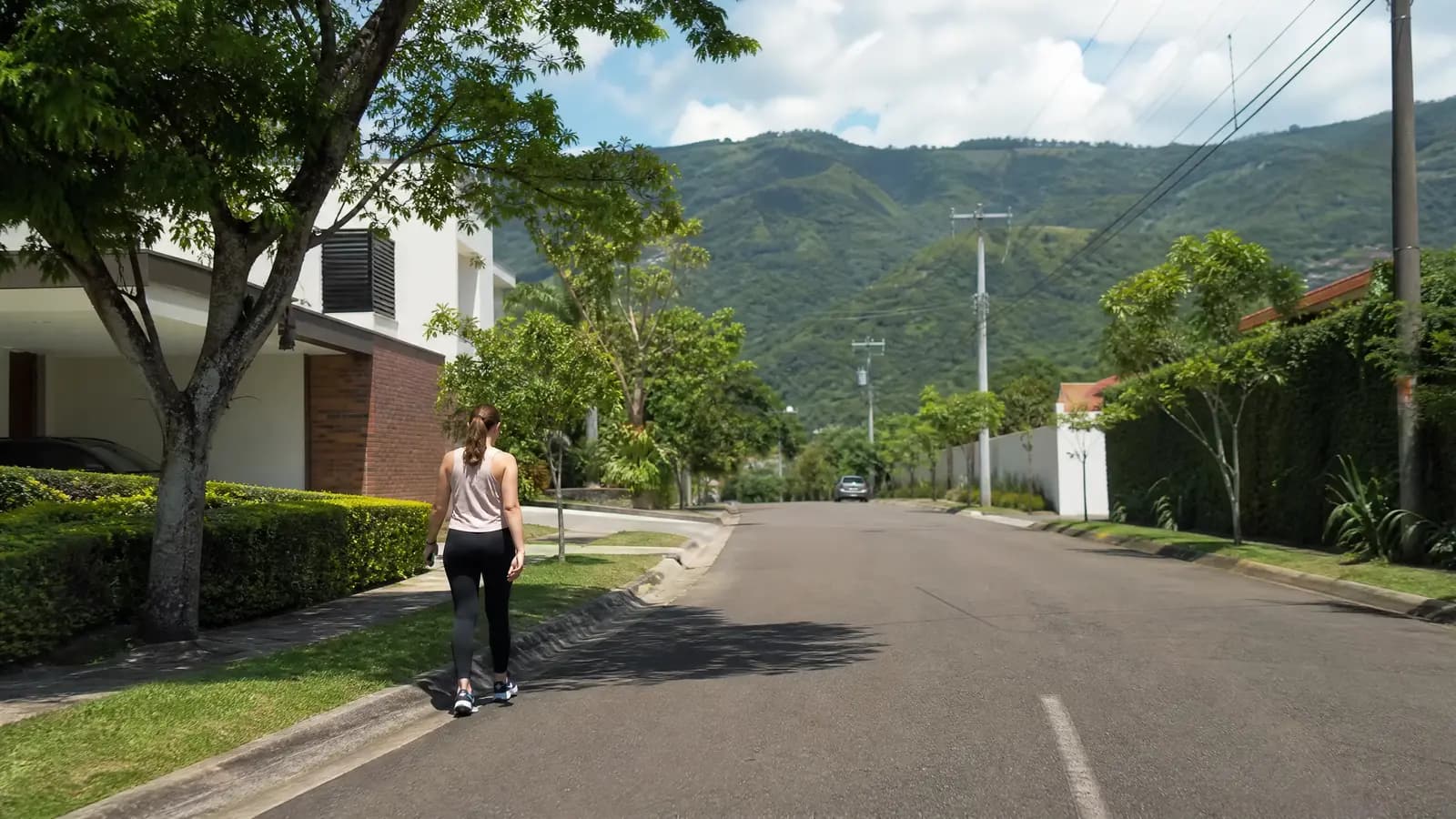
The security situation varies greatly by region. Hotspots for theft and robbery are the areas around the bus terminals and the centre of San José, the port cities of Limón and Puntarenas, and some tourist towns such as Jacó, Manuel Antonio, Puerto Viejo, Cahuita, the area around Tortuguero National Park and the bridge over the Río Tárcoles. In wealthier residential areas with private security, as many expats choose in the Central Valley, the picture is far calmer. For context: travellers and foreign residents have so far rarely been directly affected by violent crime; the main nuisance remains the theft of valuables, passports and credit cards. In practice: don't carry valuables openly at night, avoid poorly lit streets and lonely areas after dark, leave nothing visible in the car, use registered red taxis, and be careful when strangers offer help with a breakdown, because there is sometimes criminal intent behind it. With these precautions, life in the preferred regions is safe. Housing is another point: many newcomers deliberately choose a gated community (condominio) with security staff, cameras and controlled access, which cuts the risk of burglary considerably. Women are generally advised to take extra care, especially at night and with invitations from people they have only just met. This advice may sound grim, but at its core it applies to any large city in the world, and the baseline level of violent crime against bystanders remains far lower in Costa Rica than in most other countries in the region. Anyone who lives in a solid neighbourhood in the Central Valley will rarely face serious crime in daily life.
Natural hazards: the real challenge
Then there is the risk many people underestimate because they only think about crime. Costa Rica sits on the Pacific Ring of Fire, one of the most seismically active zones on earth. Earthquakes happen regularly. Most are weak, but stronger ones can damage buildings and disrupt infrastructure. For newcomers, the frequent light tremors take some getting used to, but as in many Pacific countries they are part of everyday life. The country has 16 volcanoes, of which Turrialba, Rincón de la Vieja, Poás and Irazú, among others, are currently active at times. An eruption can carry ash clouds as far as the capital and even close Juan Santamaría International Airport for a while. Visits to active volcanoes such as Poás and Irazú are therefore only possible with advance registration and under official control, and the national parks are closed when activity rises. Arenal, once very active, has been quiet since 2010, but it remains a volcano. Costa Rica has also learned from its geology: it has a working seismological monitoring network, a national emergency commission and warning systems that send out current alerts via radio, television and apps. Unlike Chile's megaquakes, Costa Rica's earthquakes are usually more moderate, but they can still cause damage because buildings in rural areas are sometimes simpler. When you buy or rent a property, it pays to look at the year of construction and the building method.
Then there are the weather-related hazards that many people tune out when they hear "tropical paradise". The rainy season from May to November repeatedly brings sudden flash floods and landslides that claim lives. Costa Rica also lies in a zone where, during the hurricane season from roughly June to November, heavy rain, flooding and occasionally the outer bands of a storm are to be expected, often with a state of emergency declared. Direct, severe hurricane strikes are rare, because Costa Rica sits somewhat outside the main storm track, but the indirect effects, with days of heavy rain, can paralyse whole regions. In the dry season, by contrast, the risk of wildfires rises. A particularly underestimated risk is the strong ocean currents on both coasts: rip currents and sudden swells put even good swimmers in mortal danger every year, and very few beaches have lifeguards. Anyone who lives on the coast or goes to the sea often should know the local current conditions and take warnings seriously, because drowning is one of the most common causes of death among foreigners in Costa Rica. Adventure tourism, such as white-water rafting or canopy tours, is also often underestimated: safety standards do not always match what you may be used to at home, so book such activities only with established, officially registered operators.
As a newcomer, check the build quality, slope position and flood risk of any property you buy or rent, familiarise yourself with the authorities' emergency plans and warning apps, keep a small supply of water, food and torches in earthquake-prone regions, and take warnings about ocean currents seriously. Anyone who knows and plans for these hazards can live very safely in Costa Rica. One concrete tip: view a property during heavy rain before you buy, because a plot that looks ideal in the dry season can look very different in the rainy season on a slope or near a river. An experienced local agent or lawyer knows the zones prone to flooding and landslides and can save you from expensive mistakes. Good buildings and contents insurance that covers natural hazards is also essential in Costa Rica.
Where foreign residents live safely
Taking crime, natural hazards and infrastructure together, a few regions stand out for newcomers. The Central Valley around Escazú, Santa Ana, Atenas and Grecia combines a mild highland climate, good medical care, gated communities and relative safety. Many rural areas and smaller towns are also considered very safe, and foreign residents there report a strong sense of community. Popular retreats with a reputation for safety include the small towns of the Central Valley such as Atenas, Grecia and San Ramón, known for their pleasant climate and relaxed atmosphere, as well as selected, well-organised coastal and mountain towns with an established expat community. Conversely, experienced residents advise against settling blindly in a remote coastal village without first checking the local security situation and the neighbourhood, because sparsely populated areas in particular have less police presence. Anyone who avoids the known hotspots, pays attention to the construction and location of their property and follows the usual precautions lives about as safely in Costa Rica as almost anywhere in Central America. Also register with your embassy, or with your foreign ministry's traveller registration service where your country offers one, so that you can be reached quickly in an emergency such as a severe earthquake or natural disaster. It also makes sense to build a network on the ground, because the established international community in the Central Valley is happy to share tips on safe neighbourhoods, reliable tradespeople and local quirks.
On balance, the picture is clear: Costa Rica's greatest strength is its political stability, its growing problem is drug-driven crime, and its underestimated challenge is nature. Anyone who weighs all three realistically will find one of the most liveable and safest countries in the region. Put another way: the biggest risk in Costa Rica is rarely people, but rather an underestimated river in the rainy season, an unfamiliar ocean current or a poorly built house on a slope. All of that can be managed well with preparation and common sense.
If you want to know which region suits your situation and how to weigh up safety, natural hazards and daily life, talk it through with me before you commit.
👉 Book a consultation with Harley
Carpe Diem. Life is short and fleeting. One shot. Make it count.