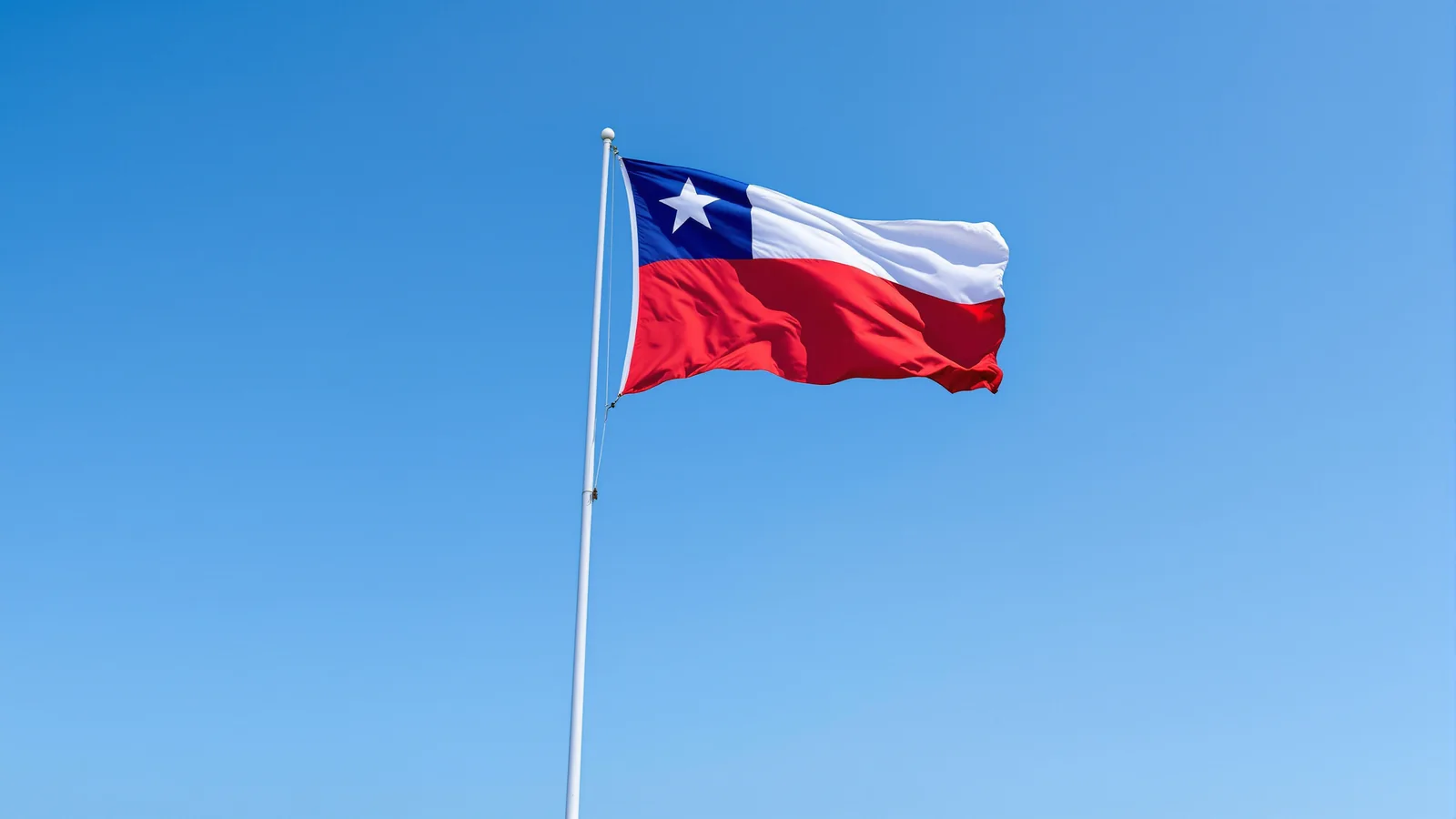

If you search for "Chile citizenship by investment", you usually expect a programme where an investment gets you a passport directly. I am a realist, not a salesman, so here is the plain answer first: there is no citizenship by investment programme in Chile. Chile does not sell citizenship. What it does have is a clear, predictable route through an investment or another reason for residence, which leads first to a visa, then to permanent residence and finally, after five years, to naturalisation. That route is attractive, but it takes time and requires real residence. In this guide I set out plainly what really works, what is just a marketing promise, and what you need to think about on dual citizenship and tax planning.
The myth of a passport for money
Where does the misunderstanding come from? In 2022 Chile raised the minimum for the investor visa to USD 500,000, and the investment has to serve the production of goods or services. This visa gets you temporary and later permanent residence, but not citizenship. From there, the same road to naturalisation applies as for every other immigrant: five years of residence. So the investment buys you entry into residence, not the passport. For most people relocating, the investor visa is not the right route anyway, because other visa categories, such as the retiree visa or a suitable temporary residence permit, are considerably cheaper and more practical; more on that in our guide to the Chile residence permit. The difference from genuine citizenship by investment countries, such as some Caribbean states, is fundamental: there you pay a sum and receive a passport within months, without ever living there. In Chile, by contrast, real physical residence over years is the essential condition. If you want a fast passport for money, Chile is simply the wrong place. If you want to build a solid, recognised second passport around a genuine centre of life, it is the right one.
The regular route to naturalisation
The standard route to Chilean citizenship is naturalisation after five years of continuous residence with a valid residence permit. The count starts from the stamp of your first temporary residence permit, the one that later led to your Residencia Definitiva. Requirements include, among others, that you are at least 21 years old, can show good character and hold a Residencia Definitiva, which must still be in place when you apply. The procedure involves the usual documents, a valid passport, birth certificate and police clearance certificate, all translated into Spanish and certified, and as a rule a language test and an exam on Chilean history and culture. Watch your absences: during temporary residence, more than two months abroad pushes back the route to the Residencia Definitiva, and once you hold it, more than two years away in one stretch makes it lapse. In practice, plan for the road from the first residence permit through the Residencia Definitiva to actual naturalisation to take several years and a fair amount of patience with the authorities, and for the processing of the naturalisation application itself to take extra time. That is not a drawback, but the logical consequence of Chile wanting to see genuine ties and genuine residence before it issues a passport. For serious movers who live in Chile permanently anyway, naturalisation at the end of this process falls into place almost by itself.
How Chile's five years compare with the rest of the region is shown in Naturalisation in Latin America: 21 countries compared.
On the practical side: the naturalisation application is filed with the relevant Chilean authority, the civil registry or the migration service, all foreign documents must be apostilled, translated and certified, and the authorities can ask for further documents at any time. As with residence law, Chile is very strict about the completeness and accuracy of documents. Allow plenty of lead time, keep your periods of residence documented without gaps and make sure your Residencia Definitiva is valid at the time you apply. If you underestimate these formalities you lose time, and in the worst case the procedure has to be started again.
Dual citizenship: Chile allows it
The good news first: Chile allows dual citizenship. From the Chilean side, you do not have to give up your existing nationality. Whether you may keep it, however, is not decided by Chile but by your country of origin, and the rules differ considerably from country to country. You need to settle this point before naturalisation, not after. The deciding legal question is whether your home country treats the voluntary acquisition of another nationality as a ground for losing its own, and whether it requires prior permission to keep it. If permission is needed, it usually has to be in place before you take the Chilean oath, and a missed step can be impossible to repair afterwards. Check your own country's rules early, and if keeping your passport matters more to you than the Chilean one, permanent residence may be the better end point.
The strong passport and its advantages
Why go to all this trouble? The Chilean passport is one of the strongest in Latin America. It offers wide freedom of movement within the MERCOSUR states, with which Chile is associated, and Chile is also the only Latin American country whose citizens can enter the US without a visa, through the US Visa Waiver Program. For anyone who values optionality and freedom to travel, that is real added value. In concrete terms, the MERCOSUR link makes living and working in large parts of South America considerably easier, which makes the Chilean passport a genuine regional door-opener. A second passport is also always a safeguard, an extra foothold in case conditions in your home country change. This optionality is the core of flag theory, under which residence, citizenship, banking and companies are deliberately spread across several countries so that you are not fully dependent on any single state. In that sense, a Chilean passport alongside your existing one is not an exit, but extra room to manoeuvre. In travel freedom rankings the Chilean passport regularly ranks high and is one of the few Latin American passports with visa-free access to the US, which makes it especially valuable as a second document.
The biggest misconception: citizenship is not a tax matter
And now the point most guides stay silent on. Chilean citizenship does not make you taxable in Chile. Chile ties tax liability not to the passport but to where your centre of life is for tax purposes: domicile and presence. A second passport, on its own, changes nothing about your tax situation as far as Chile is concerned. Anyone who believes naturalisation automatically puts them into Chile's tax system, and into the newcomer tax window, is mixing up two separate things: the window depends on arrival and tax residence, not on nationality.
Leaving your home country has to be looked at just as separately. Whether your home country taxes its citizens on the basis of residence or nationality, whether an exit tax applies when you move, and whether your tax residence there really ends, depend on where you come from, and not on whether or when you later take a Chilean passport. Keep in mind that Chile, with a top rate of 40%, is not a low-tax country. Citizenship, tax residence and leaving your home country are three separate projects that need to be planned separately:
If you lump them together, you usually make expensive mistakes. A common example from practice: someone assumes that the Chilean passport automatically takes them out of their home country's tax net, although their centre of life is still at home. The opposite is true: as long as your centre of life stays there, a second passport does not move it. Conversely, someone without a Chilean passport can already be tax resident in Chile and use the newcomer window, purely through actual residence. The passport is a matter of belonging and freedom to travel, not of taxation. Keeping them strictly apart saves you the most expensive and most common mistakes in relocation. If you plan the three levels, passport, tax residence and leaving home, separately and in the right order from the start, you get the full benefit of Chile's advantages without falling into one of the classic traps.
If you want to know whether and when the route to Chilean citizenship is worth it for you, how to keep your existing nationality safely alongside the Chilean one, and how it all fits with your tax planning, it pays to talk before you file the first application. Especially if your home country has strict rules on keeping its citizenship, and for anyone who wants to time residence, the tax window and naturalisation intelligently, getting the order right makes the difference between success and expensive mistakes.
👉 Book a consultation with Harley
Carpe Diem. Life is short and fleeting. One shot. Make it count.