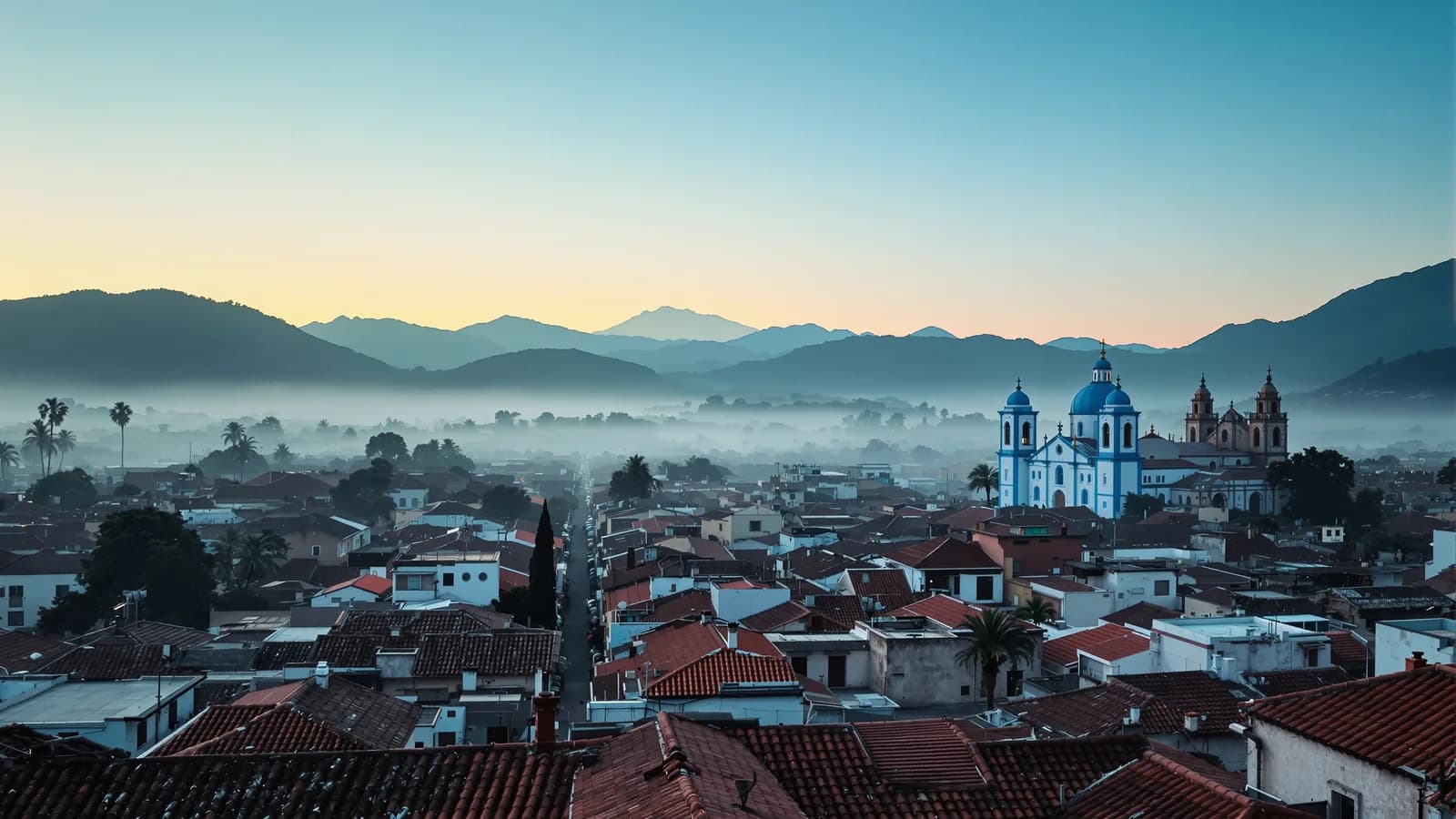

The US dollar, a five-year tax regime for newcomers, low costs, but a split security picture. What Ecuador really offers in 2026, honestly explained.
Ecuador is the down-to-earth pragmatist among the region's relocation destinations. It tempts with the US dollar as its currency, so no exchange rate risk, with very low living costs and an astonishing variety in a small space, from the Pacific coast through the Andean cities to the Amazon and the Galápagos Islands. And it has a tax regime for newcomers that hardly anyone has on their radar. But Ecuador also has a real security issue that you need to know about before you fall in love. So let us take a close look, with all the advantages and all the catches.
Tax: one misunderstanding and one genuine gift
Some plain talk first, because a lot of half-truths are circulating. For ordinary residents, Ecuador is not a territorial country. Anyone who becomes tax resident there is in principle taxed on their worldwide income, progressively up to around 37%, with credit for tax paid abroad, as the PwC tax summary confirms. You become tax resident after 183 days in the country. And now the real gift, the one that turns the whole calculation around: since January 2024 there has been a five-year tax regime for new arrivals (Residente Temporal Fiscal). Qualifying new residents pay 0% on all foreign income during those five years: dividends, interest, capital gains, everything. Only after that does the regular tax claim apply. For anyone who deliberately uses the five years and plans the transition, Ecuador becomes highly interesting from a tax point of view; for anyone who simply stays beyond 183 days without this structure, it is a worldwide-income country. The difference is planning. That is why Ecuador's tax value is decided not at the border but by the adviser who sets the regime up correctly.
The ISD: the catch with moving money
One point many people overlook, and that I always raise early with my clients: the ISD, the tax on currency outflows. If you send money out of Ecuador, you pay 5% on it, raised in April 2024 from the previous 3.5%. The same reform raised VAT to 15%. It is not a dealbreaker, but you should factor it in, especially for anyone who keeps their wealth outside the country anyway and moves capital back and forth. If you live in Ecuador and spend most of your money there, you will hardly notice the ISD; if you regularly transfer larger sums, you should budget for it. Whether a tax treaty between Ecuador and your home country helps with your income at home is a question for your own country, which I come back to at the end.
Residency and the passport
In practice, the route runs through one of Ecuador's visas. For most people moving from abroad, two matter above all: the retiree and rentista visa (proof of a monthly income from a pension or capital of three times the basic wage, the SBU, in 2026: USD 1,446, plus USD 250 per dependant) and the investor visa via property, a bank deposit or a company stake (one hundred times the SBU, in 2026: USD 48,200). Both initially grant temporary residence for two years. After 21 months you can apply for permanent residence, and three years after that naturalisation becomes possible, so roughly five years from first residence to passport. Ecuador allows dual citizenship without giving up your existing nationality. One rule to watch in the temporary phase: you may spend no more than 90 days in total outside the country before permanent residence, otherwise the path to permanent residence stalls. During the three years leading to naturalisation, the limit is 180 days of absence per year.
The safety paradox, honestly explained
Now to the subject you need to know about, and one I never gloss over. At national level, Ecuador has a serious security situation: the country recorded around 9,200 homicides in 2025, a national rate of around 51 per 100,000 inhabitants, and in January 2024 President Noboa declared an internal armed conflict against the gangs and deployed the military. The reason is drug trafficking, because Ecuador lies between the world's two largest cocaine producers, and its Pacific ports have become transit hubs. But, and this is the crucial point, the violence is heavily concentrated geographically. It clusters on the coast, above all in Guayaquil, and in the border provinces. The Andean highlands are structurally separate: Cuenca, the most popular expat city, recorded a rate of around 1.4 per 100,000 over the same period, a figure like that of a quiet European city. Both numbers are real; what matters is which one applies to where you live. The U.S. Department of State lists Ecuador as a whole at level two of four, with individual coastal and border provinces at higher levels, while the highlands around Cuenca are not named as an area of concern at all. Anyone who moves to the highlands, to Cuenca or the quiet districts of Quito, lives in a different reality from the one the headlines suggest; anyone heading for the coastal ports should take the situation very seriously.
Costs and way of life
On to daily life, and here Ecuador shines. The country is among the cheapest in the region, and with the dollar as its currency, budgeting is simple and free of inflation risk from a local currency. Cuenca, the well-kept colonial city in the Andes, is the magnet for the international community, with a mild spring-like climate, good infrastructure and a large, established retiree community. Quito, the capital, offers quiet, upmarket neighbourhoods in the Cumbayá and Tumbaco valleys. Then there is the overwhelming nature, from the Andean highlands through the rainforest to the Galápagos, all in a country small enough for short journeys. Hardly any other country in the region packs so much variety into so little space. For retirees, and for location-independent entrepreneurs who use the five tax years, the combination of the dollar, low costs and high quality of life is a strong offer.
Who Ecuador is made for
Ecuador is the country for anyone who values dollar stability, low costs and the five-year tax regime, and who is prepared to choose where they live with care. For the retiree whose pension allows a comfortable life here, for the location-independent entrepreneur who deliberately uses the five tax-free years, and for the nature lover who wants the Andes, the coast and the Amazon on their doorstep. It is less suited to people who put maximum institutional security above everything else, or who are not willing to choose their location carefully. But for anyone who moves to the quiet highlands, plans the five tax years and enjoys the benefits of the dollar, Ecuador is one of the most underrated destinations in the region.
Ecuador in regional comparison
Put Ecuador in its proper context and the choice becomes easier. For tax, it is a special case: not a territorial country like Panama or Paraguay, but thanks to the five-year regime for newcomers, effectively tax-free on foreign income in the early years, similar to Chile's model, only tied to the dollar. On costs, Ecuador is among the cheapest in the region, comparable with Peru or Bolivia. Its unique selling point is the combination of the US dollar with this five-year window, which no other country offers in the same way. The price is the split security picture, which demands a deliberate choice of location. Choose the quiet highlands and plan the five tax years, and you get dollar stability and low costs in one, a rare package. It is not a country for drifting past 183 days without a plan; it rewards those who go about it in a structured way.
The cities at a glance
So where to go? Cuenca is the clear number one for people moving from abroad: a well-kept colonial city at around 2,500 metres, with a mild spring-like climate, good medical care, a tradition of craftsmanship and one of the largest, most established retiree communities in Latin America. Many say they feel safer here than in the city they left. Quito, the capital at an even higher altitude, offers quiet, upmarket and well-guarded neighbourhoods in the lower, warmer valleys of Cumbayá and Tumbaco, where most international families live. If you love the coast, you will find attractive options in individual, carefully chosen places, but you should take the higher crime rate of the coastal region very seriously and avoid Guayaquil as a place to live. The rule of thumb for Ecuador is clear: the highlands are your friend, the big ports are not.
Your home country comes first
The same principle comes first in every plan I make. Before Ecuador's five-year regime takes effect, there is the home-country side of the move. Moving to Ecuador does not, on its own, end your tax residence at home. What your home country keeps taxing, whether an exit tax applies to company shares, and whether a tax treaty with Ecuador helps, depends on where you come from:
Structure decides, not the destination, and both sides need to be part of the same plan.
The honest trade-off
Ecuador is a country of contrasts, and that is exactly what makes a fair assessment so important. The dollar, the low costs and the five-year tax regime are tangible, rare advantages. The safety paradox, the sharp divide between the dangerous coast and the calm highlands, demands a deliberate, informed choice of location. Anyone who weighs both together and chooses their Cuenca or their quiet Quito valley with care will find a country with a high quality of life at low cost. This balanced weighing-up, opportunities and catches side by side, including the current security situation, is exactly what I go through with my clients before they commit.
If Ecuador appeals to you, let us check together whether the country really fits your life, your wealth and your goals, which place is the right one, and how the five tax years work with a sound structure. Book a call with me; the link is right below.
👉 Book a consultation with Harley
Carpe Diem. Life is short and fleeting. One shot. Make it count.