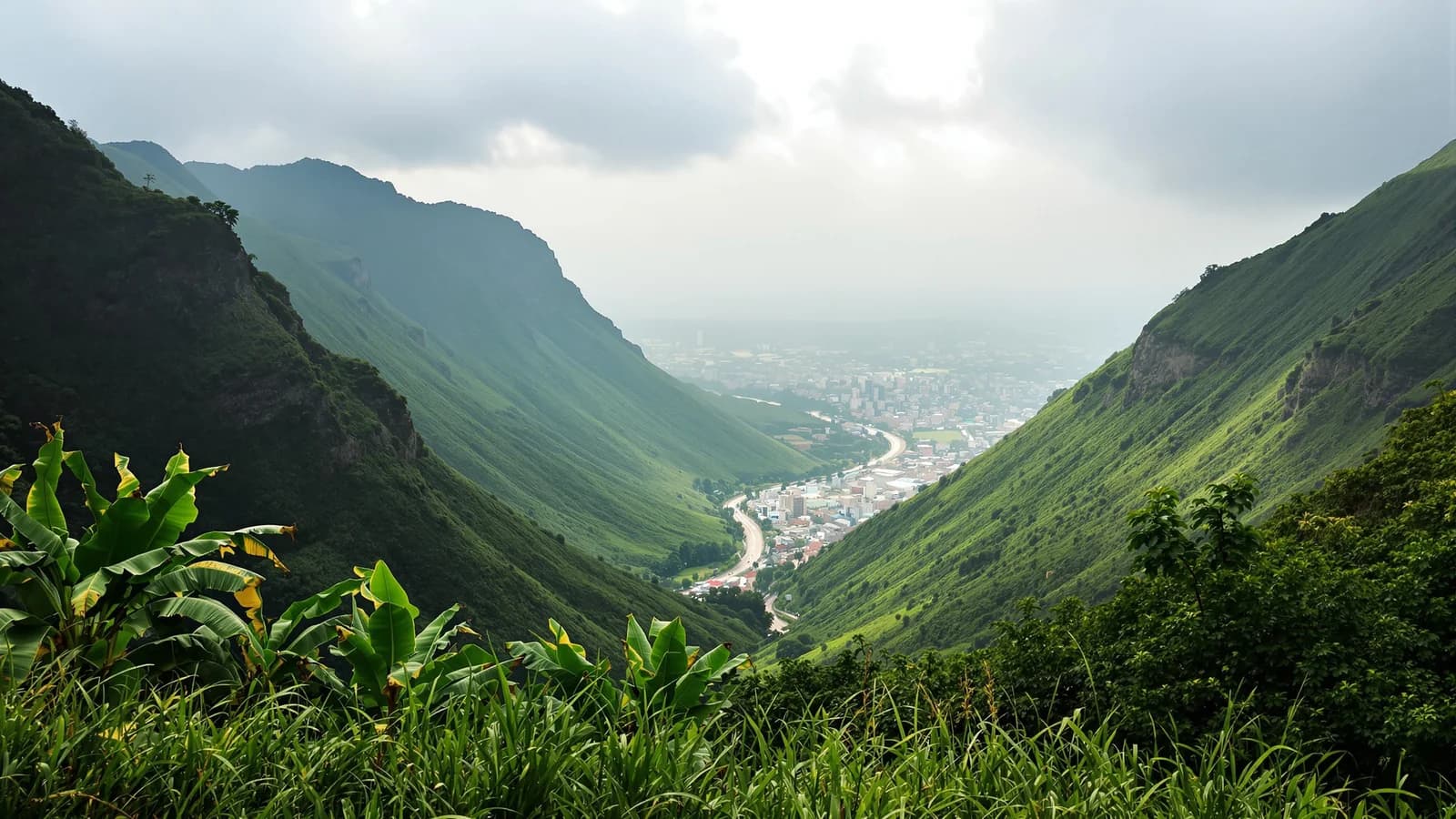

Colombia has gone through a remarkable change of image in recent years. Twenty years ago the country stood above all for cartels and kidnappings in the eyes of the world; today Medellín appears on the same lists as Lisbon or Bali when it comes to the best cities for remote work. I am not here to sell you anything, and the truth lies somewhere between those two pictures: for many people moving abroad, Colombia today is a viable, affordable and surprisingly modern destination, but it remains a country with real security and bureaucracy issues, which I do not gloss over in this guide or in my separate article on safety in Colombia.
In 2026 Colombia is one of the most accessible and affordable destinations in Latin America, measured by the low income thresholds for its visas, the low cost of living and a growing international community in cities such as Medellín and Bogotá. At the same time it demands more openness and flexibility than a move within Europe or North America: if you are looking for a one-to-one copy of your life back home with more sunshine, you will be disappointed; if you engage with the language, the culture and different structures, you will find a home worth living in. The country is unusually diverse, from the Caribbean coast through the Andean plateaus to the Amazon, and is considered one of the most biodiverse countries in the world, which for expats with a passion for nature, climate and outdoor life is a draw in its own right, and an often underrated one.
The visa structure: V, M and R
Colombia uses a three-tier visa system that you should understand early, because it shapes your whole residency plan. The V visa (Visitante) covers shorter and special stays, including the much-discussed digital nomad visa. The M visa (Migrante) is the real category for people relocating: retirees, investors, rentistas and other longer-term stays. The R visa (Residente) is the permanent residence permit, which you can apply for after a set period on an M visa, on the usual routes after five years. Visa-free tourist entry is the simplest first step: most Western passport holders may stay without a visa for up to 90 days, extendable to a total of up to 180 days per calendar year, with the border officer setting the exact length of stay with the entry stamp. For any longer or non-tourist stay you move into the appropriate visa category, which I break down in detail in my guide to the Colombian residence permit. Naturalisation takes time: five years of domicile counted from the R visa, which in practice means around ten years in total.
One point that sets Colombia apart from many competitors: no Colombian visa category, not even permanent residence, requires a formal Spanish test. That lowers the entry barrier considerably, but it does not change the fact that in daily life you quickly hit limits without basic Spanish, especially outside the big cities.
Work, remote work and self-employment
Colombia has become one of the most popular destinations in Latin America for remote workers, led by Medellín with its growing scene of digital nomads, founders and creatives. The digital nomad visa, available since October 2022, requires three times the Colombian minimum wage, the equivalent of around USD 1,400 a month, one of the lowest income thresholds worldwide for this visa category, and the income must come from remote work for employers or clients outside Colombia. The internet infrastructure in the big cities is excellent for this: fibre at 100 to 300 Mbit/s costs only EUR 20 to 40 a month, and there are numerous coworking spaces in Medellín, Bogotá and increasingly in Cali and on the Caribbean coast.
If you want to work as a conventional employee, you will as a rule need a concrete job offer from a Colombian employer and the corresponding work visa. Salaries in Colombia are well below Western European and North American levels, which the low cost of living partly offsets. Many foreigners work as freelancers instead, above all in IT and online marketing for clients in Europe or North America. Setting up a company is comparatively straightforward and often takes only two to four weeks, which makes Colombia interesting for the self-employed with local clients. A practical advantage for remote workers is the time zone: Colombia shares its time window with the US East Coast, which makes it easy to work with both European and North American clients, because working hours overlap reasonably well with both continents. I cover the tax details, in particular when you count as tax resident and how Colombia taxes non-residents only on Colombian-source income, in the residence permit guide. In short: if you spend fewer than 183 days a year in Colombia and do not count as tax resident, you pay no Colombian tax on foreign income, but you should be able to document your non-residence properly. Once you are tax resident, Colombia taxes your worldwide income.
The regions at a glance
Medellín, the "city of eternal spring", is the clear centre of the expat scene, with mild temperatures of 16 to 26 degrees Celsius all year, modern infrastructure, its own metro and popular neighbourhoods such as El Poblado and Laureles. Bogotá, the capital at around 2,600 metres, has the coolest climate, the biggest cultural offering and the most international jobs, but more traffic and bustle. Cali is known as the salsa capital, with a warmer climate and lower costs. The Caribbean coast around Cartagena and Santa Marta scores with tropical beach life but is more touristy and more expensive, with noticeably higher temperatures and humidity. Smaller cities such as Bucaramanga, Pereira or Manizales are another 30 to 50% cheaper than Medellín and worth a look for expats on a budget. Medellín attracts by far the largest international community and is often the easiest entry point for first-time expats, because a whole infrastructure of coworking spaces, language schools, international doctors and expat networks has grown up there that makes the start noticeably easier.
Practical first steps after arrival
As soon as your visa is approved, you need your Cédula de Extranjería quickly. This is your Colombian foreigner ID card, which you apply for at the migration authority, Migración Colombia, and which is a prerequisite for almost every further step, from a bank account to a phone contract to a lease. For entry itself, you have to complete the online form Check-Mig within 72 hours before arrival; it is required for both entry and exit. A bank account of your own, a local SIM card and private health insurance are the typical next steps, and they only make sense once you have the cédula in hand. To bridge the first few weeks, furnished short-term flats or coliving providers in Medellín and Bogotá offer a quick, flexible interim solution before the real search for a flat begins on the ground.
Cost of living
Colombia is one of the cheapest destinations in the region. A single person can live comfortably in Medellín on USD 1,000 to 1,500 a month including rent, and in smaller cities often on USD 700 to 1,000, as current surveys for 2026 show. A furnished one-bedroom flat in a popular expat neighbourhood of Medellín costs USD 400 to 800, and Bogotá is comparable. Groceries are much cheaper than in Western Europe, especially local produce from the markets, while imported goods such as European cheese or wine are often as expensive or more expensive because of import duties. Public transport is very cheap, and a full lunch in a local restaurant, a so-called corrientazo, costs the equivalent of two to four US dollars. A detail that surprises many: in most Colombian cities, the estrato system divides residential neighbourhoods into six social strata, which directly affects rent and utility costs; in upscale neighbourhoods you pay considerably more for the same space.
Banking and digital infrastructure
You need a Colombian bank account for leases, setting up a company and many everyday matters, and opening one usually requires a residence permit and your Colombian foreigner ID, the Cédula de Extranjería. Visa and Mastercard are widely accepted in the cities; for safety reasons you should withdraw cash during the day at busy bank branches or in shopping centres, more on that in the safety article. For expats who want to diversify their wealth deliberately outside the traditional banking world, our sister brand freedombanking.plus specialises in accounts abroad, and you will find a more detailed overview there if a Colombian account is not your first choice.
Healthcare
Colombia's healthcare system is regarded internationally as one of the most effective in Latin America; a much-quoted but now older WHO survey ranked it 22nd out of 191 countries, ahead of Canada and the US. In practice: as a resident with a residence permit you have access to the state health system EPS, but you should also take out private health insurance to avoid long waiting times and get better services. Almost half of Latin America's leading hospitals are in Colombia, with particularly good care in Bogotá and Medellín. I cover health, liability and other insurance as a separate topic later in this series.
Family, school and homeschooling
If you move with children, you will find international schools in the big cities, including German schools in Bogotá, Barranquilla, Cali and Medellín. If you are considering homeschooling instead, you should know the legal position precisely: in Colombia homeschooling is not expressly regulated, so it sits in a legal grey area that in practice allows unschooling. Article 27 of the Constitution guarantees the freedom to teach and learn, and Article 68 gives parents the right to choose the kind of education their children receive. Compulsory schooling formally applies to children between 5 and 15, but the law requires education, not necessarily attendance at an institution. Recognition of what children have learned runs through state validation procedures: under Decreto 2832 of 2005, pupils can have their knowledge examined year by year free of charge at authorised educational institutions, and there are also the nationwide SABER tests in grades 3, 5 and 9. The school-leaving qualification, the bachillerato, can be obtained under Decreto 299 of 2009 by anyone aged 18 or over through a single exam, the Saber 11 test run by ICFES, which keeps the door to university open. A dedicated law expressly regulating homeschooling is in the works in Colombia but had not been passed as of 2026, which is why the exact handling should be clarified locally with the regional education authority.
You can bring pets to Colombia with an up-to-date vaccination record, a veterinary health certificate and some lead time; I cover the exact entry rules for dogs and cats as a separate topic.
The downsides, honestly
I would rather list what really grates than sell Colombia as paradise. The security situation varies greatly by region and is by far the biggest issue, which is why it has its own article. The language barrier is real: without Spanish, daily life quickly becomes hard work, and contrary to some clichés hardly anyone speaks English outside tourist settings. Bureaucracy is slow and often paper-based, visa and official processes drag on, and many applications fail simply because documents are incomplete or submitted incorrectly. The distance from Europe is considerable: direct flights such as Frankfurt to Bogotá take around 11 to 12 hours, so spontaneous visits home are not a realistic option; from North America the trip is much shorter. And expat blues should not be underestimated, which is why a trial stay of several weeks in different regions is strongly recommended before the final move, outside the holiday mood, with real everyday life. On top of that come cultural differences in the sense of time and in how binding arrangements are, which take getting used to for anyone conditioned to punctuality, and a healthcare system that is excellent in the big cities but much thinner in rural regions. If you know these points in advance and plan for them, you will have far fewer nasty surprises in Colombia than someone chasing a pure sunshine picture. The clear-eyed city-by-city assessment is in the Colombia reality check.
Climate and altitude
An often underrated advantage of Colombia is the freedom to choose your climate through altitude. Because the country lies close to the equator, there are hardly any seasons; instead altitude determines the climate: tropical and hot below 1,000 metres, temperate between 1,000 and 2,000 metres, cool above that. So you can choose between a Caribbean beach climate, Medellín's eternal spring and Bogotá's cooler highland climate without travelling great distances. The rainy season runs roughly from April to mid-June and in October and November, with sometimes heavy rainfall, which I cover in the safety article under natural hazards.
If you now want to build a realistic plan for your move to Colombia, from choosing the right visa through choosing your city to the question of whether and when you become tax resident, let's talk before you sign the first contracts.
👉 Book a consultation with Harley
Carpe Diem. Life is short and fleeting. One shot. Make it count.