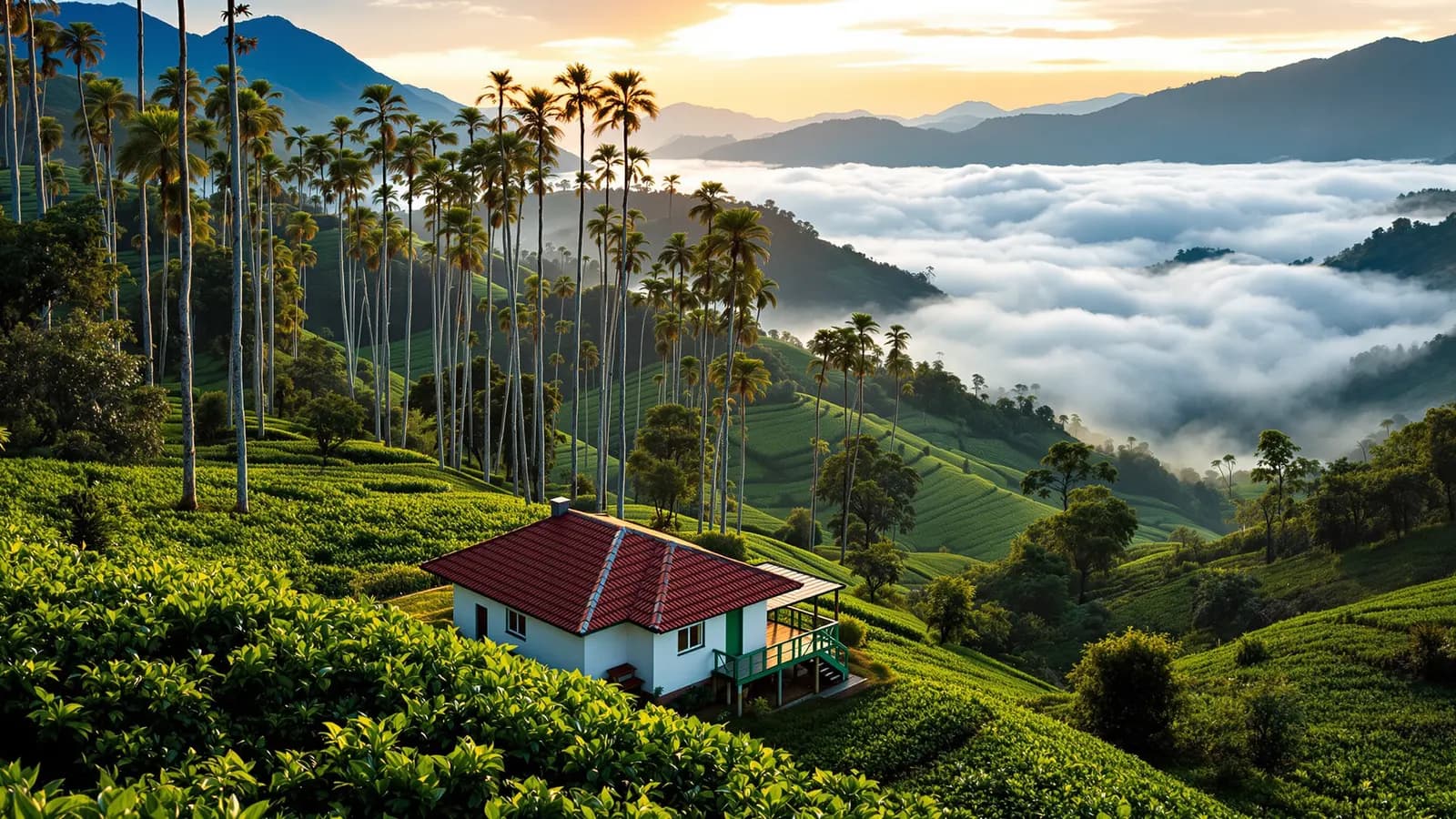

Ask what life in Colombia is really like and you get two pictures that could hardly be more different: the old headline cliché and the enthusiasm of those who live in Medellín or the coffee region today. Let me say upfront how this piece works: I do not invent testimonials, no made-up names, no fabricated quotes. Instead I summarise what expats repeatedly report about Colombia and add my own observations from advising clients, clearly marked as such. The result is a clear-eyed assessment, not a glossy reel and not a scare piece.
Medellín, coffee region or coast: where expats end up
The first point in people's accounts is almost always location, because Colombia is not one uniform country but a collection of very different worlds. Most reports come from newcomers in Medellín, the "city of eternal spring", where El Poblado and Laureles are the most international and comfortable neighbourhoods and where most people find a soft landing. Those who prefer things quieter and greener move to the coffee region around Pereira, Manizales and Armenia, and describe it as the slowed-down, affordable counterpart to the big city.
The Caribbean coast around Cartagena and Santa Marta, by contrast, gets more mixed reviews: colonial magic and warmth on one side, oppressive humidity, more tourism and higher prices on the other. And Bogotá, the cool, high-altitude capital, divides expats into those who love its urban offering and those who find the altitude, traffic and pace too much. The recurring lesson: when you say "Colombia", you first have to mean a region, because climate, costs and daily life differ dramatically between Medellín, the coffee region and the coast. A clear-eyed look at the cities is in the Colombia reality check.
One detail turns up in almost every account: the climate is the real everyday luxury. Medellín and the coffee region sit at medium altitude and offer mild, spring-like temperatures all year, without air conditioning and without extremes, while the coast is humid and Bogotá cool and thin-aired. Many expats name exactly this eternal spring weather as the point at which they fell in love, and at the same time advise experiencing each region yourself in different months before moving, rather than relying on a single sunny holiday image.
Safety: what long-term expats say that the headlines don't
No subject is as charged, and on none do long-term residents speak with more nuance. The gist of their accounts: risk is concentrated, not spread evenly. In the middle-class neighbourhoods of Medellín, in the coffee region and in the tourist centres, thousands of people move around every day without incident, while certain neighbourhoods, border regions and departments such as Cauca and Valle del Cauca carry a much higher risk.
Those who stay longer internalise the local principle no dar papaya, meaning do not offer an opportunity: no expensive phone left out on the table, no visible watch, a taxi or ride-hailing app at night instead of walking. One specific, well-documented issue in Medellín is robbery using drugs administered through dating apps or in bars, sometimes with serious consequences, a risk that men travelling alone in particular should know about. For the reliable, current situation, check official travel advice such as that of the UK Foreign Office, which advises against travel to some regions. The bottom line: Colombia is very liveable with common sense and local knowledge, but it forgives naivety less readily than Europe does, and the deeper assessment is in the Colombia safety check.
The visa question and the 180-day grey zone
One experience many underestimate is legal status. As a tourist you get 90 days on entry, extendable by another 90, but with a hard limit: a maximum of 180 days per calendar year, counted from January to December, not as a rolling window. This is exactly the grey zone some people stumble into: the classic "visa run", leaving briefly to reset the clock, does not work indefinitely in Colombia, because the 180-day cap applies to the calendar year and overstaying leads to fines and trouble on entry.
So if you really want to stay, take the proper route, a visa: anything from the popular digital nomad visa with its low income threshold through the retiree and investor visas to permanent residence and, after several years, naturalisation. The official categories and requirements are published by Colombia's Cancillería, and the practical process is described in the guide to the Colombian residence permit. One point the accounts often get wrong: the nomad visa does not automatically make you tax resident; that is decided solely by the 183-day rule, after which Colombia taxes your worldwide income, as the PwC tax summary for Colombia sets out.
Costs: the trump card and the creeping price rise
On money, expats report two things that go hand in hand. First, and this is the real trump card: with a pension or income from abroad, you live noticeably better in Colombia than in Western Europe or North America. Rent, household help, fresh food and restaurants are well below Western levels, and the same money buys a far richer everyday life here.
Second, and this is the flip side: Medellín is no longer the bargain of 2018. The influx of international remote workers has pushed up rents and prices in the popular cafés and restaurants of El Poblado and Laureles considerably, and many report a "gringo price" that is easier to end up paying without Spanish and local knowledge. The practical lesson from long-term residents: live locally and speak Spanish and you still live very cheaply; stay in the expat bubble and you pay a growing premium, and the cheaper areas increasingly lie outside the trendy neighbourhoods and in the coffee region.
On healthcare and infrastructure, expats' verdict is surprisingly positive, with one clear caveat. Private medicine in Medellín and Bogotá is considered good and inexpensive compared with Europe, several clinics have an excellent reputation in the region, and private cover is standard. Outside the big cities, though, care thins out quickly, and in the rural coffee region or on parts of the coast, good medicine often means a drive to the nearest big city. If you have a chronic illness, factor this geography squarely into your choice of location.
Social integration: language, warmth and the dating reality
One point on which almost all accounts agree: Colombians are seen as exceptionally warm and open, and social integration is easier here than in many cooler parts of the world. The decisive lever is almost always the same: Spanish. Learn the language and the country opens up to you; stay in the English-speaking bubble and you experience a thinner, more expensive and more superficial version of the same place.
Dating and relationships come up often, and openly. Many expats describe the scene as lively and accessible, but it has its pitfalls, from the app-related safety risks already mentioned to the awkward question of how far an economic gap shapes a relationship. The most mature accounts advise patience, common sense and genuine interest in the country and the language, rather than the consumer mindset some people arrive with, which quickly fails. For those who truly embrace the Colombian way of life, the human warmth often becomes the real reason to stay, even more than the climate or the costs.
Who stays, and who leaves again
As everywhere, the most revealing pattern is who stays and who goes home. Those who stay and thrive are mostly the ones who see Colombia as a place to live, not as a tax-saving model, who learn Spanish, choose their neighbourhood wisely and put purchasing power, climate and warmth ahead of the tax rate. For retirees with a solid pension and for remote workers who have planned the worldwide income question properly, the numbers work out particularly well.
Typically, three groups leave again: those who thought Colombia was a tax haven and come unstuck on worldwide taxation from 183 days; those who never learn the language and grow lonely in an expensive, isolated bubble; and those who underestimate the safety rules and lose their trust after a bad experience. What stands out: those who return rarely name the country as the reason, but almost always a mismatched expectation or skipped preparation.
Those who stayed report a subtler pattern: the transition from infatuation to a real home often includes a difficult phase after the first few months, when the thrill of the new fades and the friction of daily life, bureaucracy, language and homesickness, becomes noticeable. For those who get through this phase with patience and growing Spanish, the verdict usually turns into deep satisfaction afterwards. In the accounts, it is this slump that separates those who stay from those who return, more clearly than any single hard factor.
How to read Colombia experiences online
With Colombia in particular, critical reading of sources is essential, because the subject swings between two extremes: the outdated narco cliché on one side and the polished "paradise for 800 dollars a month" reel on the other. Neither is much use as a basis for a decision. Watch out in particular for remote worker bias: many glowing Medellín recommendations come from young, single people in exactly one neighbourhood, whose experience hardly carries over to a retiree in the coffee region or a family on the coast.
Also expect the usual survivor bias: the enthusiastic post loudly in the groups, while the disappointed have often already left. Judge an account by whether it is concrete, dated and tied to a region, and whether it weighs purchasing power against worldwide income tax, and warmth against the safety reality. The most reliable account is rarely the loudest; it is the one that still offers nuance after months or years, not the euphoria of the first few weeks.
What I see again and again with clients
Now my own view, clearly marked as observation, not statistics. In my practice, Colombia plans almost never fail because of the country, but because of two skipped questions. First, the tax question: I ask clients to be straight with themselves about whether they really want to live there permanently and thereby accept worldwide income taxation from 183 days, or whether they are looking for a pure 0% domicile, for which a territorial country such as Paraguay or Panama would be the better place. Second, as everywhere, the home side: if you do not complete your departure from your home country properly and ignore any exit tax it may levy, even the most beautiful Medellín will do little for you.
The most satisfied clients are, almost without exception, the ones who came with realistic expectations: they visited the region beforehand, started learning Spanish and priced in the cost drift of the trendy neighbourhoods. And there is one piece of advice I give almost everyone: rent first and live there for several months, and only then buy or commit, because the gap between a holiday in El Poblado and everyday life there is real. I go through the full fit, quality of life against tax burden, with everyone before they commit, and the basics are in the guide to moving to Colombia.
What these experiences mean for your decision
Taken together, the experiences paint a clear, nuanced picture: Colombia offers an almost unrivalled combination of climate, costs, warmth and quality of life, but in return it demands the willingness to live with worldwide income tax, regional safety realities and bureaucracy plus a language hurdle. It is a country for people who really want to live there, not for someone based in Paraguay who only wants a tax structure. How the numbers work out in detail is shown in the reality check, and the country data is on the Colombia country page.
If you want to know whether Colombia really fits your situation, your income and your life plans, let's go through it together, clear-eyed. Book a call with me; the link is right below.
👉 Book a consultation with Harley
Carpe Diem. Life is short and fleeting. One shot. Make it count.