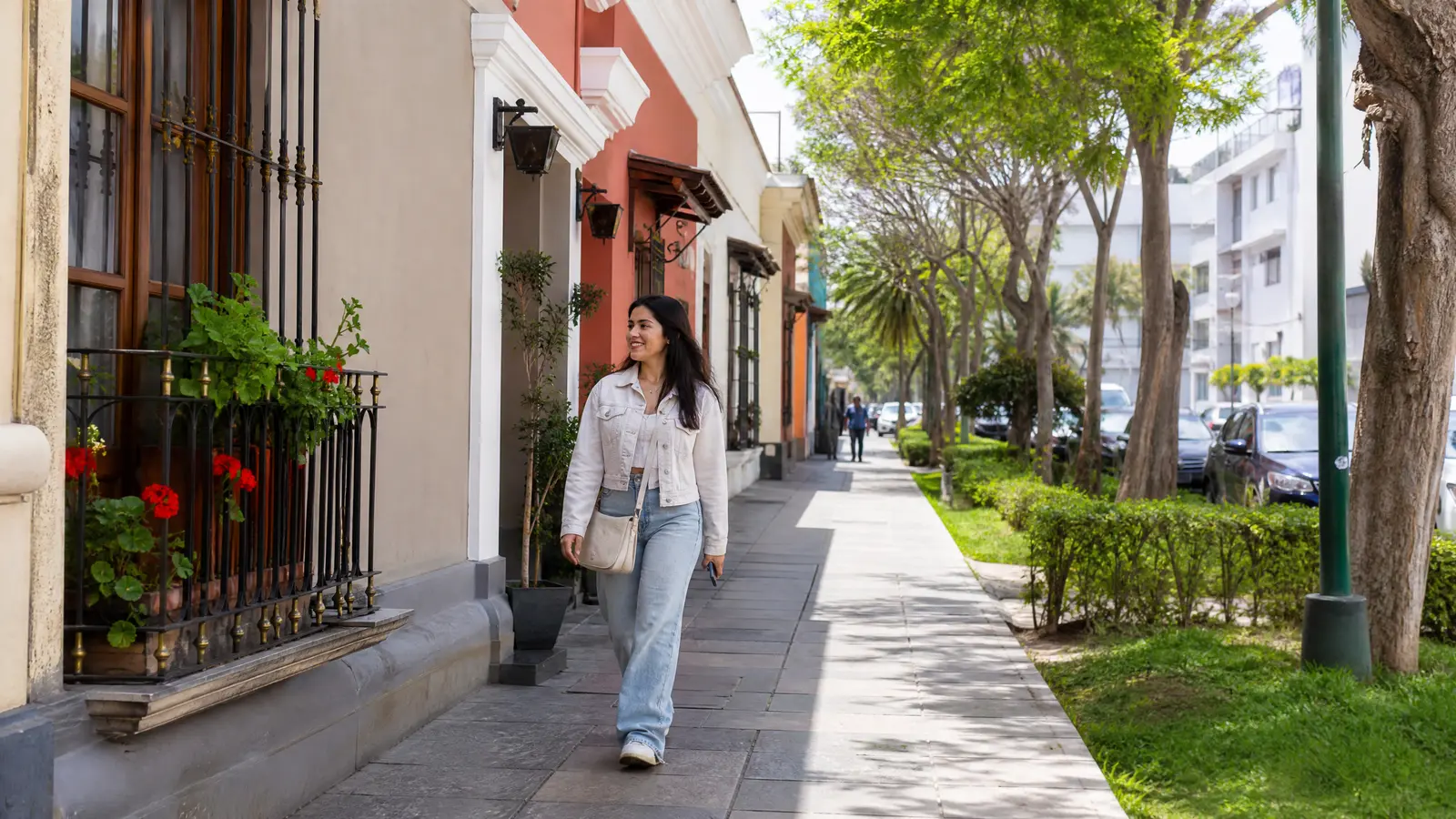

In Peru, safety decides where you settle, and often whether you move at all. I am a realist, not a salesman, and the straight answer for 2026 is this: Peru is noticeably less safe than Chile, which is often held up as the model, but the risks depend heavily on region and neighbourhood, and if you choose wisely and take the usual precautions, you can live well and safely in Peru. On top of that come political instability and natural hazards, which you need to weigh with clear eyes. I go through all of it below. Unlike El Salvador, where there has been a dramatic turn for the better, Peru is a country where safety remains a permanent topic and your own good judgement makes the biggest difference.
Crime: Lima is the hotspot
There is no point glossing over it: crime is elevated in Peru, and Lima is among the cities with the highest crime rates in South America. Robberies, thefts and violent crime are concentrated in certain districts, especially the poorer outlying ones, but also in some busy centres and public squares. In recent years organised crime, partly linked to extortion and protection money, has also grown in some cities, which is why the authorities and foreign ministries' travel advice urge greater caution. Petty crime such as pickpocketing and muggings also happens now and then in tourist neighbourhoods, and public transport calls for particular care. At the same time, like every South American metropolis, Lima also has very safe residential areas, and many foreign residents have lived there for years without problems. The choice of neighbourhood is decisive. The pattern is typical of South American cities: crime is highly concentrated, and only a few kilometres may separate a safe neighbourhood from a dangerous one. If you are relocating, the national statistics say little about your own everyday risk; what counts is your actual address and how you behave. Understand that and act on it, and you cut your risk considerably.
Choosing the right region is what matters
This is where the real leverage lies. In Lima, upscale districts such as Miraflores and San Isidro are considered comparatively safe and are popular with expats, while the outlying districts should be avoided. Outside Lima the picture is often more relaxed: Arequipa with its colonial charm, the Andean cities and many coastal regions are generally calmer. Smaller towns and rural areas have their own challenges with infrastructure and healthcare, but they are often less affected by crime than the anonymous big city of Lima. As everywhere in the region, the basic rule applies: the choice of city, and above all of neighbourhood, decides how safe you feel day to day. If you live in a good neighbourhood, avoid the problem areas and behave sensibly, you will find Peru much calmer than the national statistics suggest. A comparison with its neighbour puts this in perspective: Chile is considered one of the safest countries in South America, while Peru has made progress but still struggles with higher crime rates in some areas. So if maximum safety is your priority, you are better off in Chile; if you value Peru's lower costs and cultural diversity, you need to bring a little more care to choosing where you live.
Everyday crime and precautions
The practical precautions are simple and they work. Do not carry visible valuables or eye-catching jewellery at night, spread your cash in small amounts, avoid lonely and poorly lit streets after dark, use registered taxis or ride-hailing apps rather than basic buses, and stay especially alert on public transport. As a foreigner you stand out and can become a target, so keeping a low profile helps. Many expats choose gated residential complexes in good neighbourhoods, which noticeably lowers the risk of burglary. These measures cut your everyday risk considerably. Well-known scams in Peru include distraction thefts, staged diversions and robberies by unregistered taxis, which is why at the airport and in the city you should only use official or app-booked rides. Take care with cash machines, too: use ATMs inside guarded locations such as shopping centres rather than on the street. These precautions are not specific to Peru; they apply in the same way to most larger cities in Latin America, and if you follow them you can get around the usual parts of Lima by day without trouble.
Political instability
Politics is one area where Peru differs from more stable countries. In recent years Peru has gone through remarkable political instability, with frequent changes of government, impeachments and protests. Several presidents have come and gone in quick succession, and the political climate is shaped by clashes between government and Congress and by social protest. For expats who stay out of politics this mostly remains background noise. Occasional demonstrations, strikes and road blockades, especially in the Andes and around mining conflicts, should still be given a wide berth, because they can disrupt traffic and occasionally tourist routes such as the one to Machu Picchu. Basic services and everyday life in the cities usually carry on unaffected, but the unpredictability of national politics is a factor you should know about. In practice: check for current strikes and blockades before travelling inland, build in buffer time on tourist routes such as the one to Machu Picchu, and keep away from political rallies. The instability mainly affects the level of national government; daily life in a well-chosen neighbourhood usually remains untouched by it.
Corruption
Any fair assessment has to cover corruption too. In Peru it is a real issue in dealings with authorities, the police and business, and it can slow down and complicate procedures. As an expat, rely on trustworthy local advisers and lawyers, prepare your documents completely and in the correct form, and be patient with officials. In practice you will meet corruption less often as dramatic bribery scenes and more often as slow, opaque bureaucracy, where a good local lawyer is worth his weight in gold. Stay away from informal shortcuts and handle every process correctly, with the right paperwork, because in the long run that is safer and often faster too. Especially with visas, property purchases and dealings with authorities, reputable advisers with integrity pay off.
Natural hazards: earthquakes and El Niño
Beyond crime and politics, Peru's geology brings its own challenges. The country sits on the subduction zone of the Nazca Plate and is among the most earthquake-prone regions in the world. Severe earthquakes are a reality, the capital Lima is considered highly exposed to seismic risk, and in 2007 a major earthquake in the Pisco and Ica region killed hundreds of people. Smaller tremors are part of everyday life, and newcomers take a while to get used to them. After coastal earthquakes there is also a tsunami risk. Then there is the weather phenomenon El Niño, which periodically triggers severe flooding, landslides and the feared mudslides known as huaicos, above all on the northern coast, and can badly damage infrastructure. In strong El Niño years whole areas can be flooded, roads cut and water supplies disrupted, which you should factor in when choosing where to live and what land to buy. At altitude in the Andean cities, altitude sickness is also an issue. So when choosing a home, look for modern, earthquake-resistant construction, familiarise yourself with emergency plans and evacuation routes, and keep an emergency supply ready. The good news: modern buildings in the cities are designed to be earthquake-resistant, and Peru has earthquake and tsunami warning systems as well as a civil defence organisation. In the tropical areas of the Amazon there are additional risks from mosquito-borne diseases such as dengue, against which the usual protective measures work. If you live in Cusco or another highland city, take it slowly for the first few days, drink plenty and rest until your body has adjusted to the altitude.
Where expats live safely
All of this points clearly to where you should live. Lima's upscale districts such as Miraflores and San Isidro, and cities such as Arequipa, are considered comparatively safe and are popular with expats. If you avoid the problem districts, pay attention to earthquake-resistant buildings, stay out of politics and take the usual precautions, you can live well in Peru. Also register with your own country's travel or crisis registration service, if it offers one, so that you can be reached quickly after a major earthquake or natural disaster. It also makes sense to connect locally with other expats and the established international community, who are happy to share what they know about safe neighbourhoods, reliable doctors and local quirks.
Weighing it all up: Peru demands more care than the safer Chile, and the combination of elevated crime, political instability and natural hazards should not be played down. But if you choose your region and neighbourhood wisely, behave sensibly and are prepared for the natural hazards, you will find in Peru an affordable, culturally rich and liveable destination where many foreign residents have lived well for years. So safety does not rule Peru out; it calls for a deliberate, well-informed choice of location and sensible behaviour.
If you want to know which region and which neighbourhood suit your situation, and how to weigh safety, politics and natural hazards, let's talk it through before you commit.
👉 Book a consultation with Harley
Carpe Diem. Life is short and fleeting. One shot. Make it count.