
Peru is one of the most varied and affordable places to move to in South America: desert coast, the Andes and the Amazon, a world-famous cuisine, a rich Inca history and one of the fastest routes to citizenship anywhere. I am not here to sell you anything, and my honest verdict is this: for the right kind of person, someone who lives on income from abroad and picks the right region, Peru is exceptionally attractive. It is still a developing country, though, with real downsides in security, politics and infrastructure.
Peru has very low living costs, a retiree visa with a low income threshold and, today, a route to citizenship after just two years; under the new Ley 32421 that will become five years once the law takes effect. At the same time it taxes its tax residents on their worldwide income, struggles with elevated crime and has a record of political instability. A fair assessment has to weigh both sides. With around 34 million people and an area far larger than most European countries, Peru is a land of extremes: the dry Pacific coast with the capital Lima, the high Andes with Cusco and Arequipa, and the vast Amazon rainforest. That geographic range, the deep indigenous and colonial history and the celebrated food are a large part of the appeal.
Cost of living: one of the biggest draws
Let's start with what makes Peru so attractive. Life in Peru costs roughly half to a third of what it costs in Western Europe. Lima is cheaper than Santiago, Buenos Aires or São Paulo and roughly on a par with Bogotá and Medellín. In the upmarket districts of the capital such as Miraflores or San Isidro, a comfortable lifestyle costs around USD 1,200 to 1,800 a month including rent; outside these districts, costs drop by another 30 to 50%. You can rent a flat from about USD 350, a visit to a private clinic starts at USD 20 and lunch from USD 3. On an average Western European or North American pension you will live considerably more comfortably in Peru than at home. The currency is the Peruvian sol, whose exchange rate fluctuates, which is why many expats keep part of their savings in a hard currency. The great advantage of these low costs is that foreign income stretches a long way: if you live on a pension, investment income or location-independent work, you can afford a standard of living in Peru that would cost far more in Europe or North America, including household help, regular meals out and good private healthcare. That purchasing power, alongside the cultural richness, is the main reason Peru appeals to people moving from abroad.
A straight look at the tax system
Now the point where Peru differs from the territorial countries of the region. Peru taxes its tax residents on their worldwide income, whereas countries such as Costa Rica, El Salvador or Panama exempt foreign income. Anyone who spends more than 183 days a year in Peru becomes tax resident and has to pay tax on worldwide income there. That sounds like a disadvantage at first, but it deserves a closer look: the rates are moderate, employment income is taxed progressively at a maximum of 30%, roughly the first USD 10,000 is tax-free, and capital income is taxed at only around 5% for residents. Peru also has no wealth tax on financial assets and no classic inheritance tax. I cover the exact mechanics and planning options in the dedicated residency guide, because the structure of your income decides how attractive Peru is for you. In short: for an investor who lives mainly on capital income, Peru with its capital gains rate of around 5% and no wealth tax can be genuinely attractive, while an entrepreneur with high ongoing profits should run the worldwide-income numbers carefully. Unlike the territorial countries of the region, Peru is not a blanket zero-tax country; it calls for planning tailored to your own income structure.
Moving to Peru does not, on its own, end your tax residence at home, and whether a tax treaty helps you depends entirely on where you come from:
Visas and the fast track to a passport
Peru offers one of the most accessible immigration routes in South America. For people with income from abroad, the Rentista visa is the main option: it requires regular passive income from pensions, rent, dividends or investment returns of at least around USD 1,000 a month. There is also a visa for the self-employed with a similar income threshold, a work visa and an investor visa. The real highlight: today you can apply for Peruvian citizenship after just two years of lawful residence, one of the fastest routes in the world; Ley 32421 raises this to five years from the day after its implementing regulation is published, and until then the two-year rule applies. The details are in the guide to Peruvian citizenship. The process is also relatively unbureaucratic: you can enter as a tourist, with a stay of up to 183 days, and apply for your visa from within Peru, while your legal status is extended during processing. The low income thresholds and the fast route to a passport make Peru one of the most accessible countries for people living on income from abroad.
Regions: from the coast to the Andes
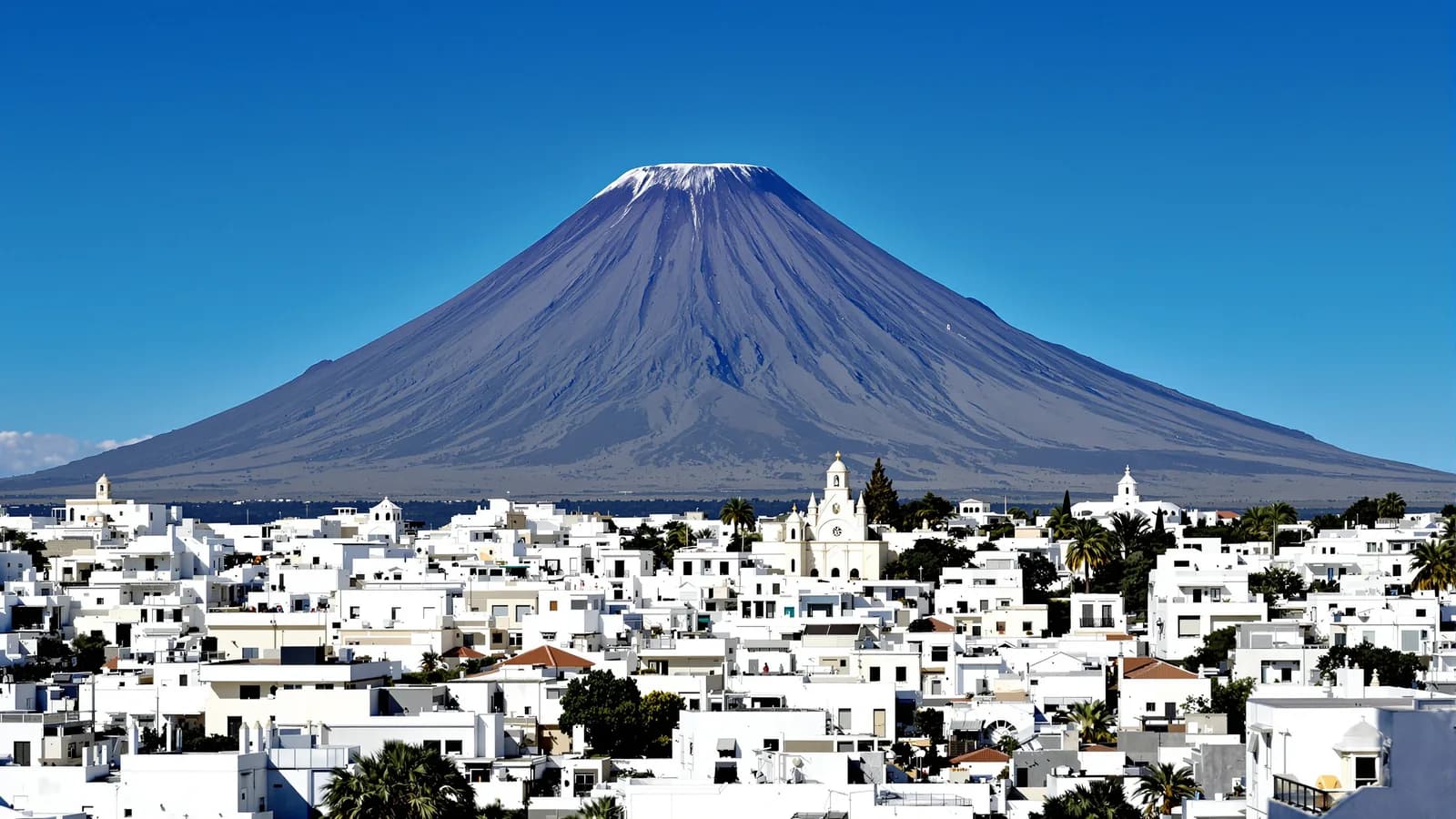
Peru's landscapes are extremely varied, and the region you choose decides your climate, costs and daily life. The capital Lima offers the most urban life, the best infrastructure and the most jobs, but it is hectic, more expensive and has higher crime, so the choice of district is crucial. The second city, Arequipa, the white colonial city at the foot of the Misti volcano, wins people over with a pleasant, dry climate, colonial charm and lower prices. Cusco, the historic Inca capital at 3,400 metres, draws people with its history and its proximity to Machu Picchu, but it is very touristy and high up. The north coast around Trujillo, Chiclayo and Piura offers a warm climate, beaches and low costs, and the Amazon around Iquitos offers exotic nature. This variety is one of Peru's great attractions. What matters for your choice is that climate, costs and safety are closely tied to the region, and in Lima even to the district. Most foreigners choose either an upmarket, safe district in Lima for the infrastructure, or quieter, cheaper cities such as Arequipa, while Cusco tends to attract culture and nature lovers who cope well with the altitude. Spend a longer stretch in the country before you decide, ideally in several regions, because the coast, the Andes and the Amazon feel very different day to day.
Climate and healthcare
Because Peru spans coast, Andes and Amazon, you can largely choose your climate zone. The coast is desert-like and mild, often overcast; the Andean highlands have a cooler mountain climate with intense high-altitude sun; and the Amazon is hot, humid and tropical. At Cusco's altitude, altitude sickness is something you have to get used to. Healthcare is two-tier: Lima and the larger cities have modern private clinics, some with English-speaking doctors, while care in rural areas is much weaker. Private health insurance, which most visas require you to prove anyway, costs around USD 80 to 200 a month and is strongly recommended. A visit to a good private clinic costs an affordable USD 20 or so, and medicines are cheap and often available without a prescription. One point that is often overlooked is long-term care in old age: Peru has no comprehensive state care system of the kind many European countries run, but home care by local staff is affordable. Your social security and health cover therefore have to be organised privately, and what your home country still pays or covers while you live in Peru depends on your country.
Work, digital infrastructure and daily life
Building a local income is not very promising: Peruvian wages are low, and even qualified professionals earn little by international standards, with exceptions mainly in mining, IT and tourism. For location-independent work, conditions in the cities are decent: internet and mobile networks work reliably in Lima, Arequipa and Cusco, while rural areas can be patchy. Spanish is the key to daily life, dealing with the authorities and integration; without Spanish, a lot remains hard work. Culturally, Peru offers exceptional richness with its world-famous cuisine, its indigenous traditions and its Inca history. Peruvian food is regarded as among the best in the world, and dishes such as ceviche or the pisco sour are part of a lively everyday life that wins many newcomers over. That cultural depth, combined with the scenery from the coast across the Andes to the Amazon, makes Peru especially appealing to people interested in culture and nature.
Families, homeschooling and pets
For families there are international and private schools, mainly in Lima, and homeschooling is possible under certain conditions, though you should check the legal position in advance. Bringing pets is feasible but requires a health certificate, vaccination records and paperwork you should prepare early.
The downsides, honestly
I would rather spell out what really gets in the way. Peru is a developing country with large social inequalities and weak rural infrastructure. Crime is elevated, especially in Lima, which is why I devote a separate article to safety in Peru. The political situation is marked by frequent changes of government and instability. Wages are low and inflation can fluctuate, so independent income from abroad is practically a prerequisite. The worldwide income principle calls for careful tax planning, and whether a treaty with your home country softens it depends on where you come from. Natural hazards are real; more on that in the safety article. And the bureaucracy is slow and prone to corruption. If you know these points, you can make an informed decision. On top of that, Peru has seen solid economic growth by South American standards, but social inequality remains high and local purchasing power is low. For people with income from abroad that matters less; for anyone who wants to build something locally, it is an important factor.
Who Peru is right for
Peru is a good fit for retirees with a pension from abroad, location-independent entrepreneurs and investors who benefit from the low tax on capital income, who draw their income from abroad and who choose the right region and the right district. For anyone seeking a fast second passport, the citizenship route is attractive too: two years today, five once Ley 32421 is in force. The country is less suitable for anyone who would depend on a local salary, who needs maximum security and political stability, or who would tackle the worldwide income principle without advice. If, on the other hand, you are financially independent, choose the right region and can handle the quirks of a developing country, Peru gives you an exceptionally affordable, culinary and culturally rich home with one of the fastest routes to a second passport.
If you want a realistic roadmap for your move, from the choice of visa through your tax structure to the right region, let's talk before you take the first steps.
👉 Book a consultation with Harley
Carpe Diem. Life is short and fleeting. One shot. Make it count.