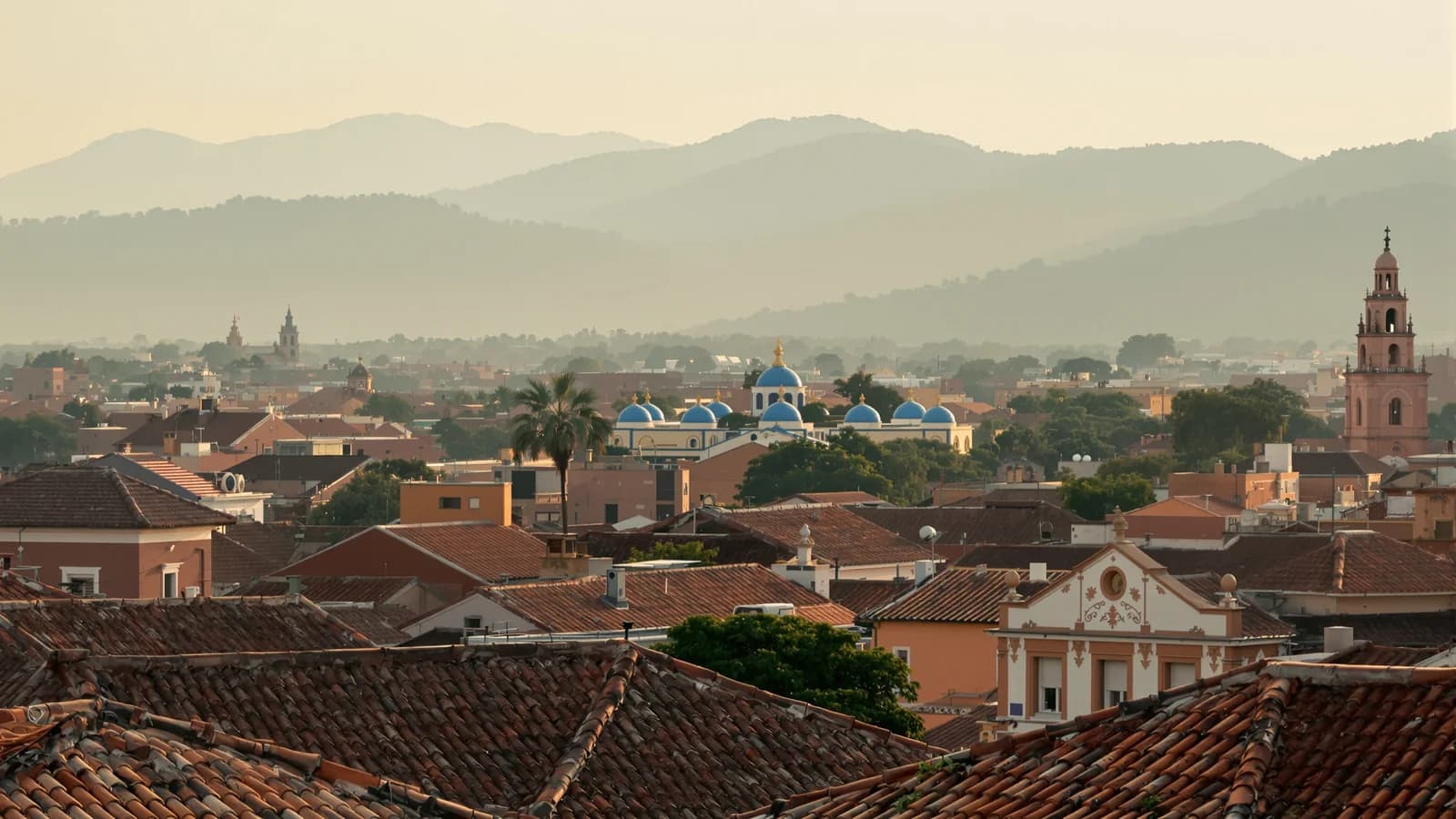

Ecuador is one of the most contradictory places to move to in Latin America. On one side it is an inexpensive, dollar-based country with eternal spring in the Andes and one of the most popular retirement cities on the continent. On the other, it is a country that recently made headlines with a serious security crisis. I am not here to sell you anything, and my honest verdict is this: for the right kind of expat, living in the right regions, Ecuador is exceptionally attractive, while for others it is clearly the wrong choice. In this guide I untangle that contradiction.
Ecuador uses the US dollar as its official currency, has very low living costs and, for newcomers, a tax regime that can leave foreign income untaxed for years. At the same time it is a developing country with stark social contrasts, a difficult security situation on the coast and a long, expensive journey from Europe. A fair assessment has to weigh both sides. Ecuador takes its name from the equator, which crosses the north of the country, and it packs astonishing variety into a small area: the Pacific coast, the Andean highlands, the Amazon rainforest and the famous Galápagos Islands. That geographic range is one of its great attractions, but it also makes clear that Ecuador is not one uniform country. It is several very different everyday realities rolled into one.
The US dollar: Ecuador's underrated advantage
Let's start with what sets Ecuador apart from most Latin American countries. Ecuador has been dollarised since 2000 and uses the US dollar as legal tender. For expats that is a concrete advantage: no exchange rate risk against the dollar, no worries about a local currency being devalued, no conversion losses if your savings are held in dollars or another hard currency anyway. Unlike Colombia, Chile or Peru, where you live with fluctuating local currencies, in Ecuador you budget steadily in dollars. That makes financial planning much easier and is one of the main reasons retirees in particular like Ecuador. A further practical effect: for digital nomads and entrepreneurs earning in dollars, all currency friction disappears and international transfers are simpler. The one drawback is that Ecuador has no monetary policy of its own, and so no devaluation lever to cushion economic shocks. For an expat whose wealth is already in hard currency, though, that is exactly the effect you want.
Cost of living: one of the cheapest destinations
This is the second big draw. Ecuador is one of the cheapest countries you can move to. A couple can live comfortably in an Andean city like Cuenca on around EUR 800 to 1,200 a month, and a single person gets by well on about EUR 1,000. A fully furnished flat in Cuenca's historic centre can be rented from EUR 300 to 400 a month, local food and services are very cheap, and many expats can afford household help or regular doctor's visits that would be unaffordable back home. A doctor's appointment costs roughly EUR 25, and private health insurance is available from around USD 100 a month. On an average Western European or North American pension, you live considerably more comfortably here than at home. One caveat: Quito and Cuenca are more expensive than rural areas, and imported goods are strikingly expensive, especially cars, which carry import duties of 50 to 100%. This combination of a stable dollar and low prices is rare: in most cheap countries you carry currency risk, in Ecuador you do not. For retirees on a modest pension, it can be the difference between a cramped life at home and a comfortable one with household help and regular meals out in Ecuador. If you want to keep a familiar Western standard of consumption with lots of imported products, however, you give up part of the price advantage, because exactly those goods are expensive.
How Ecuador taxes you: the newcomer regime
On tax, Ecuador needs careful reading, because plenty of half-truths circulate. For regular residents, Ecuador is not a territorial country: once you are tax resident, you are in principle taxed on your worldwide income, at progressive rates up to 37%, with a credit for tax paid abroad. You become tax resident after 183 days in the country. What changes the calculation is the five-year tax regime for newcomers that has existed since January 2024: qualifying new residents pay no Ecuadorian tax on their foreign income for five years, whether that is a foreign pension, dividends, interest, capital gains from an investment account abroad or the profits of an online business with clients outside Ecuador. After that, the regular rules apply. There is no wealth tax on assets held abroad. A feature you should know about is the ISD, a tax of 5% on money leaving the country, which matters for internationally mobile people who move capital in and out.
For retirees, this makes Ecuador close to ideal in the first years, because the foreign pension stays untaxed in Ecuador while the low living costs stretch your purchasing power. For digital nomads and remote workers with international clients, the newcomer regime means effectively tax-free income combined with an attractive lifestyle, and for investors with an international portfolio, capital grows untaxed in Ecuador during those five years. Plan the transition at the end of the regime from day one. Ecuador suits classic entrepreneurs with local business activity less well, because local income is taxed at rates comparable to those in Western Europe.
Ecuador is only one side of the equation. Moving there does not, on its own, end your tax residence at home, and how your pension and investment income are treated depends on where you come from and on any treaty with Ecuador:
Visas and residency
Most Western passport holders can enter visa-free as tourists. For a permanent move, the retiree visa is particularly attractive. It requires proof of a regular monthly pension income; the threshold is tied to the minimum wage and is three times the basic wage (SBU), which in 2026 is USD 1,446. There is also an investor visa for an investment of one hundred times the SBU (2026: USD 48,200) in property or financial assets, as well as a rentista visa, a visa for professionals and a digital nomad visa. As a rule you first receive temporary residence, which after 21 months can become permanent residence; citizenship follows three years after permanent residence, so about five years in total. During the temporary phase you may be absent for no more than 90 days in total, and in the first two years of permanent residence for no more than 180 days a year. The details are in my guide to Ecuador residency. What stands out is that Ecuador sets comparatively low income thresholds and opens the path to citizenship after a relatively short time, which makes the country interesting for expats who want a second passport as well as an inexpensive life. For the application you always need a valid passport, an apostilled police certificate, an apostilled birth certificate, proof of financial means and, depending on the visa type, further documents, all certified and translated into Spanish.
Regions: Cuenca and the alternatives
Ecuador's landscape is extremely varied, and your choice of region decides almost everything, from climate to safety. Cuenca in the southern Andean highlands, at around 2,500 metres, is by far the most popular city for foreign retirees. Its UNESCO-listed colonial old town, a spring-like climate all year between 15 and 25 degrees Celsius, good infrastructure and a large, active expat community make it the dream destination for many people moving abroad. The capital Quito offers more urban opportunities but is less safe in parts. Vilcabamba, the "valley of longevity" in the south, attracts people with its healthy climate and relaxed atmosphere. The coastal towns of Salinas and Manta draw beach lovers but share the more difficult security situation of the coast. Then there are the Amazon and the world-famous Galápagos Islands. When choosing where to live, it is important to understand that climate, costs and safety in Ecuador are closely tied to region: the highlands offer a mild climate, good safety and an established expat infrastructure, while the coast lures you with beaches and warmth but carries the more difficult security situation. That is why most expats deliberately choose the Sierra, above all Cuenca, and use the coast for holidays rather than as their main home.
Climate and healthcare
Because Ecuador spans altitudes from sea level to over 6,000 metres, you can practically pick your climate zone. The Andean highlands have mild spring weather all year, the coast a tropical climate, the Amazon hot and humid tropics. At altitude, UV radiation is intense. Healthcare is two-tier: in the larger cities such as Quito and Cuenca there are modern private clinics, some at European standards, with doctors often trained in the US or Europe, while care in the countryside is poor. For expats, private or international health insurance is advisable; the public IESS system is cheap but often overstretched. An often overlooked point is long-term care in old age: there is no comprehensive nursing care system of the kind many Europeans know, but home care by local staff is affordable. Most medicines are cheap and available without a prescription, and in Cuenca and Quito some foreign-language doctors practise, which makes the start easier for many newcomers.
Digital infrastructure and daily life
For remote work, conditions in the cities are good: fibre is widespread in Cuenca and Quito, and you get 50 to 100 Mbit/s for around EUR 25 to 40 a month, while connections in rural areas can be slower. Spanish is the key to daily life, dealing with the authorities and integrating. In the larger cities and the expat scene you can get by in English at first, but without Spanish a lot remains hard work. Ecuador also has strong regional cultures: Sierra, Costa and Amazon differ markedly in everyday life.
Family and pets
For families there are international schools in Quito, Guayaquil and Cuenca, often bilingual and following an American or European curriculum, and homeschooling is possible under certain conditions. Bringing pets is feasible but requires a health certificate, proof of vaccinations and a fair amount of paperwork, and the costs can run into four figures.
The downsides, honestly
I would rather spell out what really gets in the way. Ecuador is a developing country with large social contrasts, weak rural infrastructure and inadequate healthcare outside the cities. The journey from Europe is long and expensive: there are few direct connections, and the nonstop route is from Madrid (Iberia, Air Europa); with a connection, the trip adds up to a good 16 to 20 hours, and tickets often cost more than EUR 1,000. From North America the trip is considerably shorter. Corruption is a real issue in dealings with the authorities and in business. The language barrier is high without Spanish. And the security situation on the coast and in the border region with Colombia is serious, which is why I devote a separate article to safety in Ecuador and compare both countries in Ecuador vs Colombia. If you know these points and choose your region wisely, you can largely avoid the downsides. Another often underestimated drawback is the weak purchasing power of the local population and the low wage level, which makes Ecuador unsuitable for building a local income. And even though the dollar brings stability, Ecuador remains economically vulnerable and dependent on commodity prices and the political situation, which you should keep in mind in long-term planning.
Who Ecuador is right for
Ecuador is a particularly good fit for retirees with a foreign pension, who benefit from the dollar, the low costs and the mild Andean climate, as well as digital nomads and investors who use the newcomer tax regime and live in the safe highland cities. The country is less suitable for anyone who would depend on a local salary, who needs short trips back to Europe, or who wants to live on the coast and in the crisis regions. If you choose Cuenca or another highland city and are financially independent, however, you will find an exceptionally affordable and liveable destination. In short, you have to earn Ecuador, by choosing your region wisely and being able to cope with the quirks of a developing country. If you do, you are rewarded with a dollar-stable, remarkably cheap and breathtaking life that, in the Andean highlands, is also safe. That exact combination is hard to find anywhere else.
To diversify your banking beyond Ecuador, our sister brand freedombanking.plus specialises in accounts abroad. If you want to build a realistic plan for your move, from choosing the visa through the tax question to the right region, let's talk before you take the first steps.
👉 Book a consultation with Harley
Carpe Diem. Life is short and fleeting. One shot. Make it count.