
No topic decides more often whether people move to Ecuador or not than safety, and no topic is misunderstood as often. I'm a realist, not a salesman, and the honest version for 2026 is this: Ecuador is going through a serious, real security crisis, but it is heavily concentrated geographically, and the very regions where most foreign residents live are largely spared. Anyone who doesn't understand this distinction either says no out of fear or says yes out of naivety, and both can be the wrong call. So I'll go through the situation plainly, region by region. Candour matters more here than for any other country in this series, because the gap between what is in the news and what a foreign resident in Cuenca actually experiences is wider than almost anywhere else.
The crisis is real: what happened
Keeping quiet helps nobody, so let's be clear: Ecuador has deteriorated dramatically in recent years. The country sits next to Colombia, the world's largest cocaine producer, and has access to the Pacific, which has made it a central transshipment hub for cocaine bound for Europe and Asia. Only a few years ago Ecuador was considered one of the calmer countries in the region, which makes the fall all the more striking. Since then more than twenty criminal gangs have been fighting for control, 2023 was the bloodiest year in the country's history with more than 7,000 murders, and the murder rate at times exceeded that of Mexico and Brazil. In early 2024 gunmen stormed a television station in Guayaquil, after which President Noboa declared an internal armed conflict and deployed the military against the gangs, which were classified as terrorist organisations. Since then states of emergency have been declared repeatedly in many provinces, with a military presence, checkpoints and temporary curfews. The causes go back further: after the peace agreement in Colombia and the withdrawal of state control at the border, drug gangs gradually took over routes that used to be monitored, and the security policy of previous governments did too little for too long against the strengthening cartels. Add to that the Covid pandemic, a socio-economic crisis and overcrowded prisons that effectively became the gangs' command centres. The result is the worst security crisis in the country's recent history, and it is real. I don't want to play it down.
The crucial point: the geographic divide
And now comes the nuance that changes everything and that is almost always missing from the headlines. The violence is extremely unevenly distributed. Around 88% of murders occur in five coastal provinces: Guayas, Manabí, El Oro, Los Ríos and Esmeraldas. The epicentre is the port city of Guayaquil, the most dangerous province is Esmeraldas, and on top of that there is the border region with Colombia, which carries a kidnapping risk. These areas are the cocaine smuggling routes, and that is where the gang war rages. It helps to picture it on a map: Ecuador is not a war zone from end to end, but a country with a few clearly defined high-risk zones on the coast and in the north, while the large remainder lives a completely different reality.
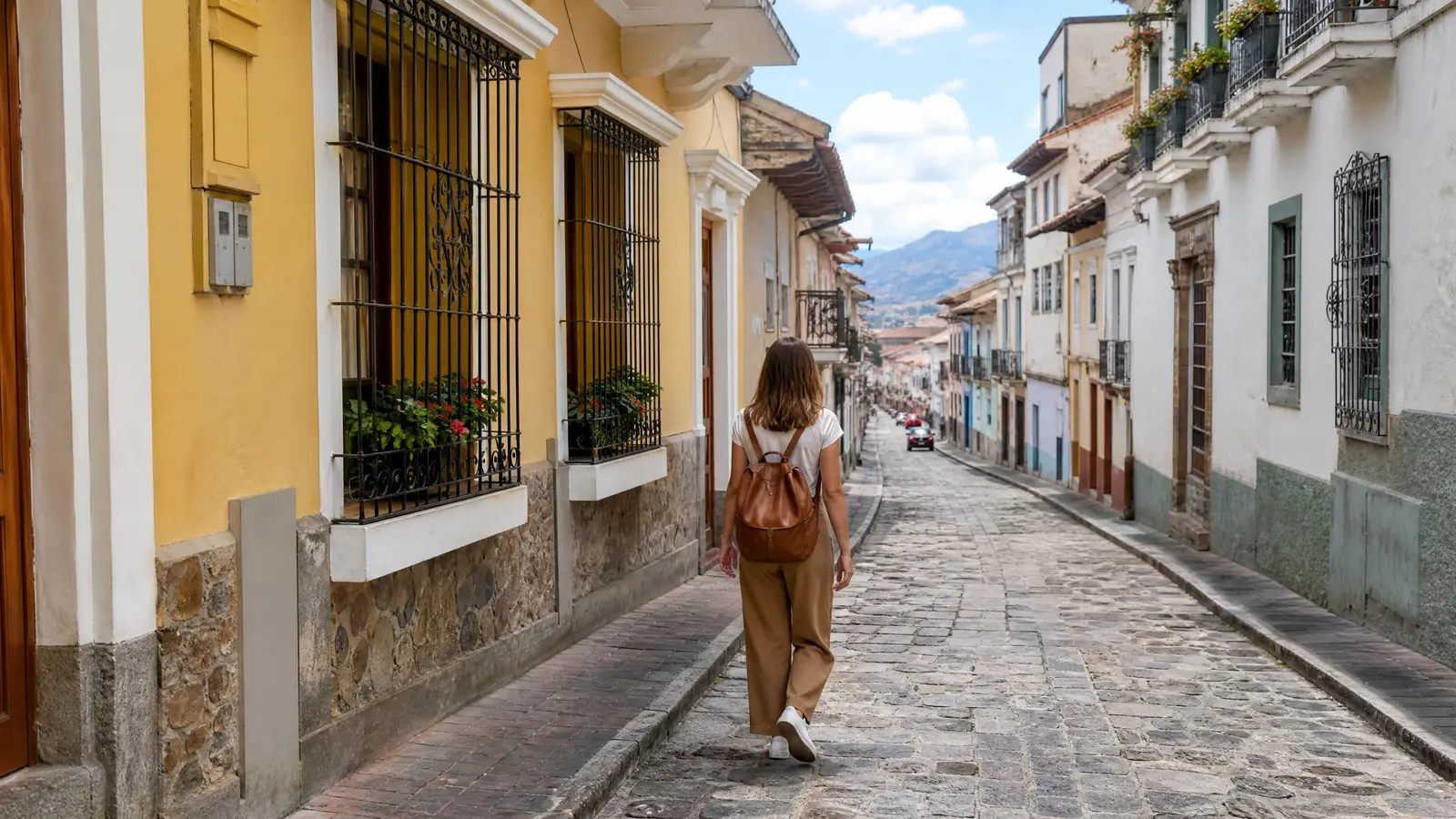
The Andean highlands, by contrast, are structurally largely cut off from it, because the drug trade runs through the coastal ports and the northern border, not through mountain cities at 2,500 metres with no port access. The figures make this starkly clear: while the national murder rate exploded, the province of Azuay, home to the expat hub of Cuenca, recorded a drop in homicides of more than 50%. Cuenca has around 1.4 murders per 100,000 inhabitants, lower than almost any major US city. Cuenca lies around 400 kilometres from the nearest heavily affected coastal province. Put another way: people who read the national headlines and then move to Cuenca are regularly surprised at how normal and calm life there is. The reason Cuenca is an island of calm is structural and therefore stable: Cuenca has no port, sits at over 2,500 metres away from the smuggling corridors, has a diversified local economy and has invested specifically in police and infrastructure for years. These factors don't change in the short term, which is why local experts expect the highlands to stay decoupled from the coastal violence in the medium term too. Advisers who have worked in Cuenca for decades report that in all that time they have not had a single client who became the target of organised violence there.
What this means for choosing a region
The practical conclusion is clear. For people moving to Ecuador, the highland cities are the safe choice, above all Cuenca, but also large parts of Quito, Loja and Vilcabamba. By contrast, official advice is against non-essential travel, and certainly against living, in the city of Esmeraldas, in Guayaquil south of Avenida Portete de Tarquí, in Durán and in the immediate border area with Colombia. The UK Foreign Office (FCDO), for example, advises against all but essential travel to the seven coastal provinces, Guayas and Esmeraldas among them, and to the area within 20 km of the Colombian border, with a few exceptions in Carchi province around Tulcán. Choose wisely and you live safely in Ecuador; live on the coast or in the border area and you take a real risk. To be plain: I would not recommend anyone to move their main home to Guayaquil or Esmeraldas province, however tempting the beach and the lower prices may be. The popular coastal retirement towns such as Salinas are considered calmer than Guayaquil, but they still carry the higher baseline risk of the coast. If you are set on living by the sea, check the specific location very carefully and don't be dazzled by cheap property prices, which are often precisely the flip side of the security situation.
Everyday crime and precautions
Regardless of region, there is petty crime in all the larger cities, above all pickpocketing, robbery and scams, especially on buses and at bus stations and in nightlife districts such as Mariscal Sucre in Quito. That is the real everyday risk for foreign residents, not the organised gang violence, which plays out almost entirely between the cartels on the coast. Known tricks include distraction manoeuvres, fake uniforms used to extort "fines", robberies by unregistered taxis, and drugging with substances given secretly, sometimes even via doctored leaflets or drinks. If you know these tricks, you fall for them less often. The practical precautions are manageable: don't carry visible valuables at night, avoid lonely and poorly lit streets after dark, use only registered taxis or ride apps, avoid night-time and long-distance road trips where possible, and don't accept food or drinks from strangers. Many foreign residents also choose gated communities with video surveillance and security staff, which cuts the risk of burglary considerably. These precautions are not specific to Ecuador; they apply in much the same way to any large Latin American city, and if you follow them you can move around Quito's tourist areas in daytime without problems. A special note on road trips: because of the states of emergency, there can be road blocks and police and military checkpoints anywhere in the country, so always carry your original passport and follow the instructions of the security forces. Avoid driving between cities at night.
The political situation
Politically, Ecuador is polarised. Since taking office, President Daniel Noboa has consistently pursued a militarised course against organised crime, which earns him support but also criticism, because the permanent emergency measures are seen as drifting towards authoritarianism. The most recent elections were close and showed a deeply divided country, but turnout was high at over 80%, which points to lively political engagement. For foreign residents who stay out of politics, demonstrations and unrest are usually local, but you should give occasional road blockades and protests a wide berth. The militarised security course has so far brought mixed results: violence has fallen in some zones, while it remains high in the worst-hit coastal provinces. What matters for you is that the political conflict and the security operations barely touch your daily life in a highland city, as long as you comply with the emergency rules such as temporary curfews and stay informed about the current situation.
Natural hazards
Beyond crime, Ecuador is also geologically demanding, because it lies on the Pacific Ring of Fire. Several volcanoes are active or under close observation, including Sangay and Reventador as well as the well-known Cotopaxi and Tungurahua, whose eruptions can lead to evacuations and even temporary closure of the airports in Quito and Guayaquil. Earthquakes are a reality: in 2016 a severe quake on the coast of Manabí killed hundreds of people, and after coastal quakes there is also a tsunami risk in Esmeraldas and Manabí. In the rainy season there is flooding and considerable disruption to road traffic, and in the lowlands you should expect aquaplaning and flooded roads. So when choosing where to live, look for earthquake-resistant, modern construction and familiarise yourself with emergency plans. The good news: modern buildings in the cities are built to withstand earthquakes, and Ecuador has working monitoring and warning systems for volcanoes and quakes. At the altitude of the Andean cities, intense UV radiation adds to the list and calls for consistent sun protection, while in the tropical areas of the coast and the Amazon there are risks from mosquito-borne diseases such as dengue, Zika and chikungunya. That too is part of sensible preparation, and it is easily managed with the usual protective measures.
Corruption
One last point any honest assessment has to include: corruption is a real issue in Ecuador's public administration, judiciary and everyday business, and it can slow down and complicate procedures. Newcomers should rely on trustworthy local advisers and lawyers, prepare documents completely and with formal accuracy, and bring patience to dealings with the authorities. In practice you will meet corruption less as dramatic bribery scenarios and more as slow, opaque bureaucracy in which files stall without the right guidance. A good local lawyer with integrity is therefore worth their weight in gold for your visa, a property purchase and dealings with the authorities: not to pay bribes, but to steer the procedures through the system correctly and quickly.
In the end the balance is clear: Ecuador's reputation is currently worse than the reality for someone who lives in Cuenca or another highland city. The crisis is real, but it takes place mainly where foreign residents are not. Anyone who avoids the coastal crisis areas and the border region, follows the usual precautions and registers with their embassy, or with their foreign ministry's traveller registration service where one exists, can live safely and well in Ecuador. Registration makes sure you can be reached quickly in an emergency. Most important of all, though, is the one decision that shapes almost everything: the choice of region. Get that right, and Ecuador's security situation is a much smaller problem in daily life than the international headlines suggest.
If you want to know which region really suits your situation and how to weigh safety, natural hazards and daily life realistically, let's talk it through personally before you commit.
👉 Book a consultation with Harley
Carpe Diem. Life is short and fleeting. One shot. Make it count.