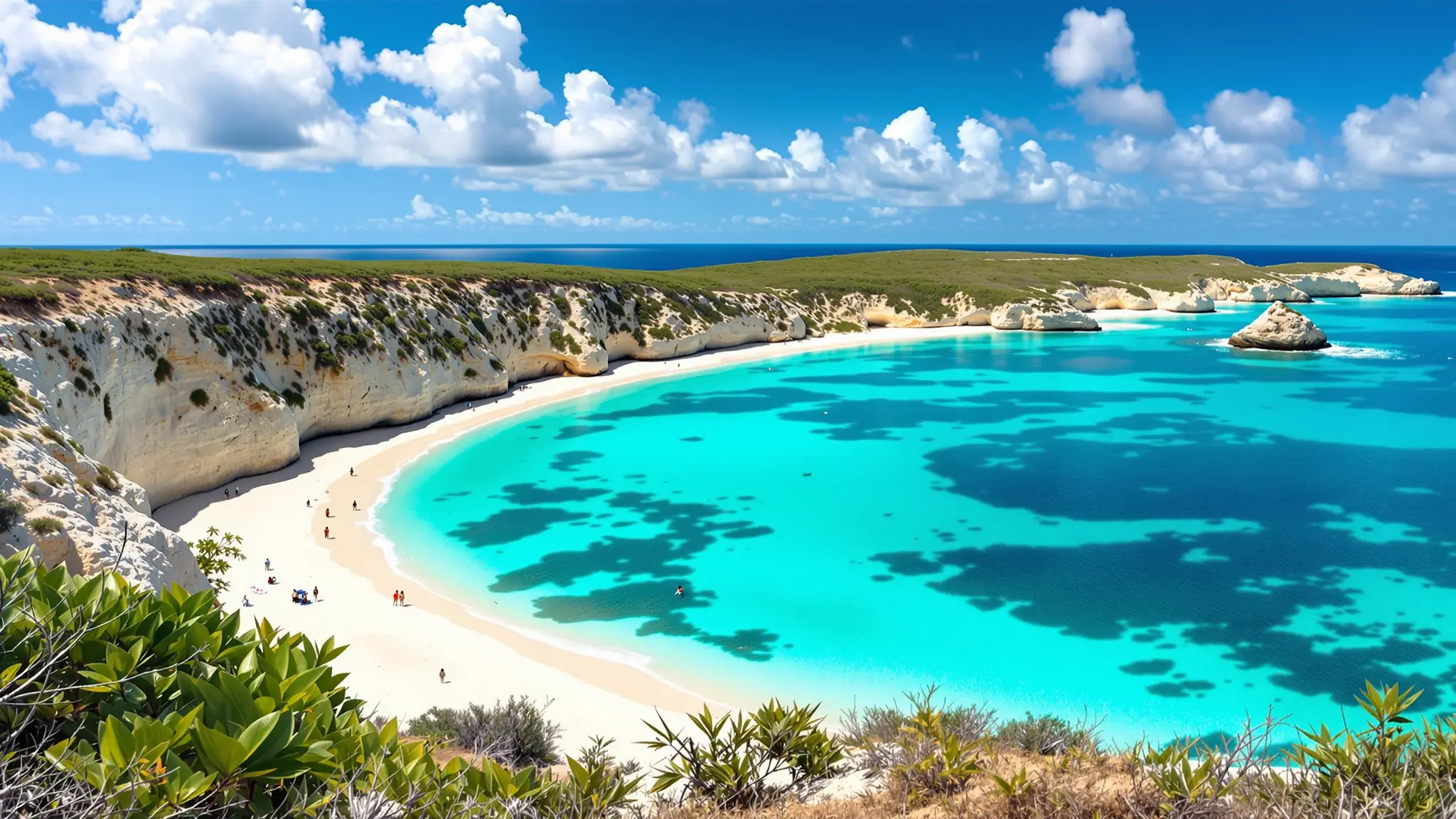
Dominican Republic
Two years to a passport for retirees, rentistas and investors and no wealth tax, but foreign investment income becomes taxable from year three.
Sources for these facts
- Naturalisation: dgii.gov.do, checked on 24 October 2026.
- Presence required: dgii.gov.do, checked on 24 October 2026.
- CRS status: oecd.org, checked on 24 October 2026.
- Tax system: taxsummaries.pwc.com, checked on 24 October 2026.
Why Dominican Republic?
The fastest passport in the Caribbean, no wealth tax, a working property market. And a tax rule that catches up with wealthy newcomers from the third year.
Among the countries we do not advise on, the Dominican Republic has the strongest real inflow of European residents: established communities, direct flights, an open property market and naturalisation two years after permanent residence, which retirees, rentistas and investors receive directly. The tax system is described almost everywhere as territorial, and for earned income that is true. For the readers this page is about, it is not: foreign capital and investment income becomes taxable from the third year of residence. If you live from your wealth, you get a two-year tax pause here, not a permanently territorial regime.
- ✓Naturalisation two years after permanent residence, which retirees, rentistas and investors receive directly
- ✓No wealth tax, inheritance tax at 3%
- ✓Non-CRS: no commitment to automatic information exchange
- ✓Pensionado from USD 1,500 a month, rentista from USD 2,000, investor route from USD 200,000
- ✓The catch: foreign investment income is taxed from the third year of residence
Residence permits and residency options
For recipients of a pension from a foreign public or private source of USD 1,500 a month or more. Leads to permanent residence on a fast track under the special incentives law and brings a range of customs and duty concessions.
For stable, permanent foreign income of USD 2,000 a month or more, for example from rent, dividends or investment returns. The same fast track as the pensionado.
From USD 200,000 in a qualifying Dominican investment, in practice usually property. Leads to permanent residence on a fast track and is the usual route for anyone below retirement age.
The permanent residence card is valid for one year at first, then four years at a time, and is renewed in the country. You become tax resident at more than 182 days in a calendar year, consecutive or not.
Tax in Dominican Republic
This is where most overviews fall short. The principle is: Dominican-source income is taxed, foreign income as a rule is not. For residents that does not hold without limit: foreign investment and capital income is caught, from the third year of residence. If you live from a portfolio, from shareholdings or from foreign rent, you have two quiet years and then a tax liability on exactly the income you came with.
The progressive rates are 15%, 20% and 25%, and the first 416,220 Dominican pesos a year are tax-free. There is no wealth tax, and inheritance tax is 3%. Gifts to individuals are subject to a 27% withholding tax.
You become tax resident at more than 182 days in a calendar year. If you stay below that, you do not trigger the three-year rule. That can be planned, but it is planning with a day count, not a system that leaves you alone by itself.
Citizenship: the route to a second passport
Two years of residence after permanent residence is granted are enough to apply for naturalisation. Retirees, rentistas and investors receive permanent residence directly and so reach the passport in around two years; if you start on temporary residence, you first wait five years for permanent residence, seven in total. That is the fastest regular route in the whole Caribbean and faster than in eleven of the twelve countries we advise on.
The Dominican passport is solid but no top travel document. If you want a passport mainly for travel freedom, Chile or Brazil give you more, though on longer timelines.
Our Dominican Republic insider tip: Las Terrenas
Las Terrenas on the Samaná peninsula is where the numbers are most likely to work for a newcomer: a European resident community that has grown since the eighties, doctors, schools, tradespeople and supermarkets within walking distance, Atlantic beaches on the doorstep and El Catey airport within reach.
Alternatives: Santo Domingo, the capital, offers full infrastructure, banking and international connections; Cabarete and Sosúa on the north coast have the country's oldest German-speaking community, but also a scene that is not for everyone; Punta Cana is built for tourism and lives accordingly.
The cost of living is mid-range for the region, well above Paraguay and Bolivia, below Costa Rica. Imported goods are expensive, local food and services cheap. On safety, without gloss: the UK Foreign Office (FCDO) calls the crime rate high, from bag-snatching to violent crime and carjacking. It points out that thieves on motorcycles snatch bags from pedestrians and that foreigners have been mugged at gunpoint or knifepoint during the day in residential districts.
Banking outside Dominican Republic
Banking and your operating company belong outside the Dominican Republic, for a concrete reason: once foreign investment income becomes taxable from the third year, a clean separation of your structure decides what is up for assessment in the first place.
The country being non-CRS means that Dominican banks do not report automatically to your home country. It does not mean you have no reporting obligation there. Holding those two sentences together is our core business.
Flag theory: why bank outside the country?
Because the country is a CRS participant and you do not want to create local economic substance or a permanent establishment, banking and your operating company belong outside Latin America. We structure this for you. More about our services →
Who is Dominican Republic right for, and who not?
✓ A good fit for
- ✓Retirees, rentistas or investors with direct permanent residence who want a second passport in around two years and will actually spend that time in the country
- ✓Retirees with a foreign pension from USD 1,500 a month who benefit from the pensionado regime
- ✓Anyone looking for a Caribbean location with direct flights to Europe
✗ Less suited to
- ✗Anyone living from investment income who needs it tax-free for good (taxable from year three)
- ✗Anyone who wants a low-presence base without counting days (then Panama or Paraguay)
- ✗Anyone who depends on a low crime level (then Uruguay or Costa Rica)
Frequently asked questions about Dominican Republic
Is the Dominican Republic really a territorial country?
For earned income yes, for wealthy newcomers only in part. Residents' foreign investment and capital income becomes taxable from the third year of residence. If you live from it, you have two quiet years and then a regular tax liability.
When do I become tax resident there?
At more than 182 days in a calendar year, consecutive or not. Residence on its own does not automatically make you tax resident.
How quickly do I get the passport?
Two years after permanent residence is granted (Reglamento 631-11, Article 52). Pensionados, rentistas and investors receive it directly and so reach the passport in around two years; if you start on temporary residence, you first wait five years for permanent residence, seven in total.
Is there a wealth tax?
No, there is no wealth tax. Inheritance tax is 3%, and gifts to individuals are subject to a 27% withholding tax.
Next steps
VidaLibrePlan advises on twelve countries in Latin America. Dominican Republic is not one of them.
If you live from capital, what you want here is tax-free foreign investment income, and in the Dominican Republic that ends from the third year of residence. In Panama foreign income stays out of the tax net for good, the currency is the US dollar, and the presence requirement is one day every two years.
Explore Panama →Is Dominican Republic right for you?
Start with a free assessment: we look at your situation and tell you honestly whether this country fits you.
Explore the countries we advise on

Productive farmland and vineyards in your own name, a real-asset hedge far from the world's trouble spots.
✓ Farmland + real assets + optional 2-year passport
A strong Global South passport, reached in around six years on the standard route.
✓ Strong Global South passport
Latin America's economic anchor, with the highest legal certainty in the region.
✓ Strongest passport (US ESTA) + foreign income tax-free for up to 6 years