
Why life in Latin America feels different: a slower pace, a family-centred culture, life lived outdoors, warm people and more time for what matters, plus the honest side of the adjustment. The 2026 guide.
Many of my clients come for the taxes and stay for the life. I hear that sentence again and again in consultations. It is not a figure of speech but an observation I keep making. The low tax rate draws them in, but what keeps them here is something else: a way of living that is fundamentally different from the tightly scheduled north. For many, the planned stopover becomes a new home. A slower pace, closer families, more life outdoors, warmer people. This guide describes why life in Latin America feels so different, honestly, with its rewarding and its demanding sides. One point first: the lifestyle is the real prize, but it does not replace sound tax planning, it rewards it.
The slower pace
The first and most obvious difference is the pace. Life in Latin America runs slower, calmer, less driven by the clock. What passes for efficiency in the north often looks like rushing here, and what counts as normal here looks like dawdling in the north. For many people moving from Europe or North America, this slowing down is the biggest adjustment and at the same time the biggest gain: suddenly there is time for a long lunch, for a chat in the street, for the life that happens between appointments. The siesta, the shared meal and the conversation without a glance at the watch are not exceptions here, they are the rhythm of everyday life. The World Health Organization documents how strongly stress and the rhythm of life affect health, as you can read at the WHO. Many people say that here they can truly breathe again for the first time in years. The constant pressure to be efficient and reachable noticeably falls away. The slower pace is not a lack of ambition but a different order of priorities. Work has its place here, but it is not the only measure of a life well lived.
The family-centred culture
The second big difference is family. In Latin America the family sits at the centre of life, across generations, and that shapes everyday life as a whole. Children are welcome everywhere, grandparents are part of everything, and the weekend belongs to the family. For people who move with children this is a blessing, but single people, too, experience a warmth and a natural togetherness that is often missing in the more individualistic north. Neighbours know each other, celebrations are shared, nobody eats alone unless they want to. You are invited, included, seen. A stranger rarely stays a stranger for long here. This family-centred culture creates a social net that reaches well beyond your own family. How strongly family and social ties shape a society's wellbeing also shows in development data from the World Bank. For many, it is precisely this human cohesion that makes life here richer than the bare statistics of costs and taxes would suggest. Anyone who comes from a society where many people grow lonely experiences this sense of belonging as a real gift.
Life outdoors
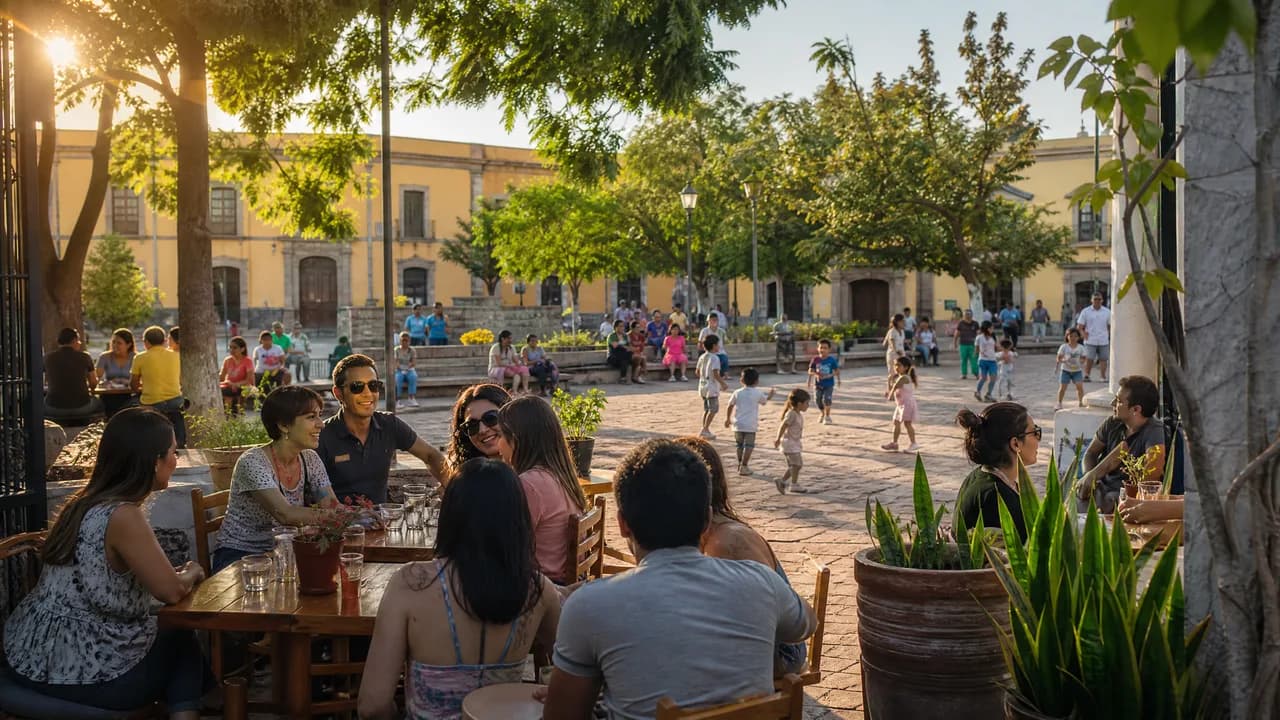
The third difference is life outdoors. Across large parts of the region the climate allows a life that takes place outside: in squares, in parks, in cafés, by the water. Outdoors is not the exception reserved for a fine day here, it is the normal place where life happens. The eternal spring of Medellín, the beaches of Brazil, the mild Andean climate of Cuenca or Arequipa: all of it invites you not to spend your life behind closed windows. Where the weather cooperates all year, life moves outside of its own accord. For people from the grey, cold north, this gain in light, warmth and time outdoors is often underestimated, yet profound. What sounds like a minor point has a surprising effect on mood, energy and health. The OECD documents how much environment and quality of life shape wellbeing, as you can read at the OECD. More sun, more movement, more encounters outdoors: that changes mood and health noticeably. The winter blues that so many in the north know well disappear in a climate that invites you outside all year round.
The warm people
The fourth difference is the people themselves. Latin Americans are rightly known as warm, open and welcoming, and the way people treat each other shapes everyday life. A conversation with the neighbour, the shopkeeper or the taxi driver is rarely just a transaction; almost always it is also a small encounter. People take time for each other, even in the most fleeting contact. For newcomers from a more reserved culture, this warmth is surprising at first and soon indispensable. It makes arriving easier, settling in faster and everyday life friendlier. Newcomers find connection faster than they are used to in the north. Of course there are all kinds of people everywhere, but the basic warmth of how people deal with one another is something almost every newcomer describes as a defining difference. This warmth is not a cliché but an everyday experience you feel within a few days. It is the human foundation of the way of life here.
The honest side: the adjustment
And now the honest side, because a life that is different is also demanding. The slower pace that is a blessing in private life can test your patience with officialdom: bureaucracy takes time, appointments shift, and efficiency looks different from what you know in the north. Language is a real hurdle; without Spanish you stay on the outside. Anyone who makes the effort to learn Spanish, on the other hand, opens up a whole new world of relationships and opportunities. And the cultural differences that enrich you in the good moments demand adaptation and composure in daily life. Some things that work automatically in the north need patience and a second attempt here. Anyone who moves to Latin America expecting everything to work as it does at home, only cheaper and sunnier, will be disappointed. The region rewards composure and punishes impatience. Anyone who embraces the different pace, the different order and the new language, however, is richly rewarded. The adjustment is the price of admission to a life that many experience as more fulfilling. This willingness to adapt decides whether the move succeeds. Those who stay flexible and keep their sense of humour find their feet quickly; those who insist on clockwork punctuality wear themselves out. Composure is the newcomer's most important virtue here.
Why many never go back
Despite all the adjustment, the most remarkable thing is how many newcomers never go back. They came for a few years and stayed because life convinced them, not the spreadsheet. What began as a tax-driven move became a decision of the heart. The slower pace, the family, the outdoors, the warmth: all of it adds up to a quality of life that cannot be captured in numbers but can be felt every day. It is this sum of small daily differences that transforms life here. Many say that here, for the first time in a long while, they have really lived instead of merely functioning. This difference between living and functioning is what changes so many people for good. That is the core of it: Latin America offers not just a cheaper or more tax-efficient life but, for many, a richer one. Rich not in the sense of a bank balance but in the sense of days truly lived. And this wealth of time, warmth and presence is, in the end, the region's strongest argument. No tax advantage in the world can outweigh this kind of quality of life.
In practice: the lifestyle rewards structure
The lifestyle is Latin America's real prize, but it rests on a foundation you have to lay first. The good life only unfolds when the tax basis is right: a proper end to your tax residence at home, attention to any exit tax on company shares, and the right choice of country and residence. The lifestyle does not replace the structure, it rewards it: anyone who leaves in good order and plans properly can enjoy the different life without the shadow of unresolved tax issues. Nothing clouds a new life like unresolved questions with your old tax office. Structure first, then the good life; in that order, both become possible. Keep to that order and you do not have to choose between a tax advantage and quality of life; you get both. Structure decides, not the destination.
Moving to Latin America does not, on its own, end your tax residence at home. What your home country keeps taxing when you leave, and whether it charges an exit tax, depends on where you come from:
Four reasons, one condition
Life in Latin America feels different for four reasons: the slower pace, which makes time for what matters; the family-centred culture with its social cohesion; life outdoors in light and warmth; and the warmth of the people. Together they add up to a quality of life that cannot be captured in numbers and that many never give up again. It is precisely the things without a price tag that tip the balance. The honest side remains: it is an adjustment, with bureaucracy, language and cultural differences, and it demands adaptation. Knowing and accepting that lets you go into the adventure more calmly. But those who commit are richly rewarded. And above all: the lifestyle is the prize, but it rewards a sound structure, it does not replace it. That combination of a good life and a solid foundation is exactly what I build with my clients. That is how the dream of a different life becomes a lasting reality.
If you want to live Latin America's different life and put it on a sound tax foundation, let us plan it together. Book a call with me; the link is right below.
Book a consultation with Harley
Carpe Diem. Life is short and fleeting. One shot. Make it count.